



WASHINGTON — The nation’s capital entered a state of high alert on Saturday, July 12, following the sudden death of influential Republican Senator Lindsey Graham of South Carolina, occurring simultaneously with a major military escalation as the United States launched a new round of airstrikes against targets in Iran. The twin developments have thrown both domestic politics and international relations into sudden turmoil, forcing lawmakers and military officials to navigate a rapidly unfolding dual crisis.
A Titan of the Senate Passes
Senator Lindsey Graham, a fixture of American foreign policy and a leading conservative voice for over two decades, passed away early Saturday morning. Capitol Police and Senate officials confirmed his death, though specific details regarding the cause and location remain limited as family members request privacy. The news shocked colleagues on Capitol Hill, where Graham was known as a sharp-witted debater and a pivotal figure in judicial confirmations and defense policy.
Graham, 69, served in the Senate since 2003 after a decade in the House of Representatives. Throughout his career, he established himself as a defense hawk, frequently advocating for strong military intervention abroad and robust funding for the armed forces. His sudden departure leaves a profound legislative vacuum in the Senate Judiciary and Foreign Relations committees, where his influence was heavily felt by both allies and adversaries.
U.S. Forces Strike Targets in Iran
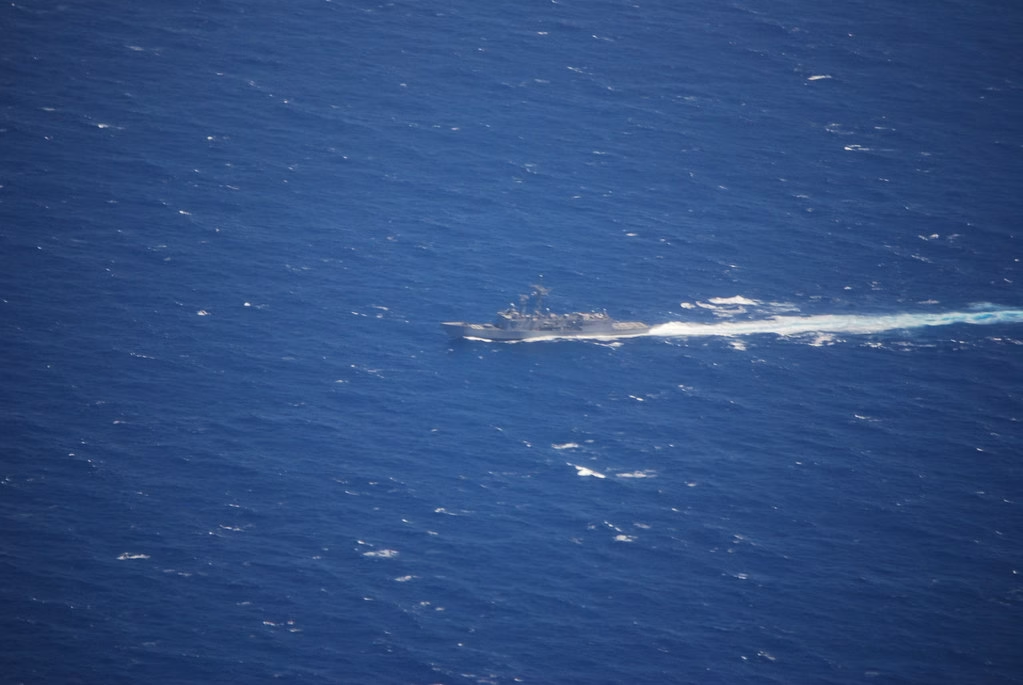
Hours after the news of Graham’s passing broke, the Pentagon confirmed that U.S. fighter jets and naval assets executed a series of coordinated strikes against military installations inside Iran. Defense Department officials stated the operations targeted drone manufacturing plants, command centers, and ammunition depots linked to hostile paramilitary groups. The administration described the action as a direct response to escalating provocations against American assets in the region.
This latest military action marks a significant escalation in the ongoing conflict between Washington and Tehran. The White House defended the strikes as a necessary measure of self-defense, citing intelligence that pointed to imminent threats against U.S. personnel and international shipping lanes. Pentagon officials emphasized that the operation was executed with precision to minimize civilian casualties while neutralizing key hostile capabilities.
Bipartisan Tributes and Political Shockwaves
In Washington, lawmakers from both sides of the aisle expressed shock and offered condolences to Graham’s family. President Joe Biden issued a statement praising Graham’s decades of public service, noting that despite their frequent political disagreements, the senator “always fought fiercely for what he believed in and loved his country deeply.” The bipartisan response highlighted Graham’s unique ability to build bridges across the aisle on key legislative matters.
Senate Minority Leader Mitch McConnell called Graham “a brilliant legal mind and a tireless champion for our armed forces.” Flags at the U.S. Capitol were lowered to half-staff on Saturday afternoon as colleagues gathered to pay their respects and absorb the sudden loss of one of the institution’s most prominent figures. The atmosphere in the Capitol was described by staffers as somber and tense given the concurrent geopolitical developments.
Meanwhile, South Carolina Governor Henry McMaster faces the immediate task of appointing a temporary successor to fill Graham’s seat. Under South Carolina law, the appointee will serve until a special election can be held, a process that political analysts say could alter the delicate balance of power in the Senate. This vacancy introduces a new variable into an already polarized legislative calendar.
Analyzing the Military Escalation
The timing of the U.S. airstrikes has drawn intense scrutiny from national security experts. While Pentagon officials maintained the timing was determined purely by operational readiness and intelligence windows, foreign policy analysts suggest the dual events present a moment of acute vulnerability and resolve for American leadership. The international community is watching closely to see how the U.S. manages this domestic transition alongside active military operations.
“The administration is signaling that even during a moment of domestic political transition and grief, American military readiness remains absolute,” said Dr. Evelyn Vance, a senior fellow at the Center for Strategic and International Studies. Vance noted that striking targets directly within Iran, rather than proxy locations in Iraq or Syria, represents a major shift in the rules of engagement and carries significant geopolitical risks.
Military spokespersons confirmed that all participating U.S. aircraft returned safely to their bases. Initial battle damage assessments indicate significant destruction of the targeted facilities, though Iranian state media has warned of “severe consequences” in response to the violation of their sovereignty. The potential for a wider retaliatory cycle remains a primary concern for defense planners in Washington.
Geopolitical and Legislative Paths Forward
The coming days will test both the legislative capacity of the U.S. Senate and the diplomatic resilience of the administration. Observers will closely monitor the appointment process in South Carolina, which could trigger a highly competitive primary season and reshape regional conservative politics. The loss of Graham’s voice on the Senate Armed Services Committee will also influence upcoming defense budget debates.
On the international stage, the immediate concern is whether Iran will choose to retaliate directly against U.S. bases or regional allies, potentially igniting a broader regional conflict. Congress is expected to convene emergency briefings early next week to address both the military strategy in the Middle East and the transition plans for the Senate committees left leaderless by Graham’s passing.

























Leave a Reply