


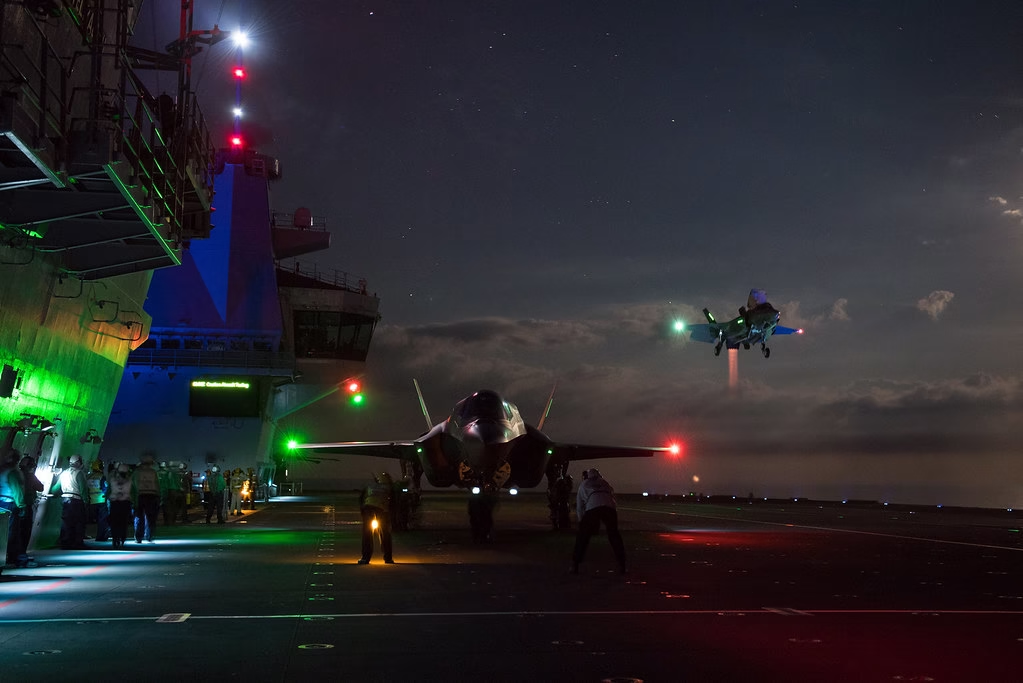
The United States military, directed by U.S. Central Command (CENTCOM), launched a fresh wave of precision airstrikes against Iranian-backed militant groups in the Middle East on Sunday night. The strategic operation targeted command-and-control nodes, weapons storage facilities, and training sites utilized by the Islamic Revolutionary Guard Corps (IRGC) and its affiliated militias. This decisive military action responds directly to a series of escalating drone and rocket attacks targeting American personnel stationed in Iraq, Syria, and the Red Sea over recent weeks.
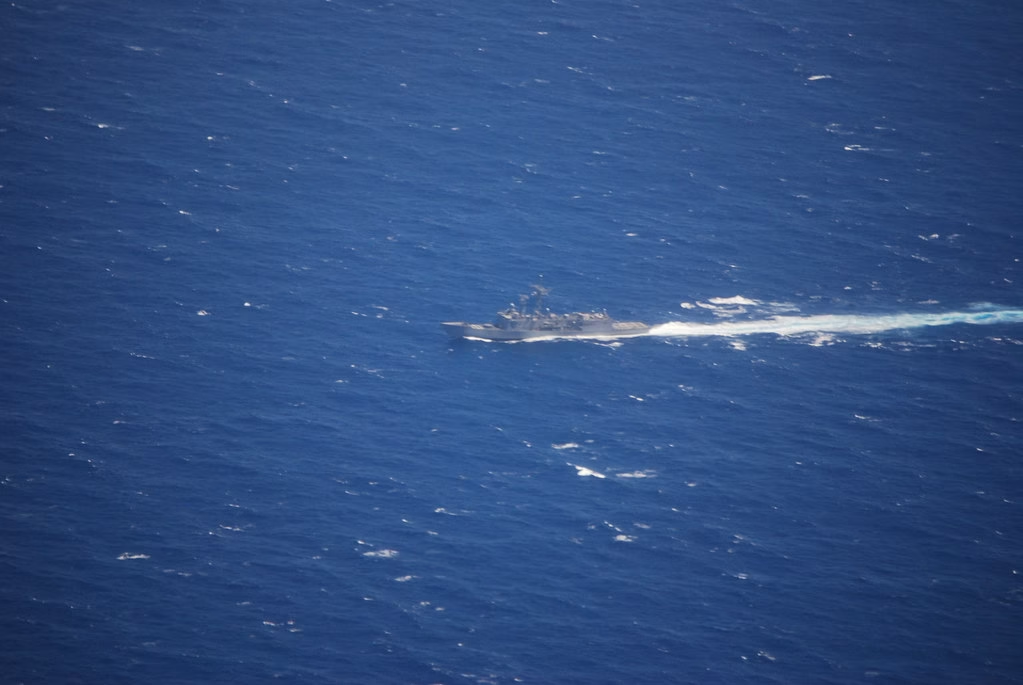
Pentagon officials confirmed that the strikes utilized precision-guided munitions deployed from both naval assets and manned aircraft. The coordinated operation represents the latest escalation in a highly volatile regional conflict that threatens to expand beyond its current borders. CENTCOM officials stated that the military action intends to degrade the operational capabilities of these proxy networks and deter further aggression against coalition forces.
Context of the Escalation
The geopolitical landscape in the Middle East has grown increasingly precarious since October, following the outbreak of the Israel-Hamas war. Iranian-backed proxy groups, including Kata’ib Hezbollah in Iraq and the Houthi movement in Yemen, have launched over 170 attacks against U.S. military installations and international shipping lanes. Washington has repeatedly warned Tehran that it holds the Islamic Republic directly responsible for the actions of its proxy forces.
Prior to Sunday’s strikes, the Biden administration signaled a shift toward a more aggressive deterrence posture. Previous rounds of retaliatory strikes had failed to halt the frequency of drone and missile launches targeting U.S. outposts like Tower 22 in Jordan, where three American service members lost their lives in January. This latest operation underscores a strategic pivot toward dismantling the infrastructure of these militant groups rather than merely responding to individual provocations.
Strategic Targets and Operational Execution
According to initial battle damage assessments released by CENTCOM, the Sunday night strikes successfully neutralized several key facilities. Intelligence reports indicated these sites served as primary logistics hubs for transferring Iranian-manufactured drones and precision missiles to local militia groups. U.S. forces targeted locations in both western Iraq and eastern Syria, operating along the strategic border corridor used for weapons smuggling.
Defense Secretary Lloyd Austin emphasized that the United States does not seek conflict in the Middle East but will not tolerate attacks on its personnel. “These strikes are intended to disrupt and degrade the capabilities of the IRGC and its affiliate groups,” Austin said in a press statement. “We will take all necessary actions to defend our people and hold those responsible accountable.”
Military analysts note that the use of heavy bombers, including B-1B Lancers in previous rounds, demonstrates the Pentagon’s capability to project immense firepower over long distances. Sunday’s operation relied on a combination of carrier-based F/A-18 Super Hornets and land-based strike aircraft, showcasing tactical flexibility and seamless coalition coordination.
Expert Perspectives on Deterrence
Defense analysts remain divided on the long-term efficacy of these military interventions. Some argue that persistent, high-impact strikes are essential to establishing a credible deterrent against Iranian regional ambitions. “Without a robust physical response, Iran and its proxies will continue to test American red lines,” said Jonathan Schanzer, senior vice president for research at the Foundation for Defense of Democracies.
Conversely, other foreign policy experts warn of the risk of miscalculation, which could trigger a direct military confrontation between Washington and Tehran. Data compiled by the Armed Conflict Location & Event Data Project (ACLED) suggests that localized airstrikes often result in temporary pauses rather than permanent cessation of militia activity. Critics argue that a purely military approach fails to address the underlying political drivers of the regional instability.
Furthermore, the Iraqi government has expressed strong objections to U.S. military actions within its sovereign borders. Baghdad officials labeled the strikes as a violation of Iraqi sovereignty, warning that such actions could jeopardize the future presence of the U.S.-led coalition tasked with defeating ISIS.
Regional Implications and What to Watch Next
In the coming days, observers will closely monitor the reaction from Tehran and its regional network of proxies. While Iran has publicly distanced itself from direct involvement in some of the militia attacks, its state media quickly condemned the U.S. strikes as “adventurism” and a violation of international law. The potential for asymmetrical retaliation, particularly through cyberattacks or renewed disruption of commercial shipping in the Bab al-Mandeb strait, remains high.
Domestically, the Biden administration faces growing scrutiny from both sides of the congressional aisle. Some lawmakers demand more decisive action directly against Iranian assets inside Iran, while others raise concerns over the constitutional authority of sustained military operations without explicit congressional authorization. The progression of these debates will likely shape U.S. defense policy and troop deployments in the region for the remainder of the year.
Additionally, diplomatic channels remain active behind the scenes as international mediators attempt to secure a lasting ceasefire in Gaza. Analysts emphasize that a diplomatic resolution to the broader regional conflict remains the most viable path to permanently reducing hostilities. Until such an agreement is reached, the risk of a broader regional war remains a critical concern for global security forces.

























Leave a Reply