


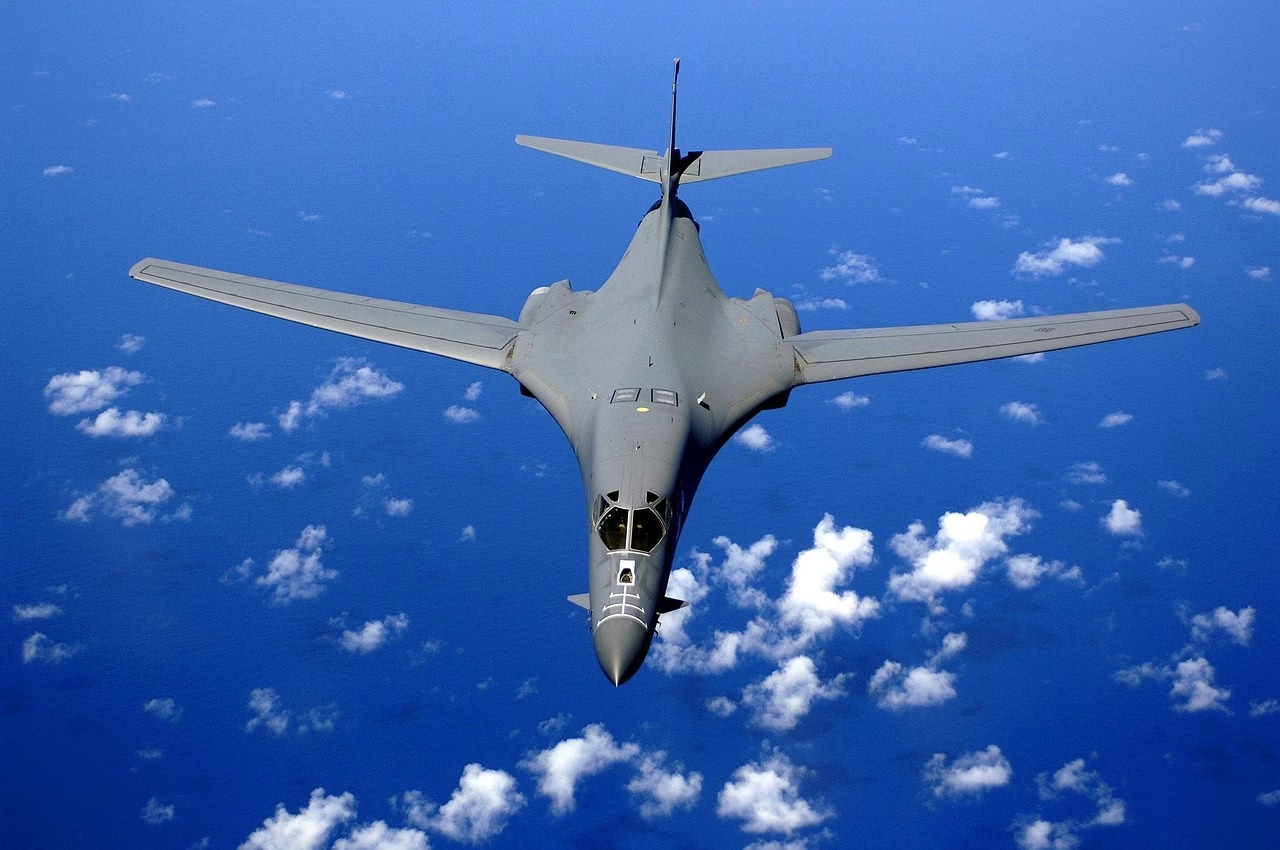
WASHINGTON — President Donald Trump has formally notified Congress that United States military action against Iran officially restarted last week, ending a fragile, months-long ceasefire that had temporarily calmed regional hostilities. The notification, delivered in a formal letter obtained by CBS News, marks a significant escalation in the long-running conflict between Washington and Tehran, shifting U.S. posture back to active deterrence and kinetic readiness in the Middle East.
The sudden resumption of military operations follows weeks of intelligence reports indicating heightened threats from Iranian-backed militias and renewed provocations in critical shipping lanes. Lawmakers on Capitol Hill received the notification under the War Powers Resolution, which requires the executive branch to keep Congress informed of active military engagements. The White House has not yet publicly disclosed the specific tactical triggers that prompted the end of the ceasefire.
The Breakdown of the Ceasefire
The now-collapsed ceasefire had provided a brief diplomatic window, pausing direct military exchanges that had previously threatened to spiral into a broader regional war. For several months, both nations had observed an unspoken truce, largely brokered through backchannel negotiations mediated by regional partners. This period of relative quiet allowed for a temporary stabilization of energy markets and a reduction in drone and rocket attacks on U.S. installations in Iraq and Syria.
However, defense analysts warn that the underlying geopolitical friction points were never fully resolved. The underlying issues—including Iran’s advancing uranium enrichment program, its support for regional proxy networks, and U.S. sanctions—continued to fester beneath the surface. The formal end of this pause suggests that diplomatic channels have exhausted their immediate utility, leaving military deterrence as the primary tool of U.S. policy.
Congressional Notification and Legal Frameworks
The War Powers Resolution of 1973 mandates that the president report to Congress within 48 hours of introducing U.S. Armed Forces into hostilities. By formally transmitting this letter, the administration satisfies its legal obligations while signaling to both domestic lawmakers and foreign adversaries that the U.S. is prepared to use force. The letter obtained by CBS News reportedly outlines the legal justification for the renewed operations, citing the need to protect national security interests and defend U.S. personnel abroad.
Reaction on Capitol Hill was swift and divided along familiar partisan lines. Senior members of the Senate Foreign Relations Committee expressed deep concern over the lack of a comprehensive, long-term strategy to prevent an all-out war. Conversely, defense hawks defended the administration’s decision, arguing that a strong military posture is the only language the regime in Tehran respects.
Multi-Angle Analysis: Regional and Domestic Reactions
The resumption of military action introduces immediate volatility into an already unstable region. In Tehran, state media reported that Iranian officials view the U.S. declaration as an act of aggression, warning that any hostile actions will meet with a “crushing response.” Regional allies, particularly Israel and Gulf Arab states, are closely monitoring the situation, balancing their security alliances with the fear of becoming targets in a wider conflict.
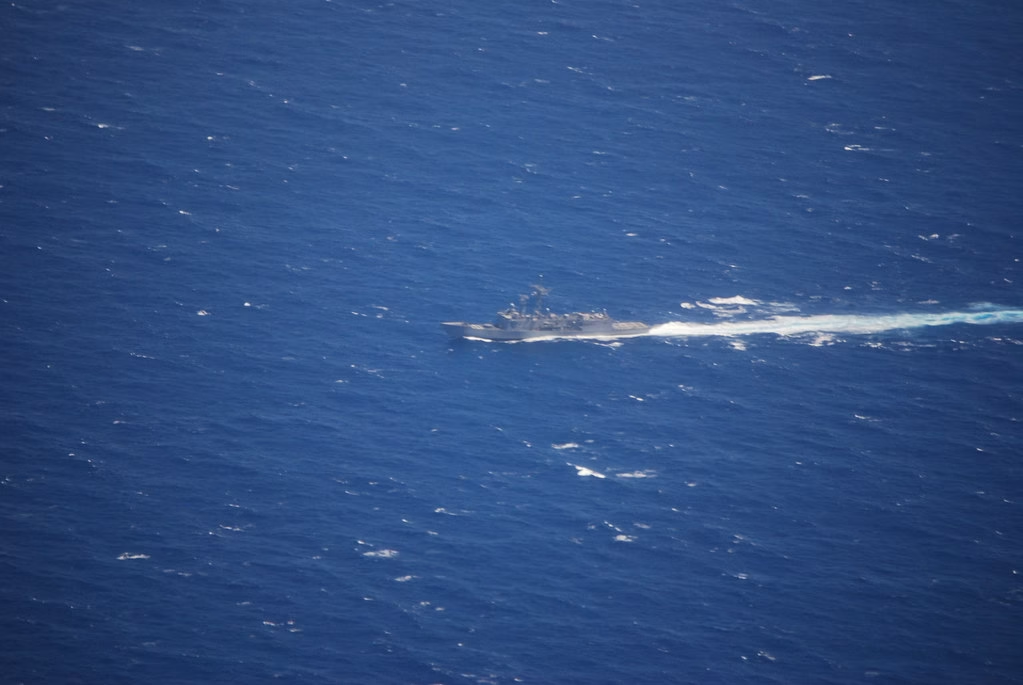
From a military standpoint, the Pentagon has reportedly adjusted its force posture in the region, positioning naval assets and strike aircraft to respond to potential contingencies. Defense officials, speaking on the condition of anonymity, indicated that the current operations focus on intelligence gathering, maritime patrols, and defensive positioning rather than immediate, large-scale offensive strikes. However, the threshold for escalation remains dangerously low.
Strategic Implications and Defense Analysis
Geopolitical experts suggest that the formal declaration is designed as a signaling mechanism rather than the prelude to an immediate invasion. “By putting this on the record, the administration is establishing a legal and political baseline for future actions,” said Dr. Evelyn Vance, a senior fellow at the Middle East Security Initiative. “It tells Iran that the rules of engagement have reverted to their pre-ceasefire status, where proxy attacks will be met with direct kinetic retaliation.”
Market reaction to the news was immediate, with global oil benchmarks rising by nearly two percent within hours of the report’s release. Economists warn that prolonged instability in the Persian Gulf, particularly around the strategic Strait of Hormuz, could disrupt global supply chains and fuel inflation. Approximately one-fifth of the world’s petroleum passes through this narrow waterway daily, making its security a vital global interest.
Escalation Risks and the Path Forward
In the coming weeks, observers will closely watch for signs of tactical escalation, such as increased drone deployments, cyber warfare campaigns, or maritime interceptions in the Persian Gulf. Diplomatic efforts are expected to shift toward the United Nations Security Council, where international powers like China and Russia will likely call for restraint. The primary challenge for the administration will be maintaining deterrence without triggering an unintended cycle of retaliation that could engulf the entire region.
As both Washington and Tehran prepare for a renewed period of confrontation, the potential for miscalculation remains high. Lawmakers are expected to demand classified briefings from defense officials to understand the specific intelligence that prompted this policy shift. Whether this formal notification serves as a successful deterrent or the opening salvo of a new conflict will depend heavily on the actions taken by both sides in the immediate future.

























Leave a Reply