


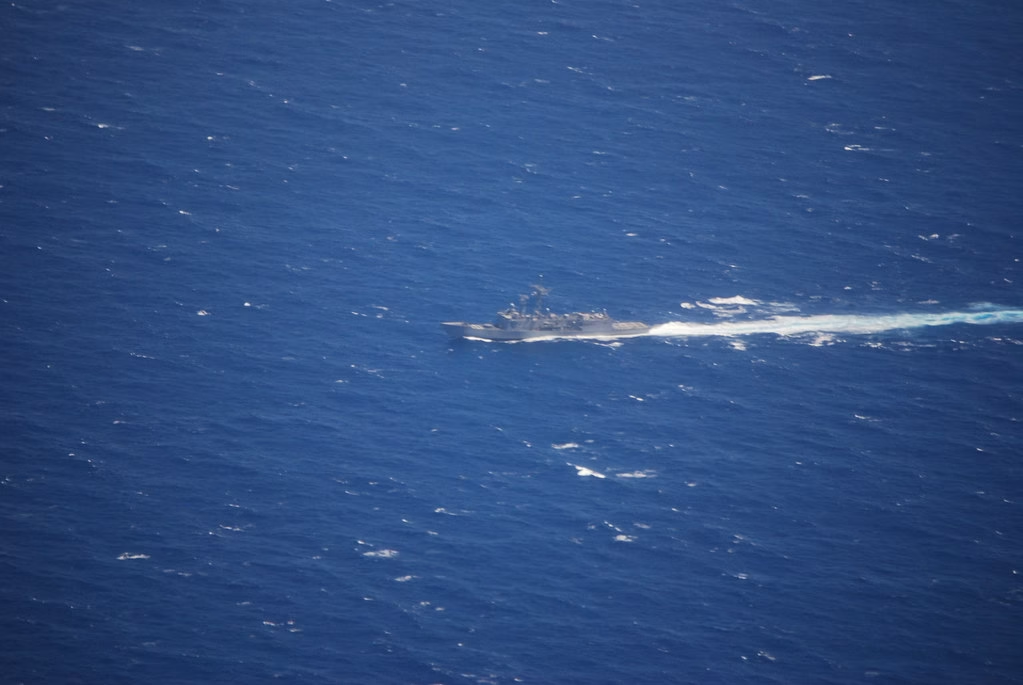
On Monday, the United States and Iran issued competing claims of control over the Strait of Hormuz, a critical global choke point for international shipping. This escalation follows a weekend of coordinated military strikes and drone attacks stretching across the wider Middle East, intensifying fears of a broader regional conflict and severe disruption to global energy supplies.
The Strategic Importance of the Strait of Hormuz
The Strait of Hormuz, a narrow waterway separating Iran from the Arabian Peninsula, serves as the primary artery for global oil transit. It connects the Persian Gulf with the Gulf of Oman and the Arabian Sea, making it one of the most geopolitically sensitive passages in the world.
According to the U.S. Energy Information Administration (EIA), approximately 21 million barrels of crude oil and petroleum products pass through the strait daily. This volume represents nearly 20% of the world’s total liquid petroleum consumption, making global energy markets highly sensitive to any instability in the region.
Control over this passage has historically been a flashpoint for diplomatic friction. While international law guarantees the right of transit passage for all vessels, Iran has repeatedly threatened to close the strait during periods of heightened international pressure or sanctions.
Escalating Rhetoric and Military Claims
Following a series of weekend strikes targeting military positions across Syria, Iraq, and Yemen, Iranian military officials asserted absolute authority over the strait. Tehran’s state media reported that the Islamic Revolutionary Guard Corps (IRGC) navy successfully monitored and challenged Western naval assets operating in the area, claiming total sovereignty over the waters.
In response, the U.S. Department of Defense rejected Iran’s assertions of dominance, reaffirming the U.S. military’s commitment to securing international shipping lanes. The U.S. Navy’s Fifth Fleet, headquartered in Bahrain, confirmed that its patrol operations remain active and unaffected by Iranian rhetoric.
“The United States will continue to fly, sail, and operate wherever international law allows,” a Pentagon spokesperson stated during a press briefing, emphasizing that the strait remains an international waterway. The U.S. military has maintained a persistent naval presence in the Gulf to deter potential interdictions of commercial vessels.
Legal Disagreements and Maritime Security Risks
The competing claims of control are rooted in long-standing legal disagreements regarding the United Nations Convention on the Law of the Sea (UNCLOS). While the United States recognizes the right of “transit passage” through international straits, Iran, which has signed but not ratified UNCLOS, argues that foreign warships require prior permission to transit its territorial waters.
Naval analysts warn that the presence of heavily armed warships in such close proximity increases the likelihood of tactical miscalculations. Even minor incidents can escalate rapidly when diplomatic communications between Washington and Tehran are virtually non-existent.
“The risk of miscalculation in these narrow waters is at an all-time high,” said Dr. Aris Roussinos, a maritime security analyst. “A single misidentified vessel or an accidental collision could trigger a rapid military escalation that neither side originally intended.”
Global Economic and Energy Implications
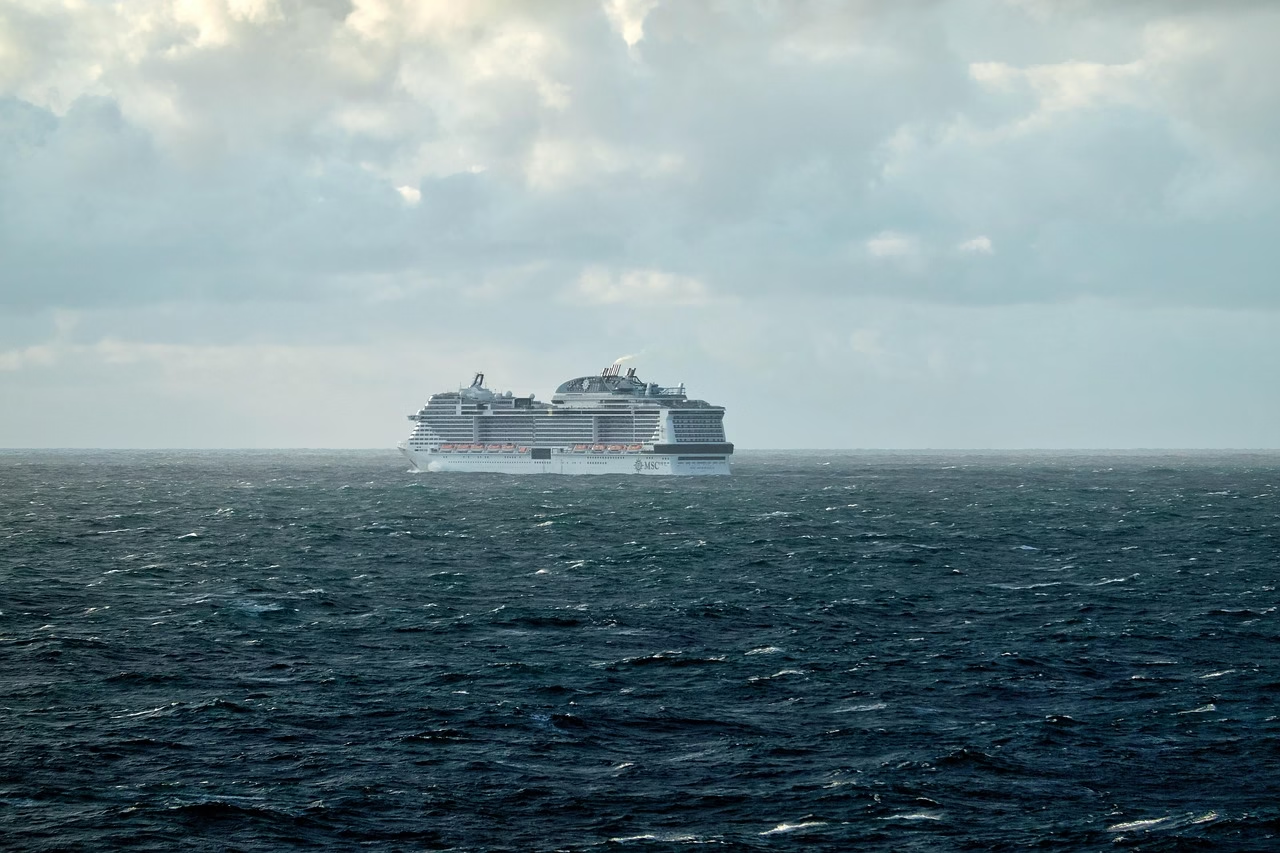
For global energy markets, the standoff presents an immediate threat of supply chain disruption and price volatility. Commercial shipping companies are already adjusting to the heightened risk environment, with several firms reporting a steep rise in war-risk insurance premiums for transit through the Gulf.
If tensions persist or escalate into physical blockades, shipping conglomerates may choose to reroute vessels around the Cape of Good Hope. This alternative route adds significant transit time and operational costs, which would ultimately be passed down to global consumers in the form of higher fuel and retail prices.
Furthermore, regional allies of both nations are bracing for the economic fallout. A closed or highly contested strait would severely damage the export-reliant economies of the Persian Gulf states, which depend on the uninterrupted flow of hydrocarbons to fund their national budgets.
What to Watch Next
In the coming weeks, international observers will closely monitor the deployment of additional naval coalition forces led by the United States and its allies to deter further provocations in the waterway. Diplomatic channels, particularly those mediated by regional intermediaries like Oman and Qatar, will be tested as they attempt to de-escalate the rhetoric before it manifests as physical interdiction on the water.
Additionally, market analysts will watch the daily Brent crude index, which historically spikes in response to physical threats in the Gulf, signaling how heavily investors weigh the probability of an actual maritime blockade.























Leave a Reply