


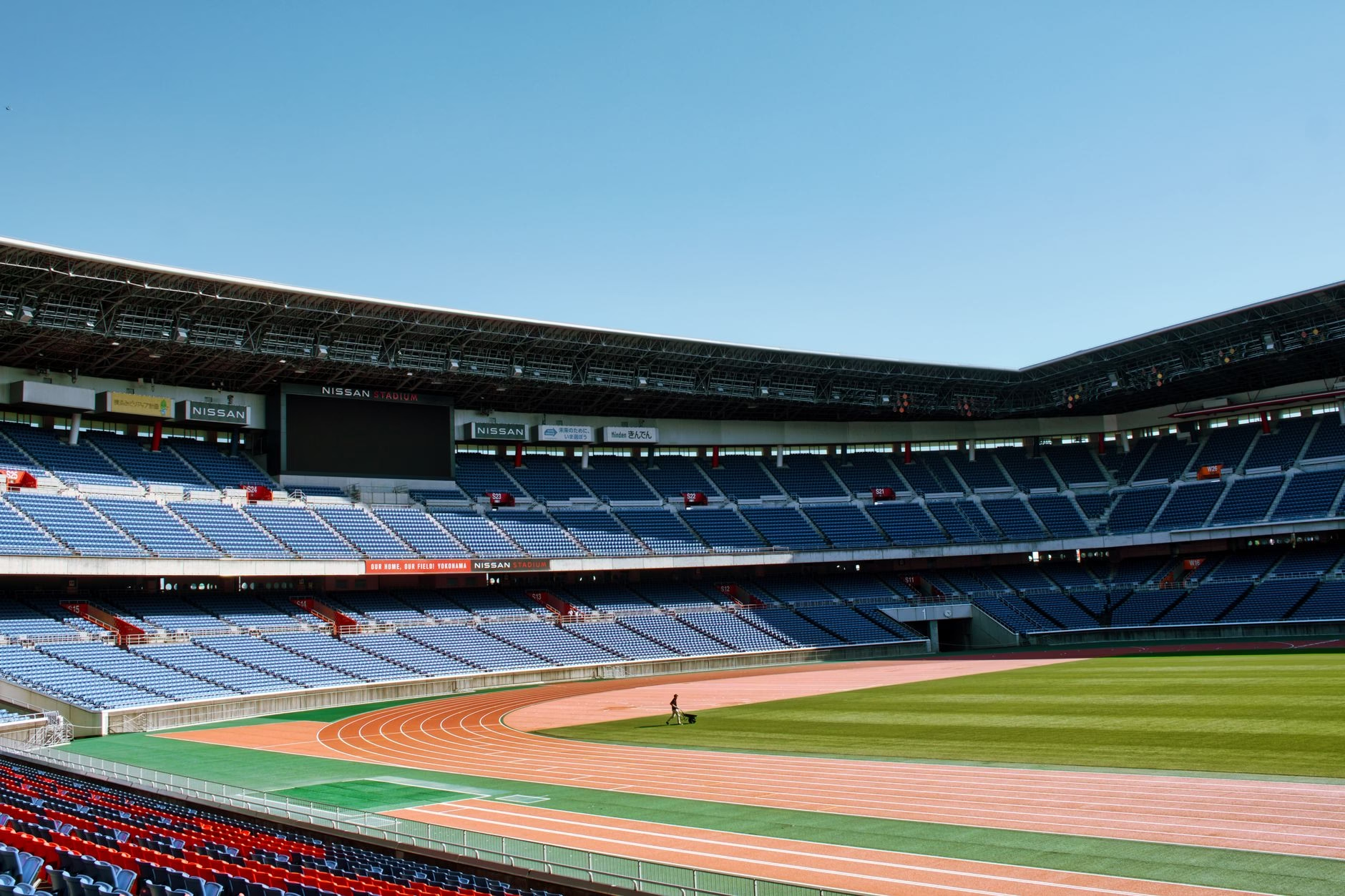
FIFA has officially unveiled the comprehensive match schedule for the expanded 2026 World Cup, setting the stage for an unprecedented 104-game tournament across the United States, Canada, and Mexico during June and July 2026. This historic expansion, designed to accommodate a record 48 competing nations, marks the first time three countries will co-host the world‘s most prestigious soccer event.
A Historic Expansion in North America
The 2026 tournament represents a major departure from the traditional 32-team format that FIFA has utilized since 1998. By increasing the field to 48 teams, soccer’s global governing body aims to broaden international representation and tap into growing North American commercial markets.
Mexico will make history as the first nation to host matches in three separate World Cups, having previously hosted in 1970 and 1986. Canada will host men’s World Cup matches for the first time, while the United States welcomes the tournament back for the first time since the record-breaking 1994 event.
The decision to expand the tournament has met with both enthusiasm and debate. While smaller footballing nations celebrate the increased opportunity to qualify, critics argue that the larger format could dilute the quality of play in the early stages of the competition.
Unprecedented Scale: ‘A Super Bowl Every Single Day’
With 104 matches packed into a 39-day window, the sheer scale of the tournament has generated immense excitement and logistical concern. United States men’s national team captain Tim Ream highlighted the magnitude of the event, telling CBS News that the tournament will feel like “a Super Bowl every single day for five weeks.”
FIFA confirmed that the opening match will take place on June 11, 2026, at the iconic Estadio Azteca in Mexico City. The tournament will culminate on July 19, 2026, with the final match scheduled at MetLife Stadium in East Rutherford, New Jersey, just outside New York City.
To mitigate travel fatigue for teams and fans, FIFA has divided the 16 host cities into three distinct regional zones: West, Central, and East. Teams will play their group-stage matches within these specific geographic clusters, a strategy designed to reduce flight times across multiple time zones.
Broadcasting and Economic Projections
Broadcasters are preparing for record-breaking viewership numbers as time zones across North America align perfectly with prime-time viewing hours in the Western Hemisphere. In the United States, Fox Sports holds the English-language broadcast rights, while Telemundo will provide Spanish-language coverage.
Economists project that the tournament will generate billions of dollars in economic activity across the host cities. According to a study by the Boston Consulting Group, host cities could see a net economic benefit ranging from $90 million to $480 million each, depending on the number of matches hosted.
However, local organizers face the daunting task of upgrading public transportation systems and stadium infrastructure to meet FIFA’s strict requirements. Several NFL stadiums, including AT&T Stadium in Dallas and Mercedes-Benz Stadium in Atlanta, must temporarily replace their artificial turf fields with natural grass surfaces to comply with tournament regulations.
Logistical Hurdles and Environmental Impact
Environmental groups have also raised concerns regarding the carbon footprint of a tournament spanning an entire continent. Despite the regionalized group stages, the knockout rounds will still require significant air travel for teams, staff, and hundreds of thousands of international fans.
FIFA has pledged to work with local host cities to implement sustainability initiatives, including green transit options and waste reduction programs. However, experts note that balancing environmental goals with the massive logistical demands of a 48-team tournament remains one of the event’s greatest challenges.
Security operations will also reach unprecedented levels, requiring coordination between federal agencies across three sovereign nations. The U.S. Department of Homeland Security, along with its Canadian and Mexican counterparts, has already begun establishing joint task forces to manage border crossings and event security.
What to Watch Next
As the countdown to June 2026 continues, national teams worldwide are currently competing in rigorous qualification campaigns to secure one of the coveted 48 spots. FIFA expects to finalize the official tournament draw in late 2025, which will determine the exact matchups and group placements.
In the coming months, local organizing committees will launch the first phase of ticket sales and volunteer recruitment campaigns. City planners and security agencies are also scheduled to begin joint-agency simulation exercises to ensure safety across all 16 host metropolitan areas during the five-week soccer spectacle.






















Leave a Reply