


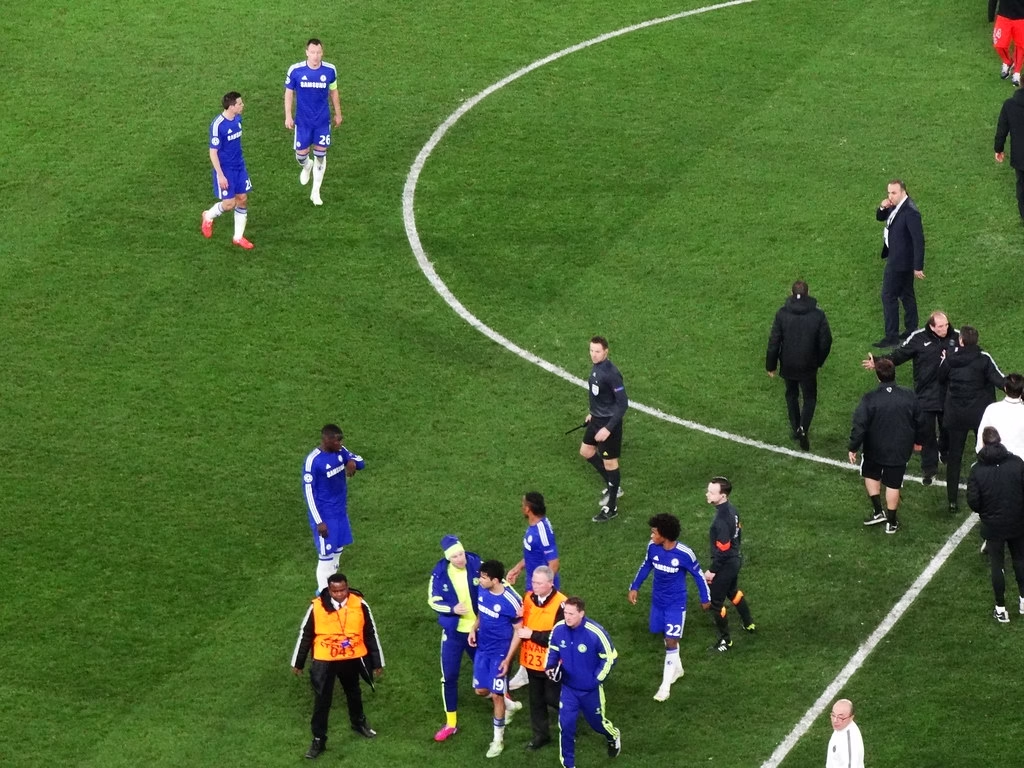
Folarin Balogun returned to the pitch for the United States men’s national team during their Round of 16 World Cup clash against Belgium this week, but his reappearance could not prevent a decisive 4-1 elimination from the tournament. After serving a mandatory suspension that sidelined him for the final group stage fixture, the striker was expected to provide the offensive spark necessary to overcome a disciplined Belgian side. Instead, the match concluded with a lopsided defeat that brings a premature end to the American campaign on the global stage.
Contextual Challenges for the U.S. Attack
The United States entered the knockout phase facing significant pressure to prove their standing among elite international programs. Balogun, who has been a focal point of the U.S. attacking strategy since his high-profile recruitment to the national program, was anticipated to be the primary threat against a veteran Belgian defense.
However, the transition back into the starting lineup proved difficult. With the U.S. struggling to maintain possession in the midfield, Balogun found himself isolated for long stretches of the game. The team’s inability to link play between the defensive third and the forward line effectively neutralized the impact of their primary striker.
Tactical Mismatches and Performance Analysis
Belgium’s tactical approach centered on aggressive high pressing, which forced the U.S. into uncharacteristic turnovers. Data from the match indicates that the Americans completed only 72% of their passes, a figure that highlights the breakdown in transition play. Balogun recorded only 14 touches throughout his time on the field, reflecting a lack of service rather than a lack of intent.
Sports analysts noted that the American side appeared disjointed after the suspension-induced rotation. While Balogun provided physical presence, the fluidity the team displayed earlier in the tournament was missing. Belgium exploited these gaps, consistently finding space behind the American wingbacks to secure their four-goal tally.
Expert Perspectives on Strategic Depth
Soccer commentators have pointed to the dependency on specific personnel as a potential vulnerability for the current U.S. roster. The reliance on Balogun to carry the offensive load suggests a lack of depth in the final third when the primary game plan is disrupted. Critics argue that the coaching staff failed to adjust their tactics once it became clear that the long-ball approach was failing to connect with the forward.
Statistical indicators show that while the U.S. maintained a competitive edge in possession during the group stage, they were outmatched in shot conversion rates against higher-ranked opponents. This disparity was on full display in the loss to Belgium, where clinical finishing proved to be the differentiator between the two squads.
Future Implications for the National Program
This exit initiates a period of critical evaluation for the U.S. Soccer Federation. The focus will likely shift to developing a more robust tactical system that does not rely solely on individual brilliance to unlock opposing defenses. Observers should watch for upcoming roster shuffles and potential shifts in training philosophy as the program begins its preparation for the next international cycle.
The coming months will also determine how the coaching staff addresses the lack of creative midfield support for the attacking line. Whether the team can develop the tactical flexibility to adapt to high-pressing opponents will be the primary metric for success in future continental tournaments.




















Leave a Reply