


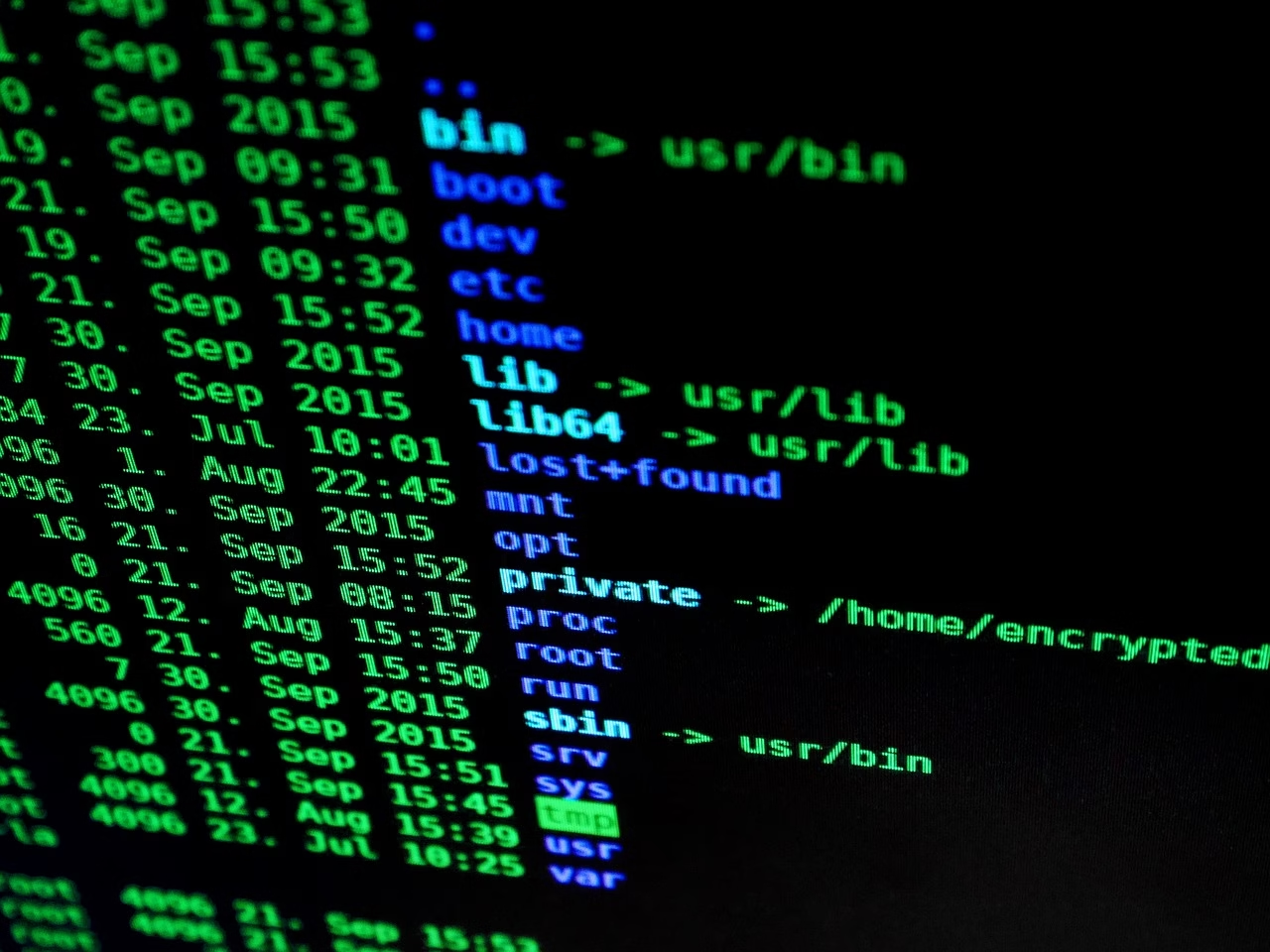
On July 12, 2026, House Intelligence Committee Chairman Mike Turner (R-Ohio) issued a stark warning during an appearance on CBS’s “Face the Nation with Margaret Brennan,” stating that foreign adversaries have dramatically accelerated cyber penetration into United States critical infrastructure. Speaking from Washington, D.C., Turner emphasized that declassified intelligence reveals active, state-sponsored efforts by China, Russia, and Iran to pre-position malware within American electrical grids, water treatment facilities, and transportation networks. The Ohio Republican urged immediate, bipartisan action to fortify domestic defenses ahead of the upcoming 2026 midterm elections.
A Growing Pattern of Digital Infiltration
The warnings delivered by Representative Turner build upon years of escalating alarm from the U.S. intelligence community regarding foreign cyber operations. In early 2024, federal agencies exposed “Volt Typhoon,” a state-sponsored cyber actor group backed by the Chinese government that had compromised multiple managed service providers and critical infrastructure sectors. Intelligence officials warned at the time that the group was not seeking immediate espionage, but rather establishing a foothold to disrupt systems during a future geopolitical crisis.
By mid-2026, these efforts have reportedly transitioned from passive reconnaissance to active preparation for potential disruption. According to Turner, recent intelligence briefs indicate that these digital incursions have grown more sophisticated, utilizing advanced artificial intelligence to bypass traditional firewalls. The House Intelligence Committee has shifted its focus toward assessing how these vulnerabilities could be weaponized to sew chaos or influence domestic policy.
The Threat to the 2026 Midterm Elections
A primary concern highlighted during Turner’s interview is the potential disruption of the November 2026 midterm elections. While federal agencies maintain that voting machines themselves remain largely secure, the vulnerability of surrounding infrastructure presents a different kind of threat. Disruption to local power grids or public transportation on election day could severely suppress voter turnout and undermine public trust in the democratic process.
“We are no longer looking at threats that exist only in theory,” Turner told host Margaret Brennan. “Our adversaries are inside our networks, waiting for the opportune moment to exploit these vulnerabilities. If a major metropolitan area loses power on election day, the psychological impact alone would be devastating to our democratic institutions.”
The Federal Bureau of Investigation (FBI) and the Cybersecurity and Infrastructure Security Agency (CISA) have echoed these concerns in recent joint advisories. Analysts note that foreign campaigns are increasingly combining cyber-physical threats with targeted disinformation operations designed to exploit societal divisions.
The Role of Emerging Technologies and Legacy Systems
A major complicating factor in securing domestic infrastructure is the widespread reliance on legacy industrial control systems. Many of the nation’s water treatment plants and regional power grids operate on technology designed decades ago, long before modern internet connectivity was integrated. These systems lack the encryption and security protocols necessary to withstand sophisticated intrusions from foreign military units.
Furthermore, Turner pointed out that adversaries are leveraging artificial intelligence to automate vulnerability detection and generate highly convincing phishing campaigns. AI allows hostile actors to scan millions of public-private networks simultaneously, identifying weak points in minutes that previously took human analysts weeks to discover. This technological leap has effectively leveled the playing field, allowing smaller state actors and proxy groups to launch highly disruptive campaigns.
Strengthening Alliances and Global Deterrence
To counter this decentralized threat, the United States is increasingly leaning on its international intelligence partnerships. The “Five Eyes” alliance—comprising the U.S., the United Kingdom, Canada, Australia, and New Zealand—has intensified its joint monitoring of state-sponsored hacking groups. In recent months, the alliance has issued several coordinated attributions, publicly naming specific foreign military units responsible for malicious cyber activity.
This strategy of public naming and shaming aims to deter future attacks by exposing the identities and methods of foreign operatives. However, intelligence experts warn that deterrence remains difficult to achieve when adversaries operate with impunity within their home borders. The lack of international cyber norms or binding treaties further complicates efforts to establish clear boundaries for digital conflict.
Bipartisan Response and Legislative Friction
Despite the consensus on the severity of the threat, Capitol Hill remains divided on the best mechanism to fund and enforce stricter cybersecurity standards. Turner called for streamlined communication between the private sector—which owns and operates over 80 percent of U.S. critical infrastructure—and the federal intelligence apparatus. He argued that bureaucratic red tape currently prevents real-time threat sharing, leaving private utility companies vulnerable to state-backed hackers.
However, some lawmakers argue that voluntary sharing is insufficient and are pushing for mandatory cybersecurity regulations with strict penalties for non-compliance. Industry groups have resisted these measures, citing the high cost of compliance and the rapid pace of technological change. Turner advocated for a middle ground, suggesting targeted federal subsidies to help municipal utility providers upgrade their legacy systems.
Data from the Center for Strategic and International Studies (CSIS) indicates that cyberattacks on critical infrastructure globally have increased by 45 percent over the past two years. The energy sector remains the most targeted, followed closely by healthcare and public water systems, highlighting the urgent need for a coordinated national defense strategy.
Implications for the Private Sector and National Security
The escalating threat landscape holds significant implications for both national security policymakers and private enterprise. For utility companies and municipal governments, the pressure to secure networks against nation-state actors will likely result in increased capital expenditure on cybersecurity personnel and software. Companies failing to secure their systems may face heightened liability, regulatory scrutiny, and reputational damage.
On a broader scale, the weaponization of critical infrastructure shifts the nature of modern warfare, blurring the lines between peacetime competition and active conflict. Deterrence in the digital age will require the U.S. to demonstrate not only robust defensive capabilities but also a credible threat of offensive cyber retaliation.
Looking ahead, observers should monitor upcoming congressional hearings scheduled for late July, where top intelligence officials are expected to testify on foreign cyber interference. Additionally, the implementation of new CISA reporting rules for cyber incidents will serve as a critical test of the public-private partnership model. How effectively the U.S. coordinates its defense over the next four months may well determine the stability of the upcoming electoral cycle.


























Leave a Reply