


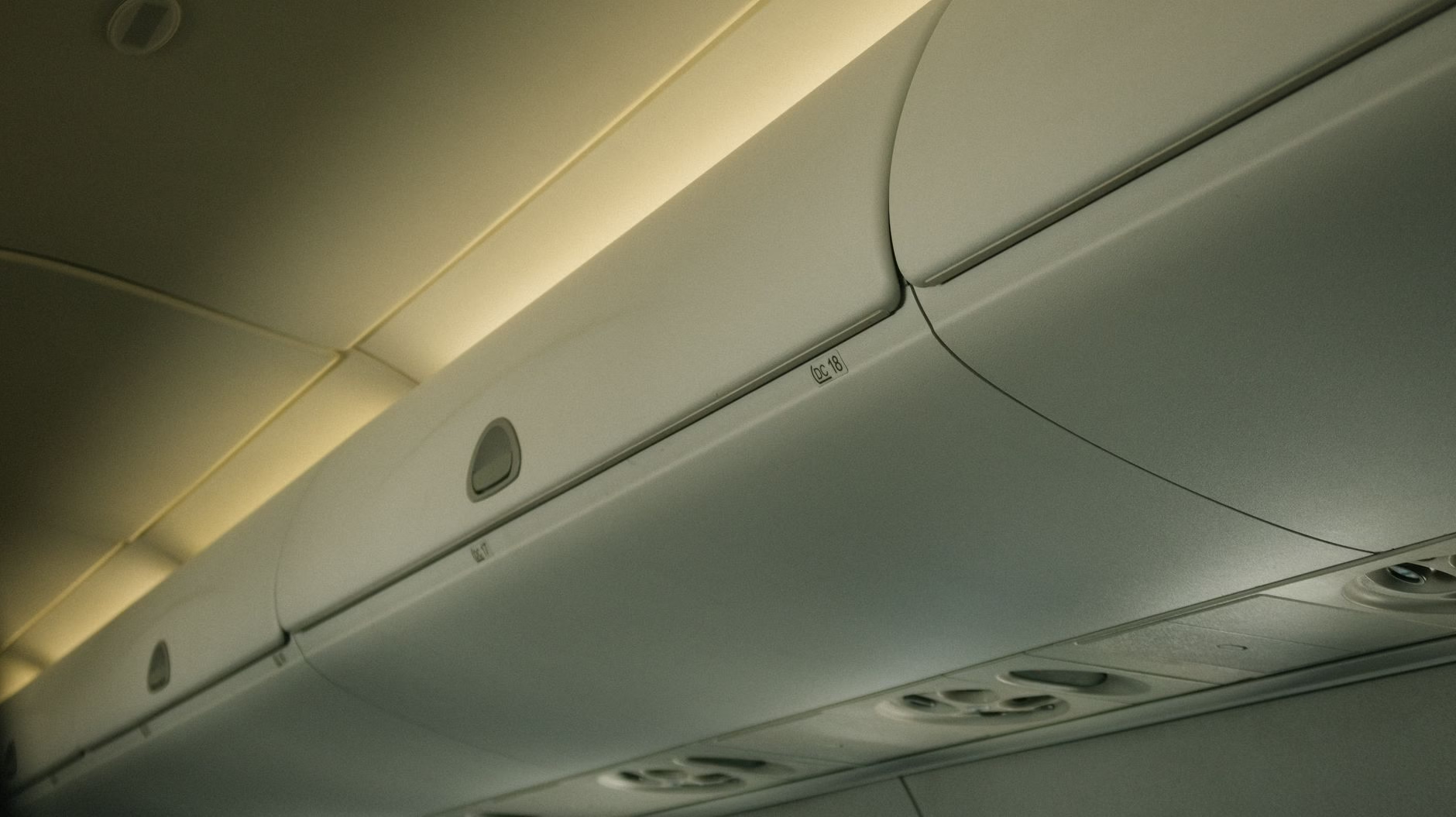
BELGRADE — Svetlana Grković spoke out on Tuesday regarding the harrowing mid-air decompression over Eastern Europe last week that nearly claimed her husband’s life when he was partially sucked out of a cabin window at 28,000 feet. The incident, which occurred aboard a regional commercial flight bound for Belgrade, has triggered a sweeping international aviation safety investigation and left the couple grappling with profound physical and psychological trauma.
A Sudden Void at 28,000 Feet
The flight was cruising at its scheduled altitude when a passenger window suddenly failed, causing an instantaneous loss of cabin pressure. The violent rush of escaping air partially pulled Grković’s husband through the opening before fellow passengers and cabin crew managed to drag him back inside.
“If we die, we die together,” Svetlana Grković recalled thinking during the chaotic moments, describing the absolute terror inside the cabin as oxygen masks dropped and the aircraft began an emergency descent. She held her husband’s hand tightly as cabin crew fought against the extreme wind resistance and freezing temperatures to secure him.
Her husband survived the ordeal but remains hospitalized in a state of shock, recovering from serious physical injuries. Svetlana Grković confirmed that while his physical wounds are being treated, both of them are suffering from severe post-traumatic stress and mental exhaustion.
The Physics and History of Mid-Air Breaches
Explosive decompression at high altitudes is one of the most feared scenarios in commercial aviation. When a cabin wall or window breaches, the pressure differential between the pressurized interior and the thin outside air equalizes violently within milliseconds.
Historical data from the Flight Safety Foundation indicates that while structural cabin breaches are exceptionally rare—occurring in fewer than one in ten million flights—they carry an extremely high fatality risk. The force of the escaping air can easily pull unsecured objects, and even passengers, out of the aircraft.
Similar incidents have shaped aviation history. In 1990, British Airways Flight 5390 experienced a windshield blowout that partially sucked the captain out of the cockpit, a situation survived only through the heroic efforts of the crew. More recently, in 2018, a window failure on Southwest Airlines Flight 1380 resulted in a passenger fatality, highlighting the persistent danger of cabin breaches.
Aviation investigators are currently focusing on the structural integrity of the aircraft’s window assembly. Initial reports suggest that micro-fractures in the acrylic pane or fatigue in the surrounding sealant may have contributed to the sudden failure under high pressure.
The Invisible Scars: Psychological Trauma
While physical recovery is the immediate priority, mental health professionals warn that the psychological scars of surviving a near-fatal aviation incident can persist for years. Svetlana Grković emphasized that the mental anguish has been just as debilitating as her husband’s physical wounds.
“The shock does not leave you when the plane lands,” said Dr. Elena Rostova, a clinical psychologist specializing in disaster trauma. “Survivors of mid-air emergencies often experience severe panic attacks, survivor’s guilt, and prolonged insomnia.”
Airlines are increasingly being urged to provide long-term psychiatric support for passengers involved in catastrophic inflight events, a service that advocates say is currently inconsistent across the industry. For the Grković family, the road to recovery will require extensive therapy to process the sheer terror of those minutes in the air.
Aviation Safety and Regulatory Response
The incident has put immediate pressure on aviation regulatory bodies to review maintenance inspection cycles for aging aircraft. The European Union Aviation Safety Agency (EASA) announced it is cooperating with local transport safety boards to determine if a fleet-wide directive is necessary.
Industry analysts suggest that the probe could lead to stricter testing mandates for cabin windows, particularly utilizing advanced non-destructive testing (NDT) methods to detect microscopic stress cracks before they fail. Currently, visual inspections are the standard, but experts argue they may not be sufficient to detect internal material fatigue.
In the coming months, investigators will analyze the aircraft’s maintenance logs and flight data recorders to pinpoint the exact sequence of the structural failure. Airlines worldwide will be watching the final report closely to adjust their safety protocols and prevent similar mid-air nightmares.

























Leave a Reply