


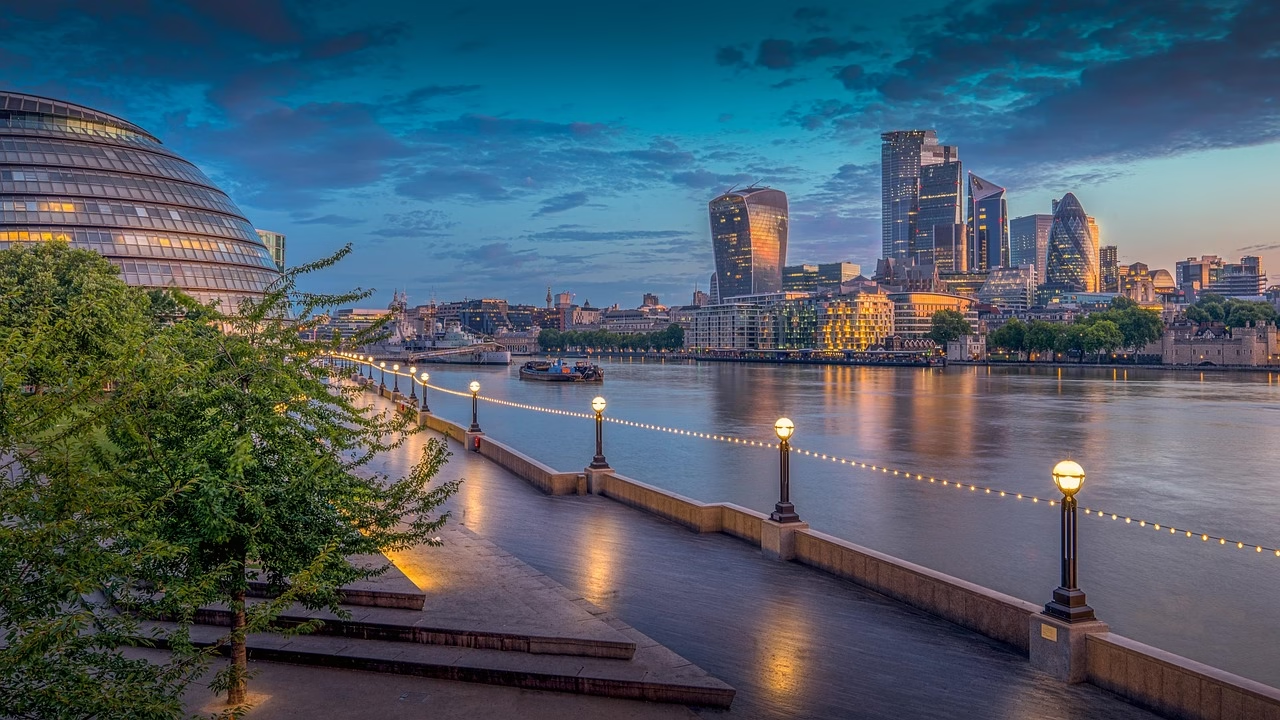
Brookfield Asset Management, one of the world’s largest alternative asset managers, announced this week that it plans to develop high-capacity data centers in London’s Canary Wharf. This strategic move, confirmed by CEO Bruce Flatt, aims to meet the surging demand for artificial intelligence infrastructure across the United Kingdom as the financial district pivots toward becoming a global tech hub.
The Evolution of a Financial Hub
Canary Wharf, historically recognized as London’s primary financial center and home to global banking giants, has faced significant pressure as traditional office footprints shrink. In response, developers are aggressively repurposing real estate to accommodate the digital economy.
Data centers have become the new gold standard for institutional investors. With the rapid integration of generative AI across corporate sectors, the requirement for localized, high-density computing power has reached an all-time high.
Meeting the AI Compute Demand
The transition toward AI-driven infrastructure requires massive, specialized facilities capable of housing thousands of high-performance GPUs. Brookfield’s entry into the Canary Wharf market signals a shift in how urban centers accommodate the physical hardware backbone of the digital age.
Industry analysts note that the U.K. is currently experiencing a critical shortage of data center capacity. According to data from real estate firm CBRE, vacancy rates in major European markets remain at historic lows, driving up rental premiums for facilities with robust power connectivity.
Expert Perspectives on Infrastructure
Energy access remains the primary hurdle for large-scale data center deployment. Experts suggest that placing these facilities within established business districts offers unique advantages, particularly in terms of existing power grid proximity and high-speed fiber optic connectivity.
“The convergence of financial services and artificial intelligence is creating a unique real estate play,” said market analyst Sarah Jenkins. “By utilizing existing infrastructure in Canary Wharf, Brookfield is effectively shortening the deployment timeline for firms that cannot afford to wait for greenfield developments in remote areas.”
Broader Industry Implications
For investors, this shift indicates that the commercial real estate market is increasingly bifurcated. Traditional office assets are struggling, while industrial-grade digital infrastructure is seeing massive capital inflows.
For the U.K. technology sector, the presence of these data centers provides the necessary latency advantages for local startups and international firms alike. It positions London as a competitive peer to U.S. tech corridors that have long benefited from proximity to major compute hubs.
Future Outlook
The coming year will likely see a wave of similar repurposing projects as developers race to secure power contracts and planning permissions. Observers should watch for how local government regulations evolve to balance the intense energy consumption of these facilities with the city’s ambitious net-zero carbon targets. Further announcements regarding the specific power capacity and cooling technologies of the Canary Wharf facilities are expected in the third quarter.






















Leave a Reply