


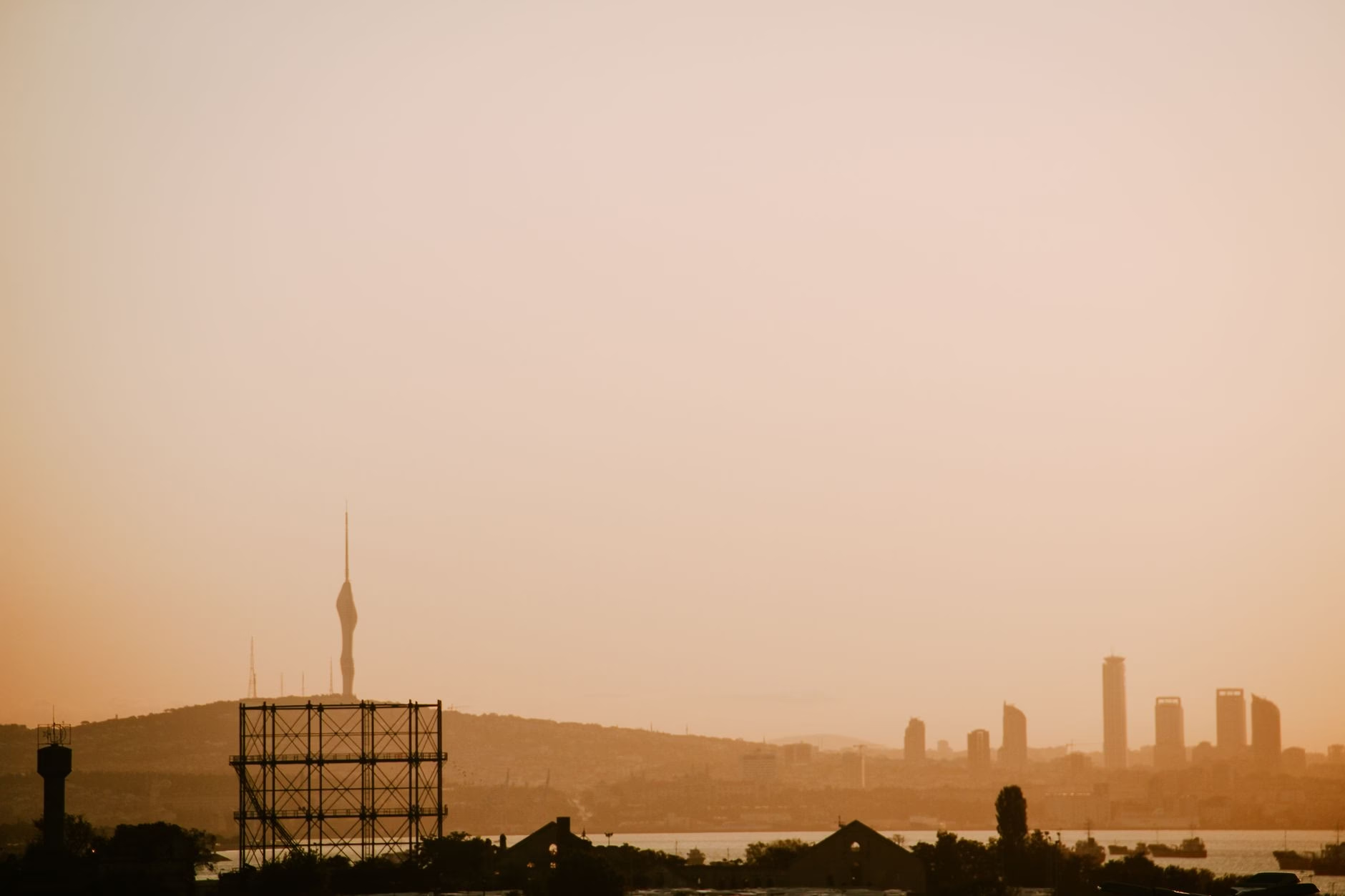
Millions of residents across the U.S. Midwest and East Coast are facing dangerous air quality conditions this week as heavy smoke from massive active wildfires in Canada and northern Minnesota blankets a vast portion of the country. Environmental protection agencies issued Code Orange and Code Red air quality alerts spanning from the Great Lakes region to the Atlantic seaboard, urging vulnerable populations to limit outdoor activities. The sudden influx of fine particulate matter, driven by shifting atmospheric wind patterns, has once again cast a hazy shroud over major metropolitan areas.
The Root of the Haze
The current air quality crisis stems from dozens of out-of-control wildfires burning through dried forest lands in western and central Canada, compounded by localized blazes in northern Minnesota. Dry winter conditions and an early spring warm-up have left northern forests highly susceptible to ignition. Strong high-pressure systems sitting over central North America are acting as a conveyor belt, channeling the resulting smoke plumes thousands of miles southward into densely populated U.S. corridors.
This atmospheric setup closely mirrors the historic wildfire season of last year, which saw New York City and other eastern hubs plunged into an eerie orange twilight. Meteorologists note that while the current volume of smoke has not yet reached those historic extremes, the geographic footprint of the affected area remains unusually large for this time of year. State climatologists warn that these early-season fires indicate a prolonged and potentially severe burning season ahead.
Tracking the Plumes and Health Risks
Data from the U.S. Environmental Protection Agency (EPA) and the AirNow tracking system show Air Quality Index (AQI) values climbing past 150 in cities like Chicago, Detroit, and Cleveland. An AQI level above 150 is classified as “unhealthy,” meaning the general public may begin to experience health effects, while sensitive groups could experience more serious issues. The primary culprit in wildfire smoke is PM2.5, microscopic liquid and solid droplets that can penetrate deep into the lungs and enter the bloodstream.
In cities like Pittsburgh and Philadelphia, local officials reported a sudden spike in emergency room visits for asthma-related complaints shortly after the smoke arrived. “The physical toll of PM2.5 exposure is immediate for many of our patients,” said Dr. Elena Rostova, a pulmonologist at UPMC. “Even healthy individuals are reporting scratchy throats, watery eyes, and mild headaches, which are classic signs of acute exposure to wood smoke toxins.”
Health departments across multiple states have issued joint advisories recommending that children, the elderly, and individuals with pre-existing respiratory conditions such as asthma or chronic obstructive pulmonary disease (COPD) remain indoors. Health experts also advise utilizing high-efficiency particulate air (HEPA) filters and wearing N95 masks for those who must work outdoors. Major athletic leagues and school districts are actively monitoring the situation, with several outdoor events already postponed or moved indoors.
Expert Perspectives and Meteorological Outlook
“We are seeing a persistent pattern where dry Canadian air masses are driving these smoke plumes directly into the heart of the U.S. population centers,” says Dr. Aris Papadopoulos, an atmospheric scientist specializing in air pollution. “With climate change accelerating the drying of boreal forests, these smoke transport events are transitioning from rare anomalies to seasonal expectations.” Researchers emphasize that the transboundary nature of wildfire smoke complicates local air quality management efforts, as local emissions reductions cannot offset the massive influx of foreign particulate matter.
According to the Canadian Interagency Forest Fire Centre (CIFFC), the number of active fires is tracking significantly higher than the ten-year average for this month. This data supports the fears of U.S. environmental officials who argue that traditional summer pollution mitigation strategies are no longer sufficient. “We can control our local factory and vehicle emissions, but we cannot control a wildfire burning a thousand miles away,” noted Susan Vance, a regional director at the Midwest Clean Air Coalition.
Satellite imagery from the National Oceanic and Atmospheric Administration (NOAA) shows the dense smoke transit path cutting across the Dakotas, dipping through the Great Lakes, and stretching toward the mid-Atlantic. Forecasters predict that a shifting weather front later in the week may temporarily disperse the smoke, but warn that any subsequent shifts in wind direction could easily bring the haze back. The unpredictability of these patterns has left local governments scrambling to establish more resilient public warning systems.
Long-Term Implications and What to Watch
The recurring air quality alerts are forcing a broader conversation about public health infrastructure and climate adaptation strategies. Municipalities are beginning to invest in public “clean air shelters” and upgrading filtration systems in public schools and community centers. On an industrial level, businesses that rely on outdoor labor, such as construction and agriculture, are facing pressure to implement stricter safety protocols for air quality hazards.
Moving forward, observers should monitor how state and federal regulators adapt air quality standards to account for uncontrollable wildfire events. Additionally, the progression of the Canadian wildfire season over the next two months will dictate whether the U.S. East Coast and Midwest must endure a summer-long cycle of hazy skies and health warnings. Climatologists will be watching soil moisture levels and temperature anomalies in the northern forests closely to predict the next wave of smoke transport.


























Leave a Reply