


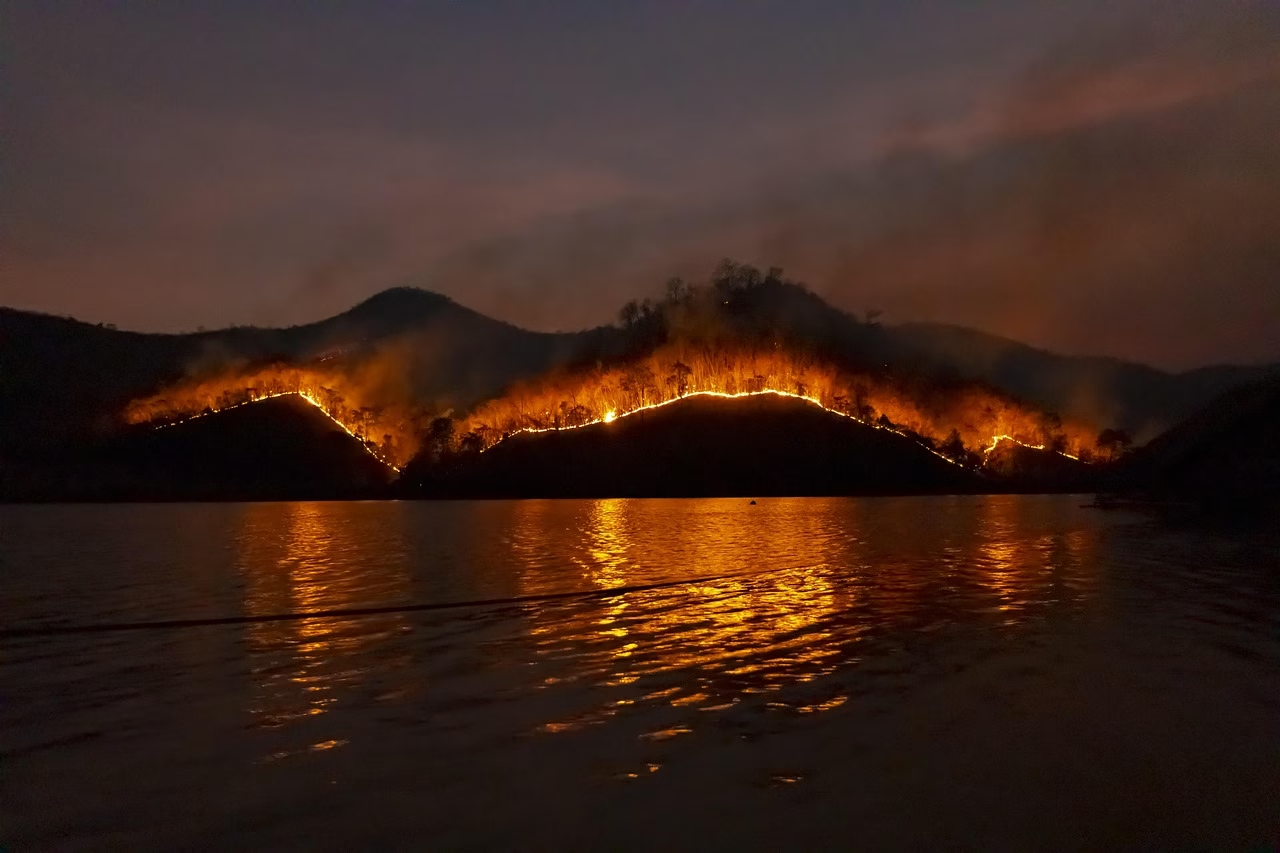
Former U.S. President Donald Trump has threatened to levy new pollution-related tariffs on Canadian goods, responding to heavy wildfire smoke from Canada that is currently blanketing major American cities. Speaking at a campaign event, Trump stated that the U.S. would calculate the economic and environmental costs of the drifting smoke and append those charges directly to existing trade duties. The escalating air quality crisis has already triggered health advisories across the U.S. East Coast and cast uncertainty over major upcoming outdoor events, including the World Cup final scheduled to take place at MetLife Stadium in New Jersey.
The Transboundary Smoke Crisis
Over the past several years, Canadian wildfires have intensified in frequency and scale, driven by prolonged droughts and rising temperatures. The resulting plumes of fine particulate matter, known as PM2.5, routinely cross the northern border, turning skies orange and forcing millions of Americans indoors. According to data from the U.S. Environmental Protection Agency (EPA), recent smoke events have pushed Air Quality Index (AQI) readings well into the “unhealthy” and “hazardous” categories in states from Minnesota to Maryland.
The economic toll of these environmental events is mounting. U.S. healthcare systems report surges in emergency room visits for respiratory issues during peak smoke weeks, while outdoor industries face significant productivity losses. A recent study by Stanford University researchers estimated that wildfire smoke exposure costs the U.S. economy billions of dollars annually in lost labor and healthcare expenses.
Trump Links Environmental Damage to Trade Policy
Trump’s proposal represents a novel fusion of environmental accountability and protectionist trade policy. By framing wildfire smoke as an unregulated Canadian export, the former president aims to leverage the United States-Mexico-Canada Agreement (USMCA) to penalize Ottawa. “Canada is dumping its toxic smoke into our pristine air, hurting our citizens and our economy,” Trump declared to supporters. “If they cannot manage their forests, they will pay for the damage they cause to our country through heavy tariffs.”
Trade analysts suggest that implementing such a policy would face immense legal and diplomatic hurdles. Under current USMCA rules, tariffs cannot be unilaterally applied based on natural disasters or transboundary pollution without a formal dispute resolution process. However, the threat alone signals a potentially more aggressive U.S. stance on bilateral trade relations ahead of the scheduled 2026 USMCA joint review.
Scientific and Economic Perspectives
Environmental economists are divided on the feasibility of calculating the precise financial damage of Canadian smoke. While researchers can estimate the healthcare costs associated with increased asthma hospitalizations, attributing those costs directly to specific Canadian forestry policies remains scientifically challenging. “Wildfires are natural disasters, even if human management plays a role,” says Dr. Elena Rostova, an environmental policy expert. “Penalizing a trading partner for natural disasters could set a dangerous precedent that might backfire on the U.S. during hurricane or drought seasons.”
Forestry experts also point out that Canada has spent billions of dollars on wildfire mitigation and suppression. They argue that extreme weather conditions, rather than negligence, are the primary drivers of the unprecedented fire seasons. Climate scientists emphasize that transboundary air pollution requires collaborative international solutions rather than punitive economic measures.
Threat to the World Cup and Major Events
The immediate concern for sports fans and organizers is the upcoming World Cup final in New Jersey. FIFA officials are reportedly monitoring the regional air quality situation closely, as prolonged exposure to PM2.5 poses severe health risks to elite athletes and spectators alike. If AQI levels exceed safe thresholds, organizers could be forced to delay matches or implement unprecedented indoor contingency plans.
Local businesses in New York and New Jersey, which are anticipating a massive economic windfall from the tournament, fear that persistent smoke could deter tourists and reduce outdoor fan-zone attendance. The hospitality sector has already begun drafting contingency plans to protect staff and patrons from prolonged outdoor exposure.
Future Outlook and Policy Implications
Moving forward, observers will watch how Canadian Prime Minister Justin Trudeau’s administration responds to these escalating threats. Ottawa has previously advocated for joint climate initiatives rather than punitive trade measures to address transboundary environmental challenges. Diplomatic friction is expected to rise as both nations prepare for the upcoming trade review.
The debate is likely to intensify as the U.S. presidential election approaches, forcing other political figures to clarify their stances on environmental trade policies. Whether these threatened tariffs materialize or remain campaign rhetoric, the intersection of climate change, public health, and international trade is rapidly becoming a central battleground for North American diplomacy.


















Leave a Reply