


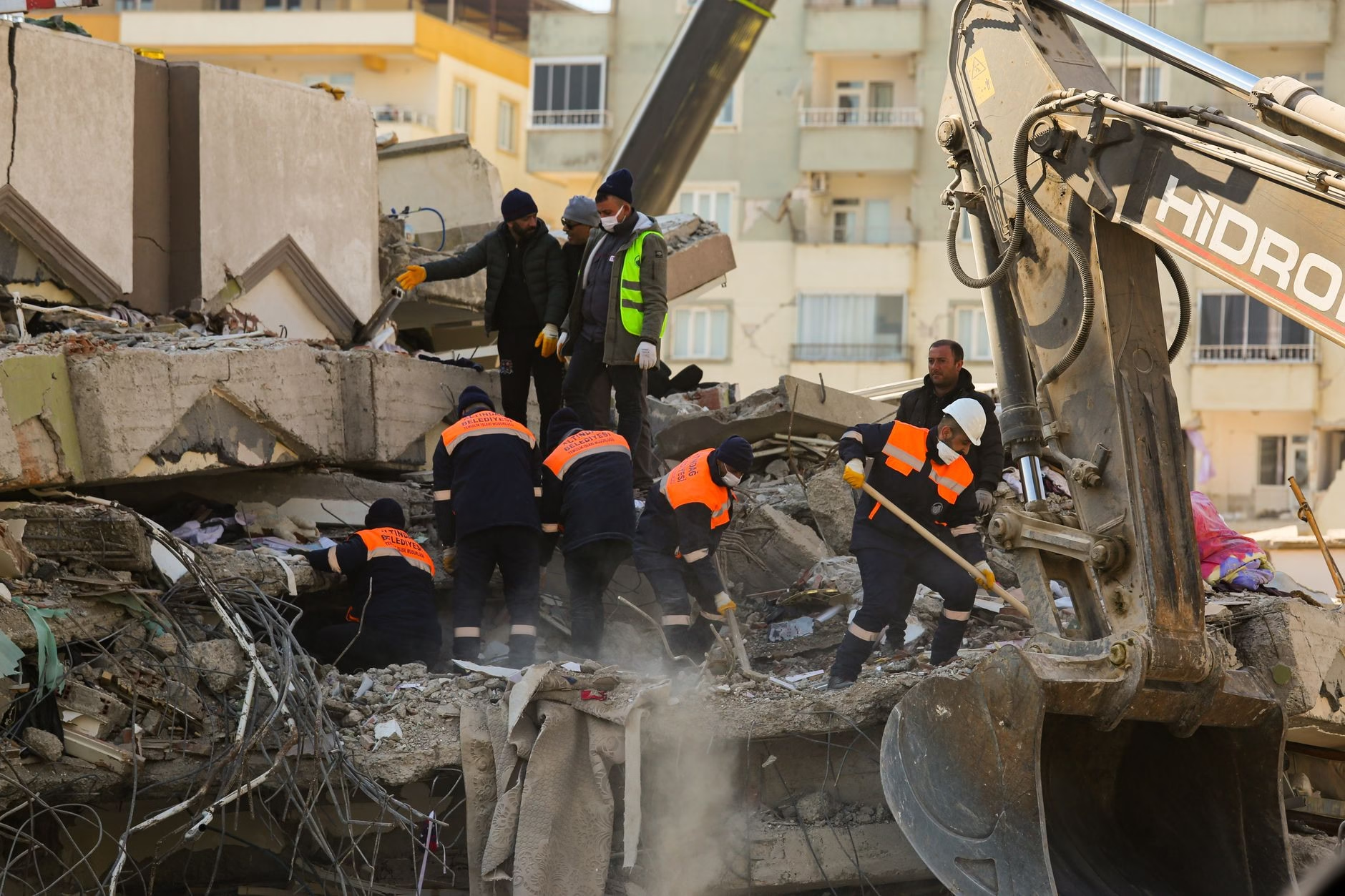
On October 24, Venezuelan emergency management authorities confirmed that the death toll from the catastrophic 7.2-magnitude earthquake that struck northern Venezuela last week has surpassed 5,000 people. The disaster, which struck the coastal region with immense force, now ranks as one of the deadliest seismic events in South American history as rescue workers continue to search collapsed infrastructure for survivors.
Historical Vulnerability and the Initial Shock
The earthquake struck at 10:42 AM local time on October 18, with its epicenter located 12 kilometers northeast of the coastal city of Cumaná. The region sits directly on the active Boconó fault system, a major tectonic boundary between the Caribbean and South American plates. Historically, this fault line has generated significant seismic events, but none in the modern era have resulted in casualties of this magnitude.
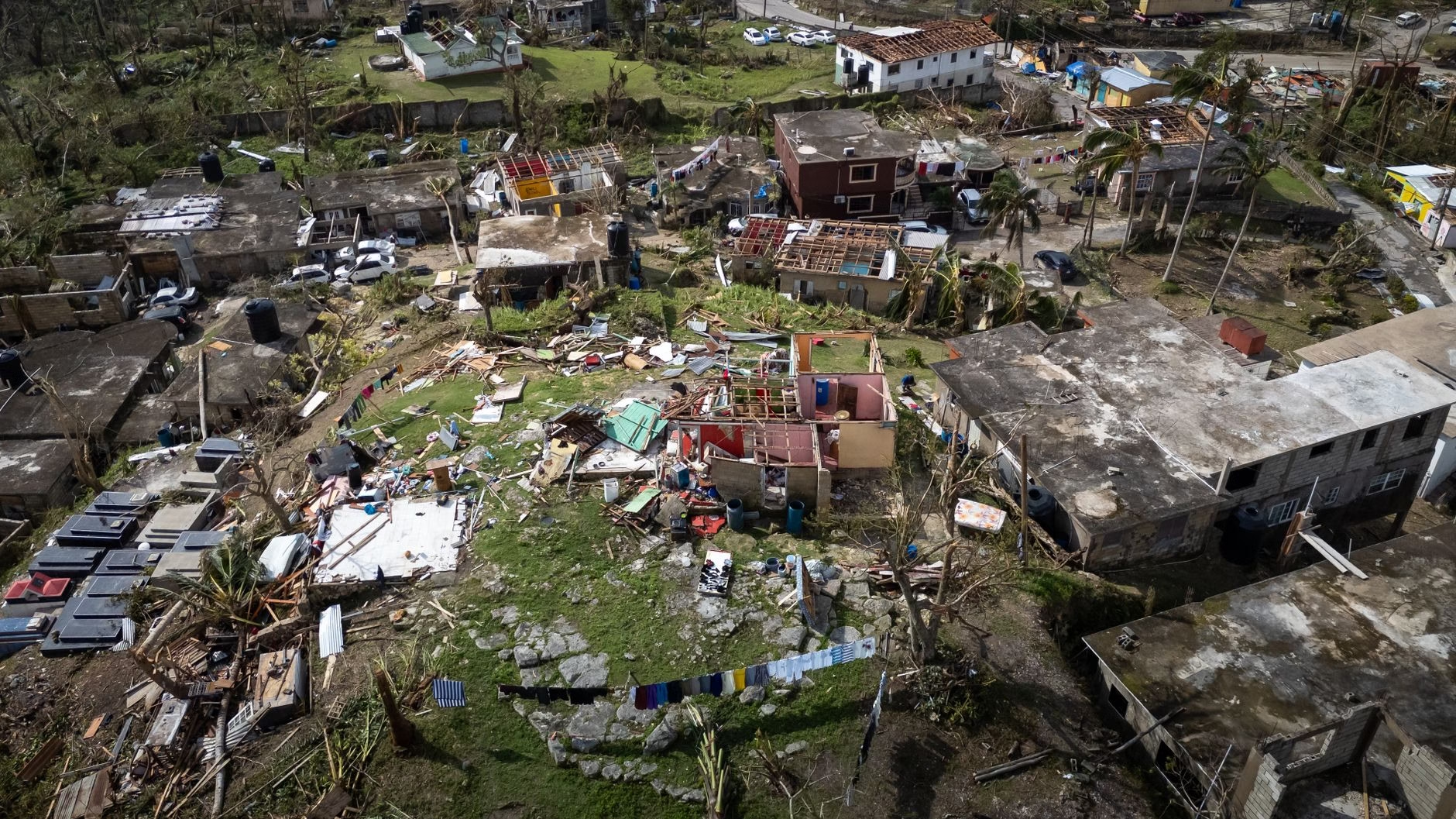
The high casualty count is attributed to a combination of shallow focal depth—estimated at just 10 kilometers—and the extreme vulnerability of local infrastructure. Many residential structures in the regional capital and surrounding fishing villages were constructed without seismic retrofitting, leaving them highly susceptible to sudden collapse. Strong aftershocks, measuring up to 5.5 on the Richter scale, have continued to rattle the region, causing further damage to weakened structures and complicating rescue efforts.
Overwhelmed Healthcare and Search Operations
Rescue teams from the Venezuelan Civil Protection agency, aided by international search-and-rescue units from neighboring Colombia, Brazil, and the United Nations, are working around the clock. Heavy machinery is slowly clearing debris in densely populated urban centers, but unstable structures and frequent aftershocks have repeatedly halted operations. Emergency workers are using specialized acoustic equipment and search dogs to locate survivors trapped beneath the concrete slabs.
Local hospitals in Cumaná and Barcelona reached maximum capacity within hours of the initial tremor. Medical professionals report severe shortages of basic surgical supplies, anesthetics, and clean water, forcing field hospitals to be established in open-air plazas. The Venezuelan Red Cross has mobilized over 2,000 volunteers to assist with triage and emergency first aid, while military transport planes are evacuating the critically injured to Caracas.
Widespread power outages and the collapse of telecommunications networks have isolated several rural communities near the epicenter. Emergency response teams have had to rely on satellite phones to coordinate relief distribution, and major roadways blocked by landslides have delayed the arrival of heavy excavation equipment to these remote areas.
Infrastructure Deficits and Economic Challenges
Structural engineers point to decades of economic stagnation and lack of building code enforcement as primary drivers of the high death toll. Dr. Helena Mendoza, a seismologist at the Central University of Venezuela, noted that over 65% of the buildings in the affected zone were informal concrete brick structures built on unstable, sandy coastal soil.
“The seismic energy released was immense, but the structural vulnerability of the housing stock turned a natural hazard into an unprecedented humanitarian disaster,” Mendoza stated during a press briefing in Caracas. She emphasized that modern engineering standards, if properly enforced, could have mitigated up to 80% of the structural failures observed in the urban core.
Economic analysts estimate the preliminary damage to public infrastructure, including schools, power grids, and water treatment facilities, to exceed $4.2 billion. This financial burden comes at a time when Venezuela’s economy is already struggling with high inflation and limited access to international credit markets, raising concerns about the government’s capacity to fund a comprehensive reconstruction effort.
Regional Stability and Long-Term Recovery
The disaster is expected to trigger a fresh wave of internal displacement, as tens of thousands of residents have been left homeless. Temporary tent cities have been erected on the outskirts of major cities, raising concerns among public health officials about potential outbreaks of waterborne diseases due to compromised sanitation systems and a lack of potable water.
International diplomatic channels are opening to coordinate long-term reconstruction funds. The International Monetary Fund (IMF) and the Inter-American Development Bank (IDB) have announced they are reviewing emergency loan requests submitted by the Venezuelan government to rebuild the coastal region’s shattered infrastructure.
In the coming weeks, global attention will focus on how efficiently aid is distributed and whether the Venezuelan government will implement stricter, enforceable building codes to mitigate the impact of future seismic activity along the active Boconó fault line.

















Leave a Reply