


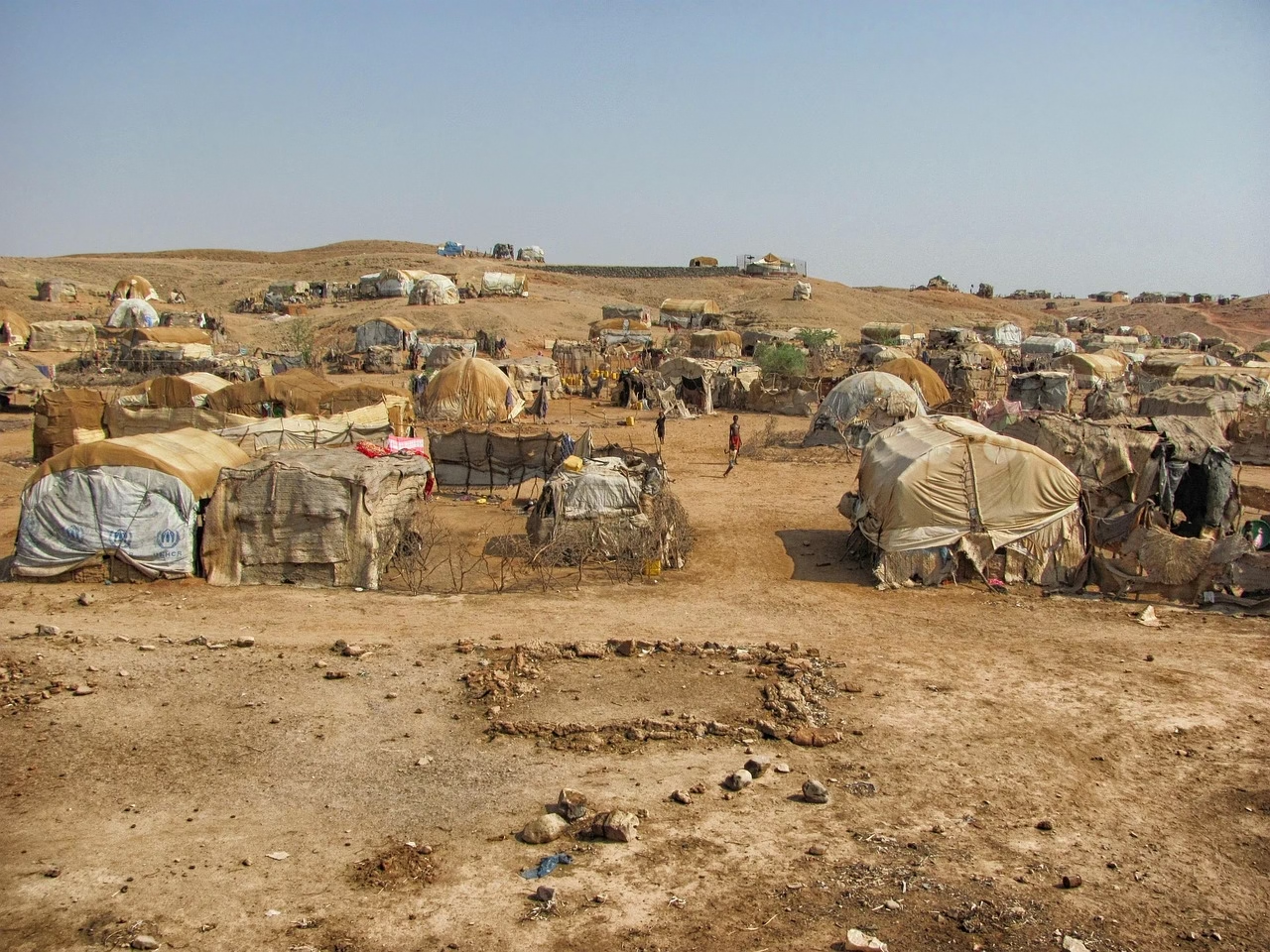
In the Gaza Strip, the traditional markers of summer—school holidays, coastal recreation, and outdoor play—have effectively vanished for more than one million children as the ongoing conflict enters its tenth month. Humanitarian organizations, including UNICEF and the UNRWA, report that the lack of safe zones and the pervasive threat of bombardment have forced families into a state of permanent confinement, fundamentally altering the developmental landscape for an entire generation.
The Erosion of Childhood Norms
For decades, Gaza’s coastline served as a primary outlet for the territory’s youth during the sweltering summer months. Today, the beaches are largely inaccessible or dangerous, and the urban infrastructure that once housed playgrounds and youth centers lies in ruins.
The current reality is defined by displacement, with the majority of Gaza’s population living in overcrowded tent cities or makeshift shelters. According to the United Nations, over 80% of school buildings have been damaged or destroyed, eliminating the primary social hubs where children would normally gather for summer programs.
Psychological Toll and Developmental Stagnation
Mental health professionals working in the region describe a phenomenon of “toxic stress” that prevents children from engaging in normal cognitive and emotional development. Dr. Ahmed El-Moghrabi, a physician operating in central Gaza, notes that the constant sound of drones and artillery creates a physiological state of fight-or-flight that never dissipates.
Data from the World Health Organization (WHO) indicates that at least 17,000 children are currently unaccompanied or separated from their families. This disruption of the primary caregiver bond, combined with the loss of physical play spaces, has led to a documented spike in severe anxiety disorders, bedwetting, and elective mutism among children under the age of 12.
The Logistics of Survival
Daily life for a child in Gaza is now centered entirely on the acquisition of basic survival resources. Instead of sports or recreational reading, the average day is consumed by long queues for water, the search for firewood, and the struggle to secure food supplies.
Aid agencies are struggling to provide even basic educational materials or recreational kits due to severe restrictions on the entry of goods. While some local volunteers attempt to organize informal “learning circles” in displacement camps, these efforts are frequently interrupted by evacuation orders and the need to relocate to safer areas.
Broader Implications for the Future
The total suspension of childhood activities carries long-term implications for the social fabric of Gaza. Education experts warn that the “lost years” of schooling and socialization will create a significant developmental gap that could take decades to bridge, even after the cessation of hostilities.
As the international community debates the long-term reconstruction of the territory, the focus remains primarily on physical infrastructure such as power grids and housing. However, child protection advocates argue that the psychological rehabilitation of the youth population must be integrated into any future recovery plan to prevent a cycle of intergenerational trauma.
Looking ahead, observers are monitoring the potential for localized, small-scale educational initiatives to scale up if a permanent ceasefire is reached. The ability to restore a semblance of normalcy—through the reopening of schools and the creation of dedicated “child-friendly spaces”—will be the primary metric for assessing the possibility of recovery for the next generation.

















Leave a Reply