


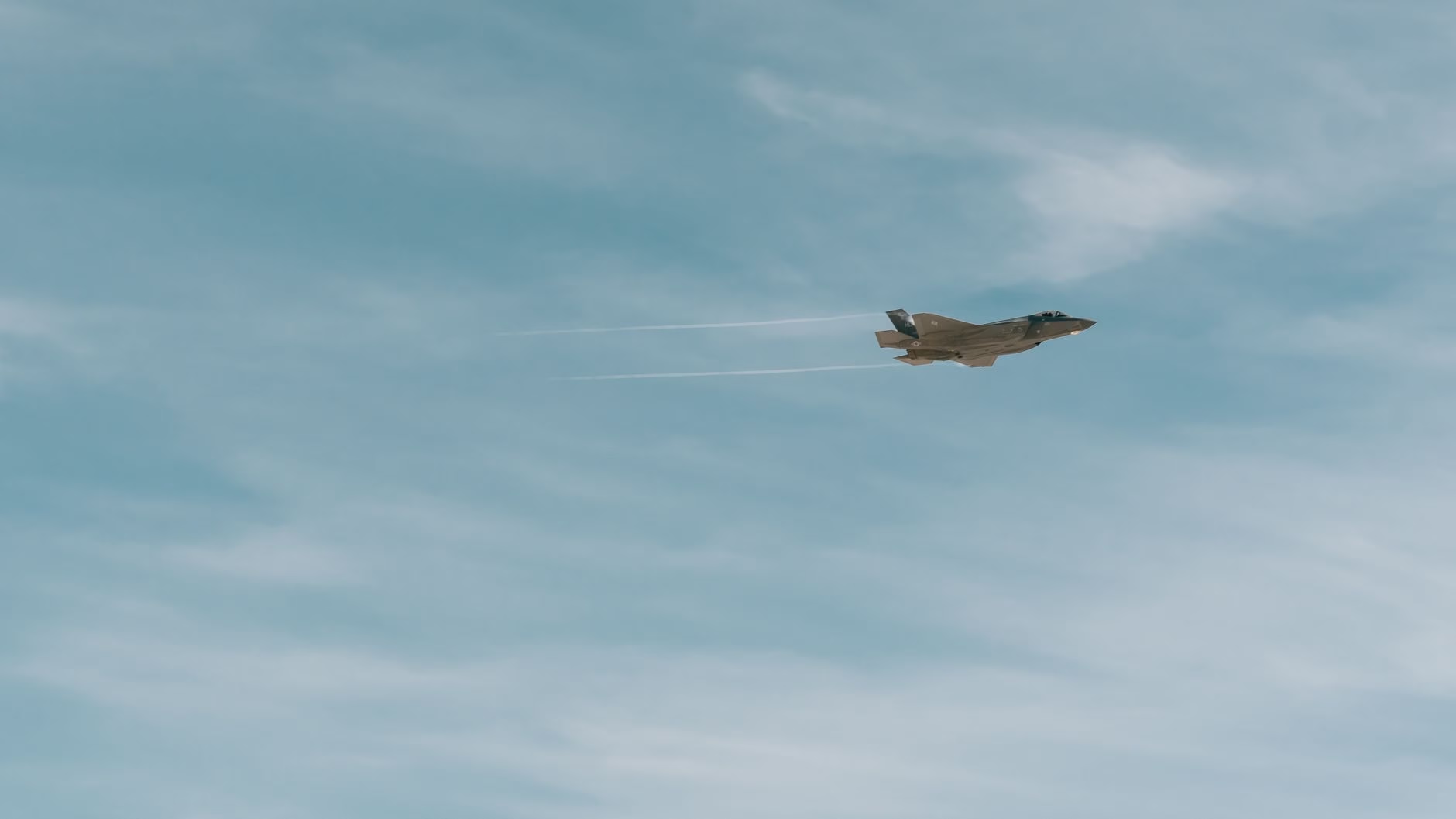
On Thursday, military forces from the United States and Iran engaged in a series of intense aerial exchanges across the Middle East after President Donald Trump declared the existing ceasefire “over.” While Iranian officials claimed the U.S. launched fresh offensive strikes, American defense officials quickly disputed those assertions, clarifying that U.S. operations were strictly defensive maneuvers to intercept incoming Iranian projectiles. The sudden escalation has reignited fears of a broader regional conflict, drawing urgent reactions from global leaders.
The Collapse of the Fragile Ceasefire
The sudden escalation follows months of fragile diplomatic maneuvering aimed at preventing a wider regional war. President Trump’s declaration abruptly terminated the temporary truce, which had temporarily halted direct hostilities between Washington and Tehran. The agreement, brokered by international intermediaries, had been under immense strain due to continuous low-level proxy skirmishes.
Historically, the region has remained on a knife-edge, with proxy conflicts in Iraq, Syria, and Yemen frequently threatening to drag both nations into a direct confrontation. The official end of the ceasefire marks a critical pivot point, shifting the posture of both militaries from cautious deterrence to active engagement. Analysts warn that the lack of open communication channels increases the risk of miscalculation.
Conflicting Reports Over Offensive Operations
A senior U.S. official, speaking to NBC News on the condition of anonymity, confirmed on Thursday that the United States had not conducted any new offensive airstrikes. This statement directly contradicts claims made by Iranian state media, which asserted that American jets had targeted military installations inside Iranian-controlled territory. The Pentagon emphasized that its current operations are focused entirely on force protection.
Despite denying offensive actions, the Pentagon confirmed that U.S. anti-missile batteries and naval assets in the region remained highly active. American forces successfully intercepted and destroyed multiple incoming Iranian drones and missiles aimed at coalition bases. These defensive actions occurred over international airspace and key strategic corridors in the Persian Gulf.
Military analysts point out that the discrepancy in reports highlights the intense information warfare accompanying the physical conflict. Tehran’s statements likely serve to justify its own retaliatory measures to domestic and regional audiences. Meanwhile, the Pentagon has reinforced its defensive perimeter, placing additional Patriot missile batteries and fighter jet squadrons on high alert.
Strategic Repercussions and Expert Analysis
“We are seeing a dangerous game of brinkmanship where miscalculation could trigger a full-scale regional war,” said Dr. Amanda Vance, a senior fellow at the Middle East Policy Institute. Vance noted that without a diplomatic channel, both sides are relying heavily on military signaling to establish boundaries. This method of communication carries an incredibly high margin of error.
According to data from the Armed Conflict Location & Event Data Project (ACLED), military skirmishes in the region have increased by 40% over the past quarter alone. This surge in kinetic activity underscores the volatility that preceded the collapse of the ceasefire. The data suggests that local commanders on both sides have been operating with increased autonomy, further complicating command-and-control structures.
Global Economic and Security Implications
The escalation has immediately impacted global energy markets, with Brent crude prices rising by 3.4% within hours of Trump’s announcement. Analysts warn that sustained hostilities could disrupt shipping lanes in the Strait of Hormuz, through which 20% of the world’s petroleum passes. Energy sector analysts are already adjusting their volatility forecasts upward for the next quarter.
For international shipping companies and commercial airlines, the renewed hostilities necessitate costly rerouting strategies to avoid active combat zones. Insurance premiums for maritime transit in the Gulf have already begun to spike, threatening to increase global supply chain costs. These economic ripple effects are likely to be felt globally if the tension does not subside quickly.
What to Watch Next
In the coming days, international observers will closely monitor the United Nations Security Council, where emergency sessions are expected to be called by European allies seeking to de-escalate the situation. The posture of regional powers, including Saudi Arabia and Israel, will also be critical in determining whether the conflict remains contained or spreads. Diplomatic missions are working behind the scenes to establish backchannel communications.
Additionally, the focus will turn to whether Iran escalates its proxy network operations or continues direct state-on-state missile strikes. The U.S. Congress is also expected to demand briefings on the legal justification for continued military engagement in the absence of a formal declaration of war. How the financial markets react to the prolonged instability will also dictate international pressure on both administrations.























Leave a Reply