


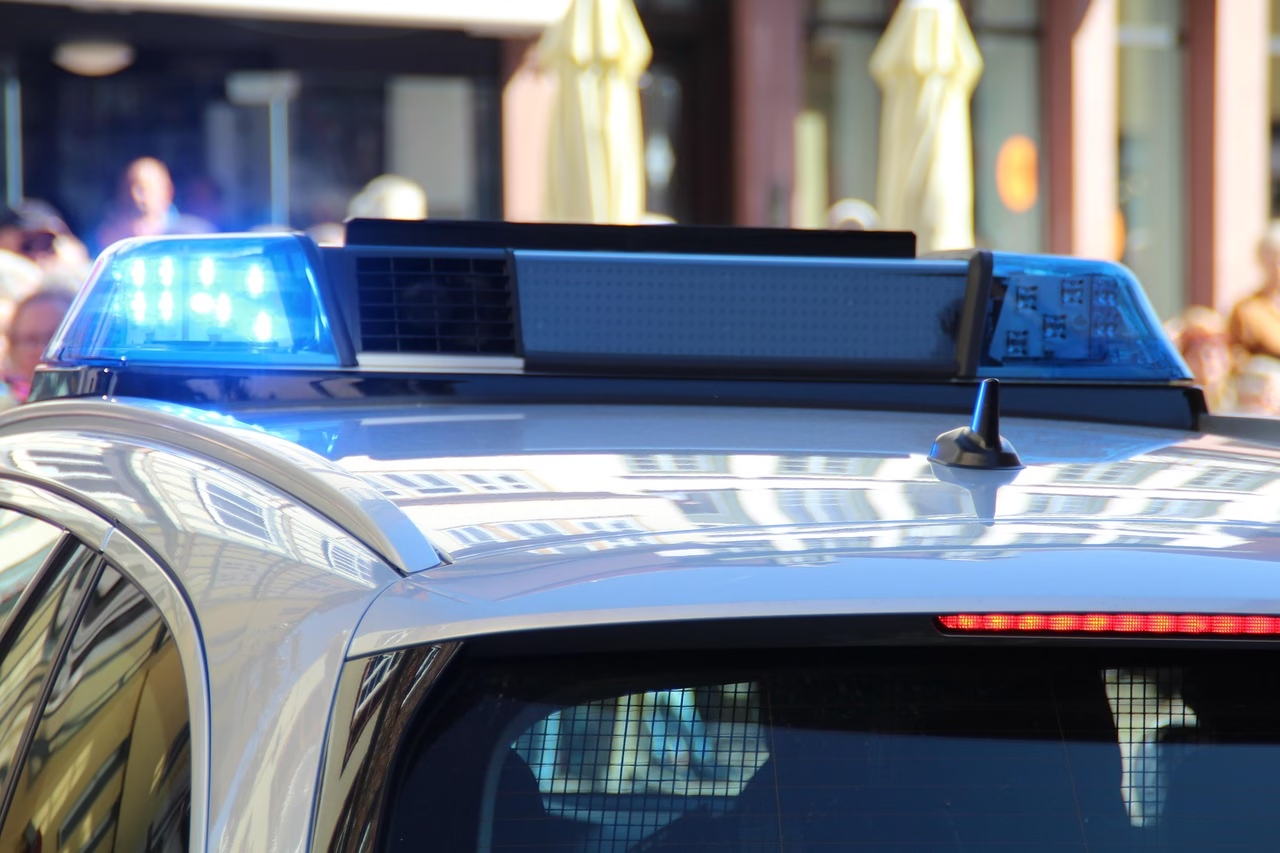
Former British politician Ann Widdecombe has been killed in what police describe as a “targeted attack” at her residence in Devon, southwest England, on Wednesday. Counter-terrorism officers have arrested a 28-year-old man on suspicion of murder and terror-related offenses, and he remains in custody under an extended detention warrant.
The incident has sent shockwaves through the British political establishment, prompting immediate tributes from across the political spectrum. Devon and Cornwall Police, supported by the Metropolitan Police’s Counter Terrorism Command, are leading the ongoing investigation into the circumstances of the attack.
Background of a Prominent Public Figure
Ann Widdecombe, 76, served as a Conservative Member of Parliament for Maidstone (later Maidstone and The Weald) from 1987 until her retirement from the House of Commons in 2010. During her lengthy parliamentary career, she held several high-profile ministerial positions, including Shadow Home Secretary under William Hague’s leadership.
Known for her robust socially conservative views, uncompromising rhetoric, and distinctive public persona, she transitioned to television and media after leaving Westminster. In 2019, she made a brief return to active politics, winning election as a Member of the European Parliament for the Brexit Party.
Widdecombe remained an active and highly visible commentator on contemporary British social and political issues. Her outspoken nature frequently placed her at the center of national debates, making her one of the most recognizable political figures of her generation.
The Investigation and Suspect in Custody
Emergency services responded to reports of a violent incident at a residential address in Devon on Wednesday afternoon. First responders discovered Widdecombe with severe injuries, and medical professionals pronounced her dead at the scene shortly thereafter.
Police quickly apprehended a 28-year-old male suspect near the vicinity of the crime. Authorities initially arrested him on suspicion of murder, but subsequently added charges under the Terrorism Act after uncovering preliminary evidence during initial searches.
On Thursday, detectives successfully secured an extended detention warrant from a magistrates’ court, allowing them to legally detain the suspect for further questioning without charge. Investigators have not yet released the suspect’s identity or detail of any specific ideological motivations.
A History of Threats Against Public Figures
This tragedy marks another grim chapter in the escalating security crisis facing British public figures. The attack draws immediate and painful comparisons to the murders of Labour MP Jo Cox in 2016 and Conservative MP Sir David Amess in 2021.
A 2023 report by the Parliamentary Security Department revealed a 150% increase in reported threats against politicians over the last five years. Security experts warn that polarized political discourse and online radicalization continue to fuel violent extremism targeting high-profile individuals.
“The threat landscape for public figures in the United Kingdom has deteriorated significantly,” says Dr. Elizabeth Thorne, a political violence researcher at the Royal United Services Institute. Thorne notes that the decentralized nature of modern extremism makes preventative policing exceptionally challenging.
Security Protocols Under Review
In the wake of the attack, the Home Office announced an immediate review of security arrangements for former ministers and high-profile political commentators. Currently, automatic police protection is generally reserved for senior government ministers and specific royal family members.
Members of Parliament and former politicians have expressed growing anxiety regarding their safety during public engagements and at their private residences. Several backbench MPs have called for a standardized, publicly funded security package to protect those who have served in high-profile offices.
The National Police Chiefs’ Council (NPCC) has urged all public figures to exercise heightened vigilance and review their personal security measures. Local police forces across the country have also increased patrols around constituency offices and political events as a precautionary measure.
National Reaction and Political Fallout
Prime Minister Rishi Sunak condemned the attack, calling it “an assault on the very fabric of our democratic society.” Opposition Leader Keir Starmer echoed these sentiments, praising Widdecombe’s dedication to public service despite political differences.
Flags on government buildings across Whitehall were lowered to half-mast as a mark of respect. Tributes have poured in from former colleagues, journalists, and constituents, remembering her as a formidable debater who stood firmly by her convictions.
However, the attack has also sparked intense debate over the tone of public discourse. Commentators are calling for greater civility in political debates, warning that dehumanizing language online can translate into real-world violence.
What to Watch Next
In the coming days, investigators will focus on analyzing the suspect’s digital footprint, including social media accounts and electronic devices, to establish a motive. The public can expect further updates from counter-terrorism officials as the extended detention period nears its expiration.
Legal experts anticipate that the suspect will face formal charges in court early next week, which will shed more light on the specific nature of the terror allegations. The judicial process will be closely watched by legal analysts and the public alike.
Furthermore, Parliament is expected to convene an emergency debate to discuss the safety of public figures when it returns to session. The outcome of this debate could lead to significant policy shifts regarding how the state protects its political representatives and commentators.





















Leave a Reply