



Escalating Hostilities
The United States military launched a series of targeted airstrikes against Iranian-backed infrastructure early Thursday, triggering an immediate retaliatory response from Tehran that saw strikes directed at U.S.-allied nations across the Middle East. This sudden explosion of violence marks a definitive collapse of the fragile interim peace agreement that had temporarily stabilized regional tensions over the past six months.
Pentagon officials confirmed the strikes were launched in response to intelligence suggesting imminent threats to American personnel stationed in the region. Tehran, in turn, utilized regional proxies to launch drone and missile attacks, signaling a major shift in the geopolitical landscape of the Persian Gulf.
The Fragility of Diplomacy
The interim peace deal, brokered by international mediators, was designed to freeze nuclear development and curb proxy warfare. For months, the agreement acted as a buffer against direct confrontation, though regional observers noted that low-level friction had persisted throughout the negotiation period.
The unraveling of this pact began earlier this week following a breakdown in high-level communications. Diplomatic channels, which had been the primary mechanism for de-escalation, reported a complete cessation of dialogue as both nations moved their military assets into offensive postures.
A Multi-Front Conflict
The exchange of fire has expanded beyond the initial point of contact, impacting several nations allied with the United States. Military analysts observe that Tehran’s decision to target neighboring countries demonstrates a strategic effort to widen the theater of conflict, putting significant pressure on existing regional security alliances.
According to data from the Armed Conflict Location & Event Data Project (ACLED), the frequency of regional skirmishes has surged by 40% in the last 48 hours alone. These metrics indicate that the violence is not merely a contained skirmish but a synchronized escalation across multiple borders.
Expert Perspectives
Security experts emphasize that the current situation represents the most dangerous escalation since the previous cycle of instability. Dr. Elena Vance, a senior fellow at the Institute for Regional Security, noted that “the collapse of the interim deal removes the guardrails that were preventing a wider conflict, leaving intelligence and military force as the only remaining tools of influence.”
Data from global energy markets reflects this concern, with crude oil prices spiking by nearly 6% in overnight trading. The volatility in the energy sector underscores the immediate economic implications of the renewed hostilities for the global community.
Implications for Global Security
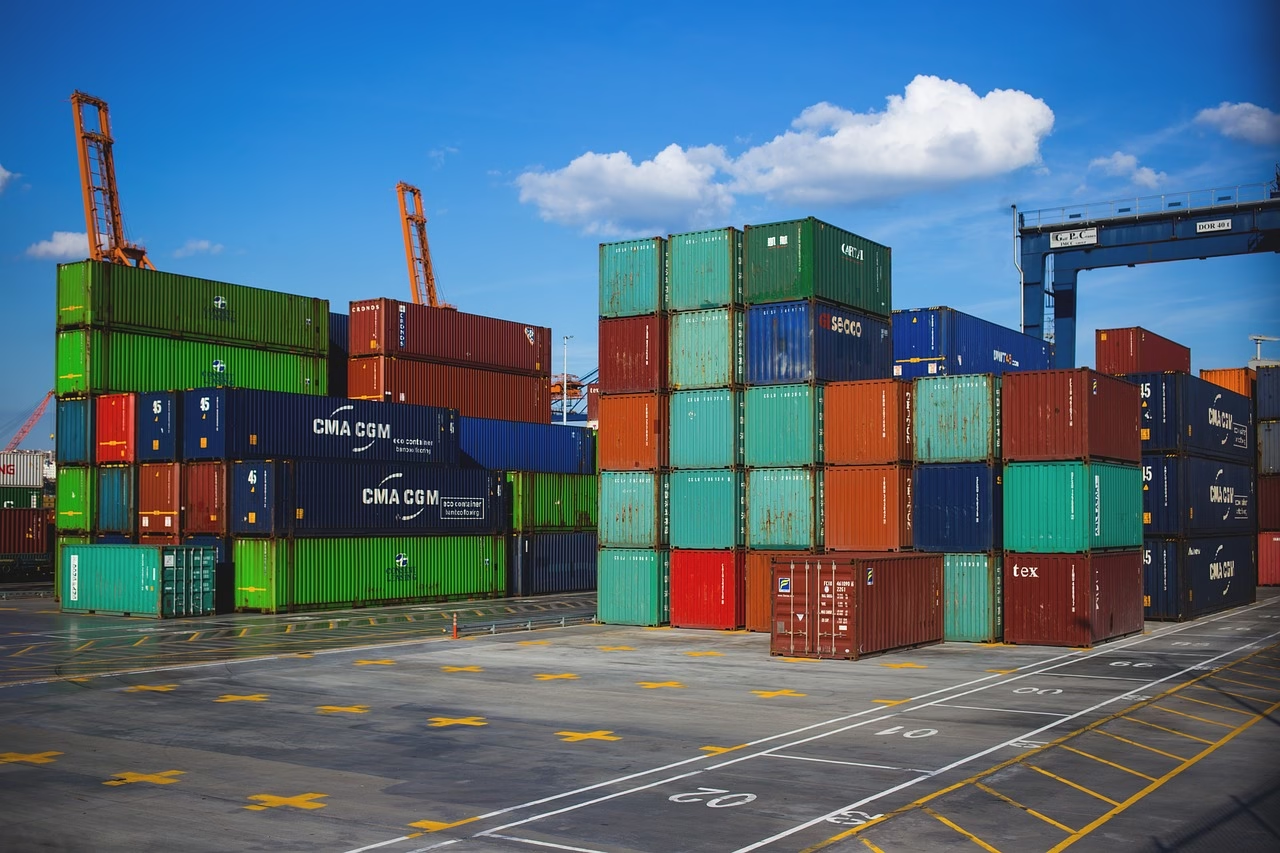
For the average reader, the immediate consequence is a heightened state of uncertainty regarding international travel and regional supply chains. The disruption of transit routes through the Gulf could lead to broader inflationary pressures if the conflict persists for an extended period.
Looking ahead, policymakers are closely monitoring the potential for a larger, sustained military operation. Intelligence analysts suggest that the next 72 hours will be critical in determining whether the exchange remains a calibrated show of force or devolves into a full-scale regional war. International observers will be watching for any signs of renewed back-channel negotiations or, conversely, the mobilization of additional naval assets in the Persian Gulf.





















Leave a Reply