



United States military forces executed a series of targeted airstrikes against critical bridges and transport infrastructure surrounding a major southern Iranian port overnight into Friday. The operation marks a sharp escalation in a week-long aerial campaign designed to pressure Tehran into relinquishing its contested control over the Strait of Hormuz, the world’s most vital maritime oil chokepoint.
According to statements from U.S. Central Command (CENTCOM), the precision strikes successfully degraded logistics routes connecting mainland Iran to key naval staging areas. Pentagon officials confirmed that the operation aimed to disrupt the Iranian military’s ability to reinforce its coastal missile batteries and fast-attack naval fleets.
The Battle for the World’s Most Critical Chokepoint
The escalation follows months of rising friction in the Persian Gulf, where Iranian forces have increasingly intercepted commercial shipping and declared unilateral jurisdiction over transit lanes. The Strait of Hormuz, a narrow waterway between Oman and Iran, carries approximately 20 percent of the world’s daily petroleum consumption, making its uninterrupted flow crucial to global economic stability.
Washington and its international allies have repeatedly warned Tehran that attempts to restrict navigation through the strait would meet military resistance. Analysts note that this week’s sustained campaign represents a shift from defensive escort missions to active degradation of Iran’s offensive capabilities.
Prior to Friday’s strikes, U.S. and allied forces focused on neutralizing radar installations and drone launch sites along the Iranian coastline. By targeting inland bridges and transport infrastructure, the coalition is now attempting to isolate Iranian ports from their domestic supply chains.
Strategic Degradation of Logistics Networks
Military analysts indicate that the destruction of key bridges near the southern port city of Bandar Abbas severely hampers the Islamic Revolutionary Guard Corps (IRGC) logistics. These routes are essential for transporting heavy military hardware, including anti-ship ballistic missiles and aerial drones, to coastal launch positions.
Initial battle damage assessments suggest that at least three major transport links were rendered impassable. U.S. defense officials, speaking on the condition of anonymity, stated that B-52 bombers and carrier-based F/A-18 fighter jets participated in the coordinated midnight raids.
Tehran’s state media acknowledged the strikes, condemning the action as an unprovoked violation of its national sovereignty. Iranian officials warned that the attacks would not go unanswered, raising fears of a wider regional conflict that could draw in neighboring Gulf states.
Market Shockwaves and Strategic Calculations
The sudden expansion of the military campaign sent immediate shockwaves through global energy markets. Brent crude futures surged by over four percent in early trading on Friday, reflecting deep anxieties over potential supply disruptions.
“We are entering uncharted territory in terms of maritime security in the Gulf,” said Marcus Vance, a senior naval analyst at the London-based Center for Maritime Strategy. “By targeting fixed infrastructure like bridges, the U.S. is signaling that it is prepared to systematically dismantle Iran’s coastal defense logistics if Tehran does not back down.”
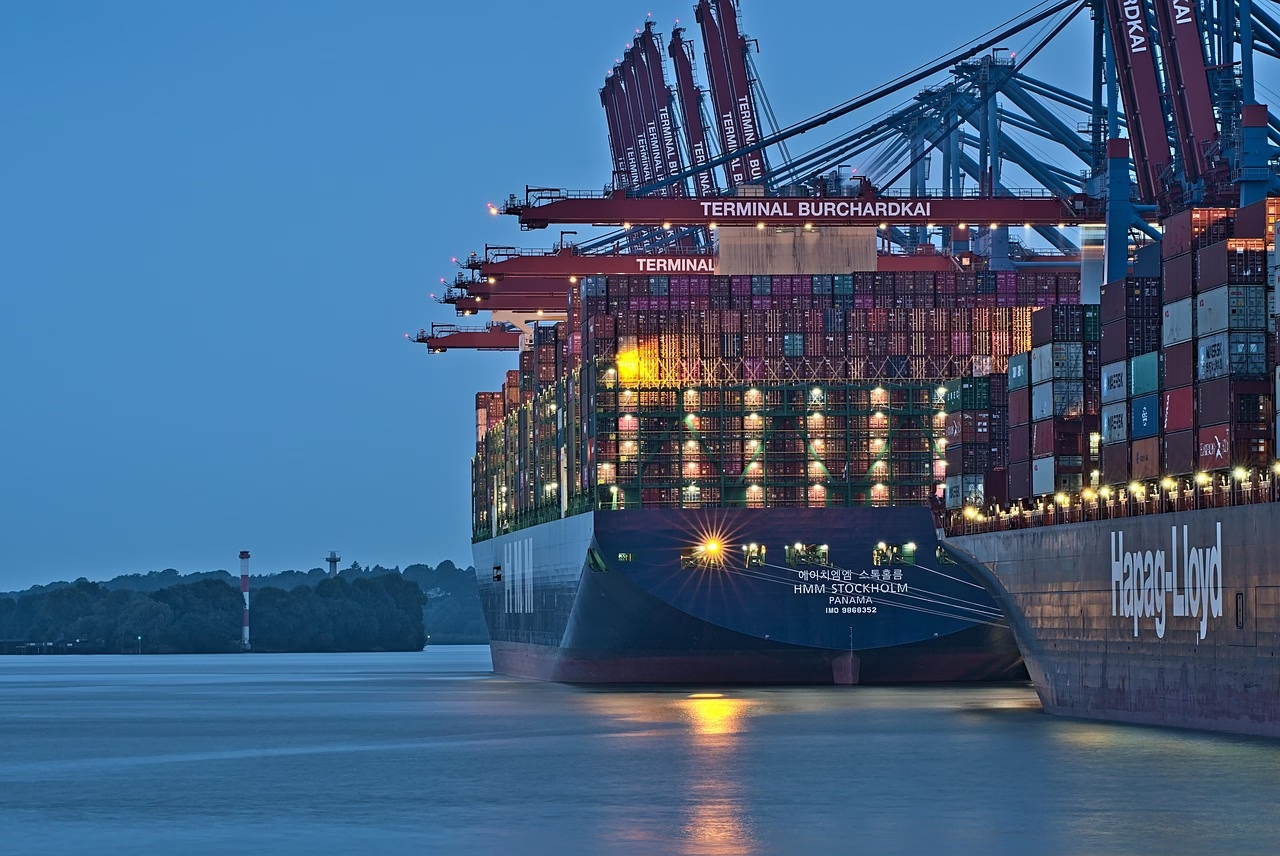
Shipping industry representatives have already advised commercial vessels to exercise extreme caution when navigating the region. Maritime insurance premiums for transiting the Persian Gulf have reportedly tripled over the past forty-eight hours, forcing some shipping conglomerates to consider rerouting vessels around the Cape of Good Hope.
Regional Alignments and Diplomatic Fallout
The strikes have forced regional powers to quickly define their positions. Traditional U.S. allies in the Gulf, including Saudi Arabia and the United Arab Emirates, have urged restraint while quietly bolstering their own air defense systems in anticipation of potential retaliatory missile strikes.
Meanwhile, Beijing and Moscow have issued statements calling for an immediate cessation of hostilities. China, which relies heavily on Iranian crude imports, warned that the militarization of the Strait of Hormuz poses a direct threat to international trade routes and energy security.
The domestic political pressure on the White House also remains high. U.S. lawmakers are divided, with some demanding congressional authorization for continued military action, while others argue that decisive force is necessary to deter Iranian aggression and protect global commerce.
What to Watch Next as Conflict Intensifies
The immediate concern for international observers is how Iran will choose to retaliate. While its conventional supply lines have been disrupted, the IRGC retains significant asymmetric capabilities, including naval mines, submarine fleets, and regional proxy networks capable of striking shipping lanes or Western assets.
Diplomatic channels remain severely strained, with European mediators scrambling to establish communication lines between Washington and Tehran to prevent an all-out war. The United Nations Security Council is expected to convene an emergency session over the weekend to address the rapidly deteriorating security situation.
In the coming days, observers will monitor whether the U.S. coalition establishes a formal blockade or protective convoy system for commercial vessels. The resilience of global energy markets will largely depend on whether the conflict remains localized to the coastal infrastructure or spills over into direct, open confrontation across the Gulf waters.





















Leave a Reply