


The United States Treasury Department officially sanctioned Cuban President Miguel Díaz-Canel and four other high-ranking government officials on Thursday, marking a significant escalation in American diplomatic pressure against the island nation’s leadership. The move, announced through a formal filing on the Treasury’s website, targets individuals deemed responsible for the suppression of civil unrest and the detention of protesters during recent political demonstrations.
Context of U.S.-Cuba Diplomatic Relations
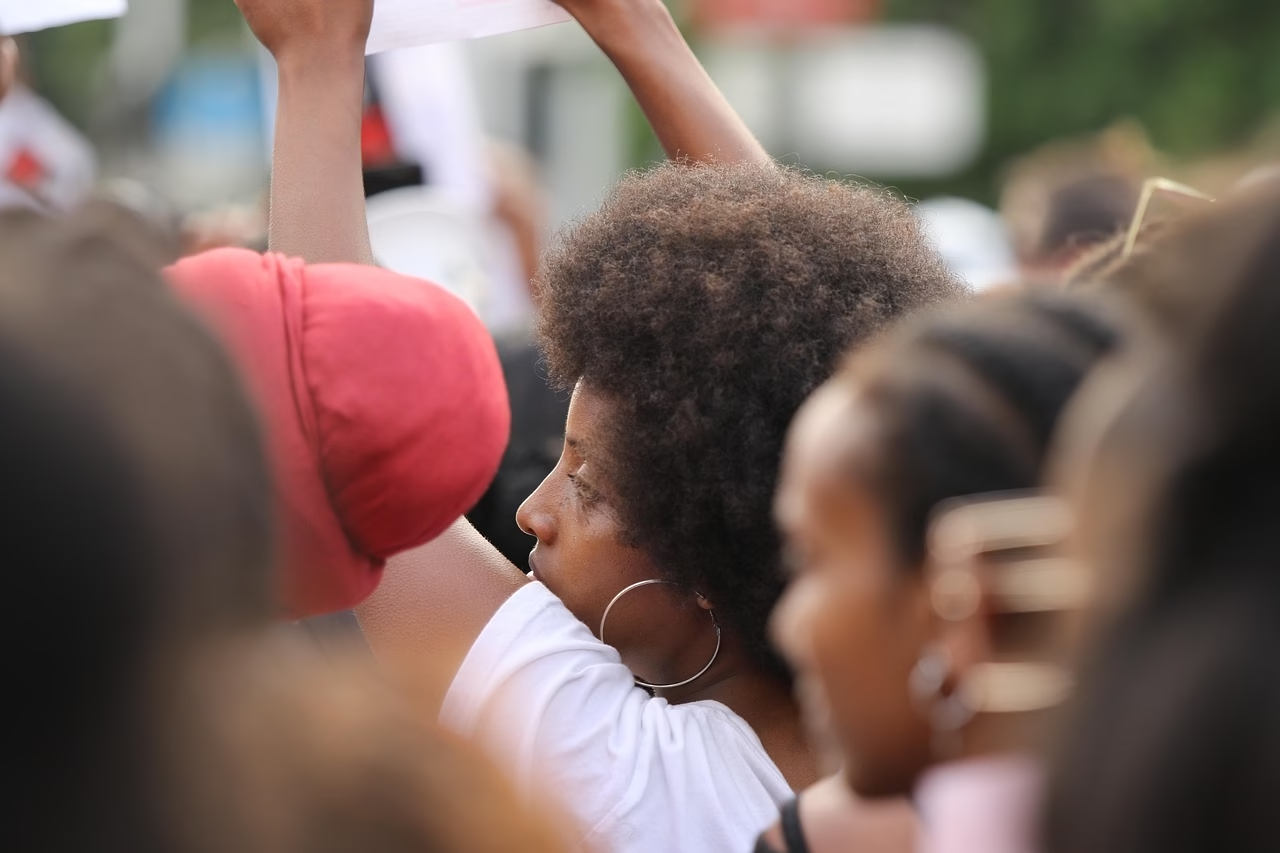
This decision follows a summer of unprecedented anti-government protests across Cuba, where thousands of citizens took to the streets to demand greater economic freedoms and political reforms. The Cuban government responded with a heavy-handed security crackdown, resulting in the mass arrest of activists, journalists, and everyday citizens.
U.S. officials have characterized these actions as a direct violation of human rights. The administration maintains that these targeted sanctions are designed to hold specific leaders accountable rather than imposing a blanket embargo on the Cuban population.
Details of the Targeted Sanctions
The sanctions freeze any assets the designated individuals may hold within U.S. jurisdiction and effectively bar them from engaging in financial transactions with American entities. In addition to President Díaz-Canel, the Treasury Department targeted key figures within the Ministry of the Interior and the Revolutionary Armed Forces.
These designations fall under the Global Magnitsky Human Rights Accountability Act, which grants the U.S. authority to penalize foreign officials implicated in human rights abuses. The inclusion of the President himself signals a shift in strategy from previous administrations, which often sought to avoid direct confrontation with the head of state.
Expert Perspectives and Data
Foreign policy analysts suggest that the impact of these sanctions may be largely symbolic, as Cuban leadership typically maintains limited direct financial exposure to the U.S. banking system. However, the move serves as a powerful diplomatic signal to the international community.
According to data from the Office of Foreign Assets Control, the U.S. has maintained varying levels of sanctions on Cuba since the 1960s. Recent reports from international human rights organizations confirm that over 1,000 individuals remain in custody following the July demonstrations, providing the evidentiary basis for the current U.S. administrative action.
Broader Industry and Geopolitical Implications
For the average Cuban citizen, the long-term economic impact of these sanctions remains a subject of intense debate. Critics argue that such measures often exacerbate the economic suffering of the general public by tightening the state’s grip on resources, while proponents maintain that isolating the leadership is the only viable path to forcing democratic change.
Businesses operating in the region face increased compliance risks as the regulatory landscape becomes more complex. Financial institutions are now required to conduct enhanced due diligence to ensure no prohibited entities are involved in supply chains or cross-border transactions involving Cuban interests.
Looking ahead, observers are closely monitoring whether these sanctions will trigger retaliatory measures from Havana or lead to further diplomatic isolation. International observers will be watching the upcoming judicial proceedings for the protesters currently held in Cuban detention centers, as these trials will likely dictate the tenor of U.S.-Cuba relations for the remainder of the year.



















Leave a Reply