


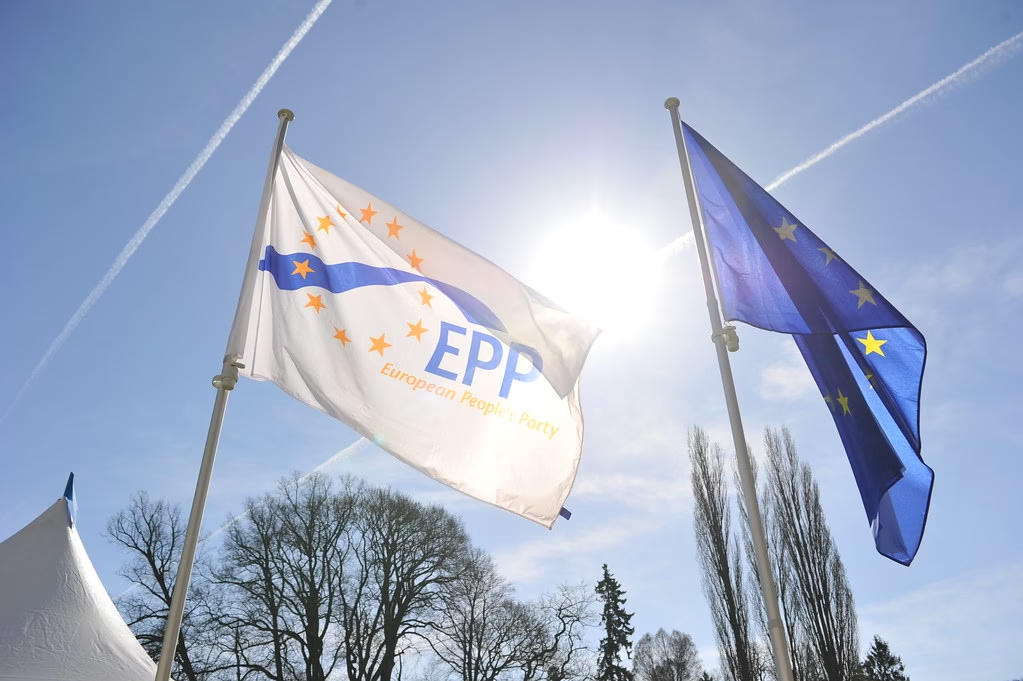
Finnish President Alexander Stubb has publicly advocated for a sweeping expansion of the European Union, proposing that the bloc grow to include 40 member states, a list that would reach across the Atlantic to incorporate Canada. Speaking at a policy forum this week, Stubb argued that such a transformation is essential for the EU to maintain its geopolitical relevance and project decisive influence on the global stage amid shifting international power dynamics.
The Geopolitical Context of EU Enlargement
The European Union currently comprises 27 member states, with several nations in the Western Balkans, Ukraine, Moldova, and Georgia currently navigating various stages of the accession process. Stubb’s proposal represents a significant departure from traditional enlargement policy, which has historically been confined to the European continent.
By suggesting the inclusion of non-European nations like Canada, Stubb is framing the EU as a broader alliance of values rather than a strictly geographic entity. This shift reflects growing concerns among European leaders regarding the bloc’s ability to compete with superpowers like the United States and China.
Strategic Motivations and Global Power
The core of Stubb’s argument rests on the necessity of scale. In an era defined by economic blocs and security competition, the Finnish President believes that a larger, more unified EU would be better positioned to set global standards, negotiate trade deals, and ensure collective security.
Proponents of this vision suggest that expanding the bloc beyond its traditional borders would create a more robust coalition. By integrating stable, democratic partners like Canada, the EU could potentially bolster its democratic credentials and economic resilience.
Expert Perspectives and Structural Challenges
Analysts note that while the vision is ambitious, the practical hurdles remain immense. Current EU decision-making processes, which often require unanimity, are already strained by the existing 27 members.




















Leave a Reply