


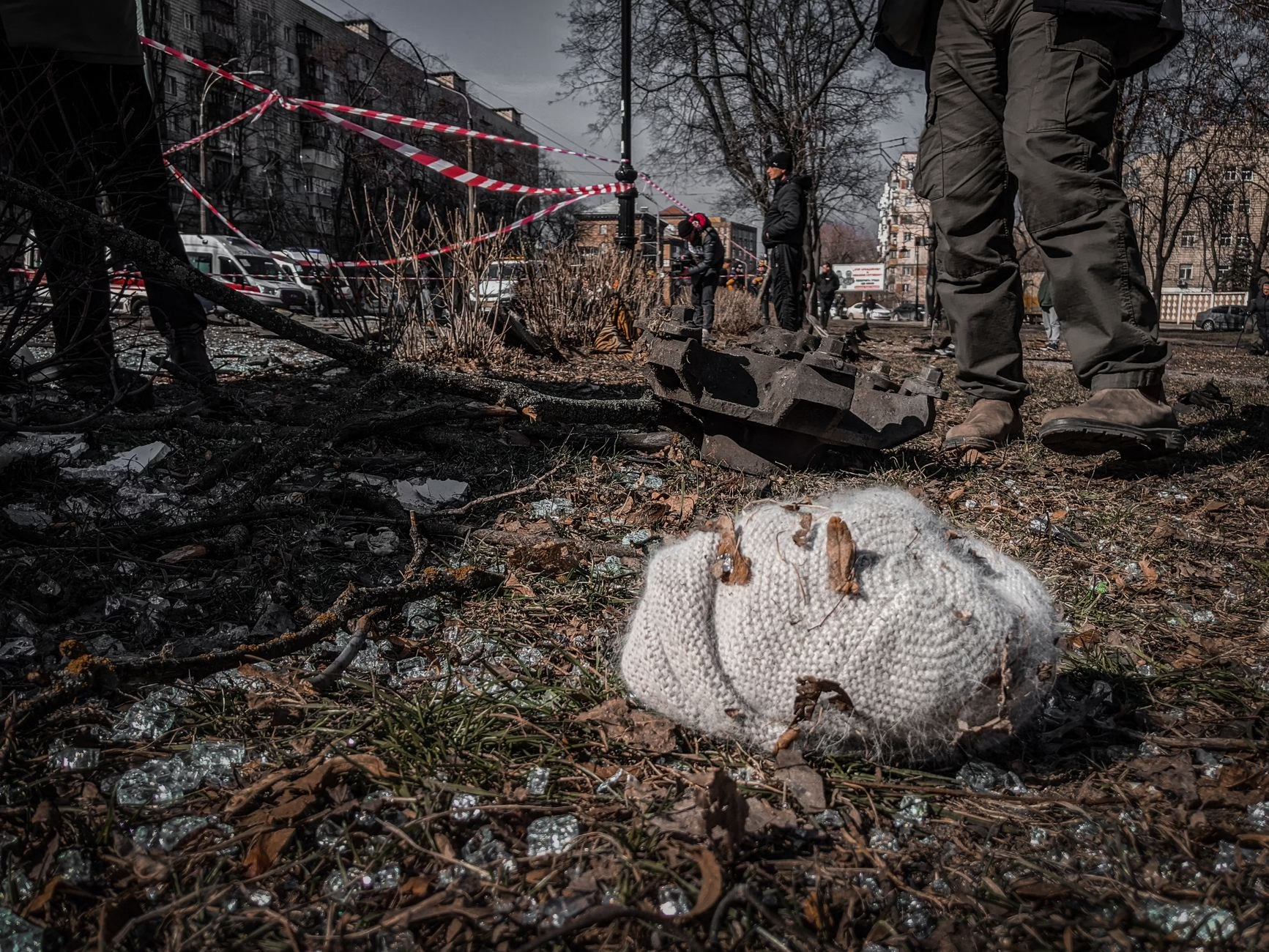
Recent events in Ukraine have once again cast a harsh light on the profound human cost of armed conflict, particularly concerning the targeting of non-combatants. A disturbing incident involving a drone attack on a vegetable vendor has drawn widespread attention, prompting a strong condemnation from Ukraine President Volodymyr Zelenskyy. The President stated that the footage from this event vividly illustrates how Russian soldiers ‘take pleasure in killing’ civilians, an assertion that underscores the brutal realities faced by ordinary citizens caught in the crossfire.
This incident, occurring in a civilian setting and impacting someone engaged in a basic daily activity, highlights a deeply troubling aspect of modern warfare. It brings to the forefront critical questions about adherence to international humanitarian law and the moral boundaries of conflict. The alleged targeting of a non-military individual, a vendor simply conducting their trade, serves as a stark reminder of the indiscriminate nature of some tactics employed and the immense vulnerability of civilian populations.
The Disturbing Reality of Civilian Targeting
President Zelenskyy’s statement regarding the alleged ‘pleasure in killing’ civilians is a grave accusation, suggesting a deliberate and malicious intent that goes beyond conventional military objectives. If substantiated, such actions represent a profound breach of ethical conduct in warfare and a direct challenge to the principles of humanity. The psychological impact of such a declaration on a nation already enduring prolonged conflict cannot be overstated, as it speaks to a perceived dehumanization of the enemy and a disregard for fundamental human rights.
Attacks on civilians, especially those engaged in everyday life, are not merely collateral damage; they are acts that erode the very fabric of society. They instill fear, disrupt essential services, and create an environment of pervasive insecurity. For a vegetable vendor, a symbol of sustenance and community, to become a target underscores a strategy that appears designed to terrorize and break the will of the populace, rather than achieve legitimate military gains.
Drones in Modern Warfare: A New Dimension of Threat
The use of drones has revolutionized modern warfare, offering unprecedented capabilities for surveillance, reconnaissance, and precision strikes. However, this technological advancement also introduces new complexities and ethical dilemmas, particularly when these unmanned aerial vehicles are deployed in areas populated by civilians. While drones can offer tactical advantages, their deployment in civilian contexts demands extreme caution and adherence to strict rules of engagement to prevent harm to non-combatants.
Incidents like the attack on a vegetable vendor illustrate the devastating potential of drones when used indiscriminately or with malicious intent against civilian targets. The remote nature of drone operations can sometimes create a detachment from the immediate human consequences, potentially lowering the threshold for engagement. This makes robust oversight, clear rules of engagement, and accountability mechanisms even more crucial to ensure that these powerful tools are not misused to inflict terror or cause undue civilian suffering.
International Law and Civilian Protection
International humanitarian law (IHL), often referred to as the laws of armed conflict, provides a framework designed to limit the brutality of war and protect those not participating in hostilities. Central to IHL are the principles of distinction, proportionality, and precaution. The principle of distinction mandates that parties to a conflict must always distinguish between civilians and combatants, and between civilian objects and military objectives. Civilians and civilian objects must not be targeted.
An attack on a vegetable vendor, a clear civilian, and their stall, a civilian object, would represent a direct violation of the principle of distinction. Furthermore, IHL prohibits attacks that are expected to cause incidental loss of civilian life, injury to civilians, or damage to civilian objects that would be excessive in relation to the concrete and direct military advantage anticipated. Such incidents, therefore, raise serious concerns about potential war crimes, which are grave breaches of the Geneva Conventions and other international treaties.
The Psychological Toll on Civilians
Beyond the immediate physical harm, attacks on civilians inflict deep and lasting psychological trauma. The constant threat of violence, the disruption of daily life, and the loss of loved ones or livelihoods create an environment of chronic stress and fear. For those living in conflict zones, every routine activity, from going to a market to simply being at home, can become a source of anxiety.
Witnessing or being directly affected by such attacks can lead to post-traumatic stress disorder (PTSD), depression, and other mental health challenges. Children are particularly vulnerable, as their development can be severely impacted by prolonged exposure to violence and instability. The long-term societal consequences include fractured communities, eroded trust, and a generation grappling with the invisible wounds of war, hindering recovery and reconciliation efforts for years to come.
Calls for Accountability and Justice
In the face of alleged war crimes and violations of international law, the global community has a responsibility to demand accountability. Documenting such incidents meticulously is a critical first step towards ensuring justice. International bodies, human rights organizations, and national courts play vital roles in investigating these allegations, collecting evidence, and prosecuting those responsible.
Establishing accountability sends a clear message that such actions will not be tolerated and that perpetrators will face consequences. It is essential for upholding the rule of law, deterring future violations, and providing a measure of justice for victims and their families. The pursuit of justice, even amidst ongoing conflict, is fundamental to preserving human dignity and laying the groundwork for a more stable and peaceful future.
The Enduring Human Cost
The incident involving the drone attack on a vegetable vendor in Ukraine serves as a poignant reminder of the enduring human cost of armed conflict. It is a stark illustration of how war extends far beyond the battlefield, reaching into the most ordinary aspects of civilian life and leaving a trail of devastation, both visible and invisible. President Zelenskyy’s powerful statement underscores the moral imperative to protect civilians and to hold accountable those who transgress the fundamental laws of humanity.
As the conflict continues, the international community must remain vigilant in advocating for the protection of civilians, documenting abuses, and supporting efforts to bring perpetrators of war crimes to justice. The path to lasting peace in Ukraine, and indeed in any conflict zone, must be built upon respect for human life, adherence to international law, and a steadfast commitment to upholding the dignity of every individual, regardless of their role in the conflict.




















Leave a Reply