


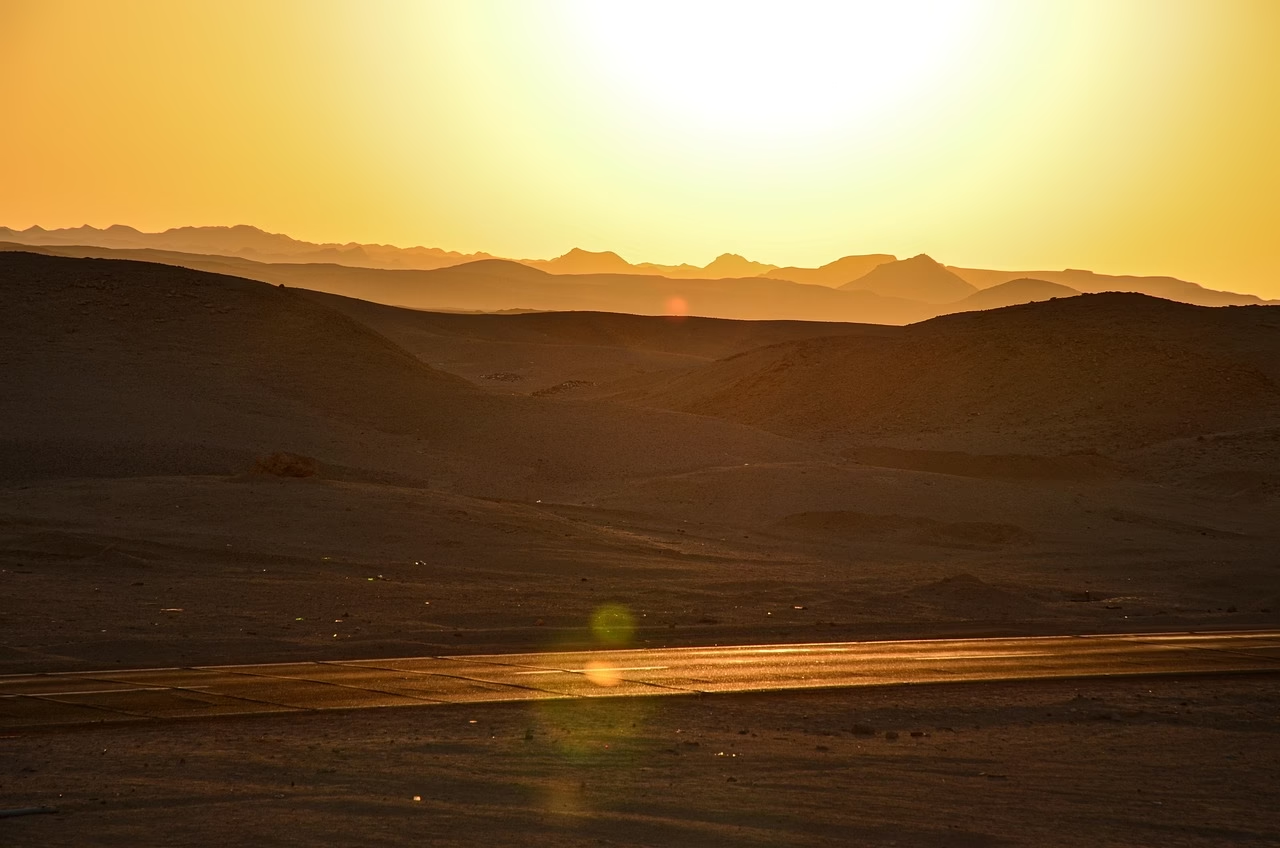
Military strikes between United States forces and Iranian-backed groups escalated sharply this week, resulting in severe damage to critical water and power infrastructure across Iran and Kuwait. The attacks coincide with an intense regional heatwave pushing temperatures past 100 degrees Fahrenheit, threatening the basic survival resources of millions of residents. Local authorities confirmed the strikes on Wednesday, marking a dangerous shift in targeting toward civilian life-support systems during a period of extreme climate vulnerability.
A Region Parched by Conflict and Climate
The Middle East is currently experiencing one of its hottest summer seasons on record, with temperatures consistently exceeding 100°F (38°C) and reaching up to 115°F in some urban centers. This extreme weather already strains local power grids and water desalination plants to their limits. The sudden destruction of these utilities exacerbates an existing humanitarian vulnerability, turning essential utility networks into active battlegrounds.
Historically, conflict in the region has focused on oil facilities, shipping lanes, and military installations. However, security analysts note that targeting water and electricity infrastructure directly impacts civilian populations, raising concerns over international humanitarian law violations. The Geneva Conventions strictly prohibit attacks on objects indispensable to the survival of the civilian population, including drinking water installations and irrigation works.
Infrastructure Under Fire
In Kuwait, state media reported disruptions at a major desalination plant near the northern border following an indirect missile strike, which damaged auxiliary power transmission lines. Though no casualties were reported, the facility’s output dropped by 30 percent, forcing municipal water authorities to ration supply in several residential districts. Engineers are working under extreme heat to restore the damaged lines, but officials warn that full recovery could take several days.
Meanwhile, Iranian state television confirmed that drone strikes hit two major electrical substations in the southern, oil-rich province of Khuzestan. The strikes caused widespread blackouts, disabling air conditioning units and municipal water pumps across several major cities. Local hospitals were forced to rely on emergency diesel generators to keep critical life-support systems running.
The Pentagon stated that U.S. forces conducted precision strikes against facilities used by Iran’s Islamic Revolutionary Guard Corps (IRGC) and affiliated militia groups. According to U.S. Central Command (CENTCOM), these strikes were retaliatory measures following a series of rocket and drone attacks on coalition bases in Iraq and Syria. Iran, however, accused the U.S. and its allies of deliberately targeting civilian infrastructure to destabilize the nation during a severe climate crisis.
The Humanitarian Toll and Expert Warnings
Energy and security experts warn that the intersection of military conflict and climate vulnerability creates a compounding disaster. “When you disable power grids in 100-degree heat, you are not just disrupting military communications; you are turning off air conditioning and water pumps for hospitals and homes,” said Dr. Amira Al-Saber, a regional security analyst at the Middle East Institute. She noted that the tactical shift toward infrastructure targets represents a dangerous escalation that could trigger mass displacement if water supplies fail entirely.
Data from the World Health Organization (WHO) indicates that prolonged exposure to temperatures above 100°F without access to clean drinking water or cooling dramatically increases heatstroke rates, particularly among vulnerable demographics. The International Committee of the Red Cross (ICRC) issued a statement urging all warring parties to immediately cease targeting facilities indispensable to civilian survival.
Geopolitical Fallout and Future Outlook
The escalation threatens to derail ongoing diplomatic efforts aimed at restoring stability to the Persian Gulf. Observers expect regional powers to increase cyber defenses and physical security around critical utility nodes in the coming weeks. As the summer heat intensifies, the resilience of the Middle East’s interconnected power grids will face its ultimate test.
In the coming days, international monitors will watch closely to see if the United Nations Security Council convenes an emergency session to address the targeting of civilian infrastructure. The immediate focus remains on whether local engineering teams can repair the damaged desalination and power plants before rising temperatures trigger a full-scale public health emergency. The situation highlights how climate change and geopolitical conflict are increasingly intertwined, turning basic resources into primary targets of war.




















Leave a Reply