


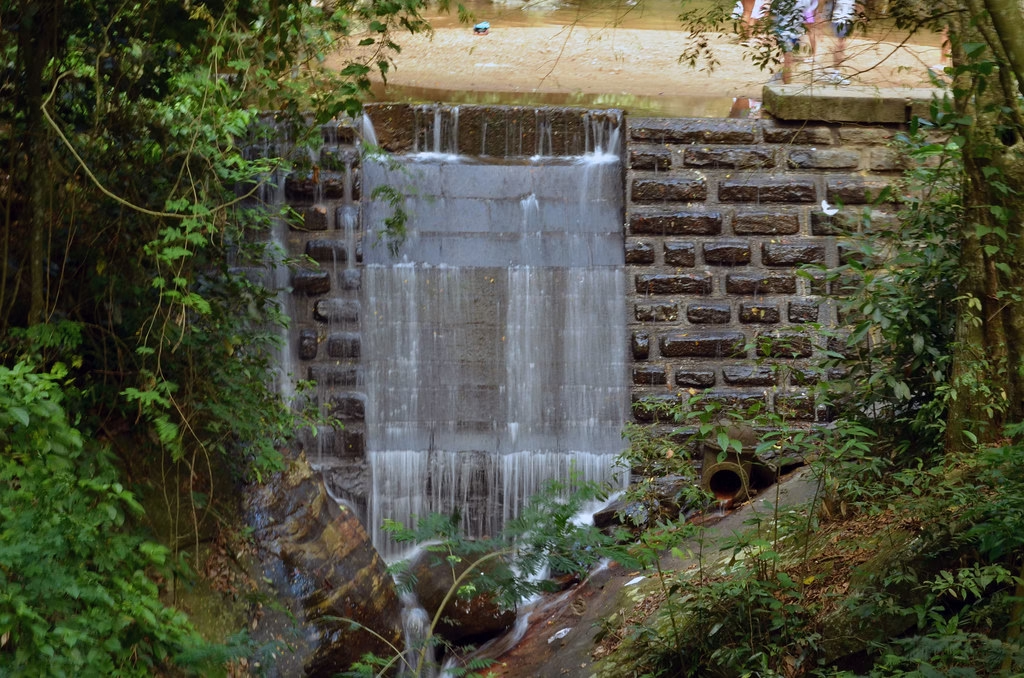
Five adults, including two married couples from Honduras, drowned over the weekend in Ohio’s Great Miami River, local police and international diplomats confirmed on Tuesday. The tragic incident occurred on Sunday afternoon near Dayton, Ohio, when the victims encountered dangerous undercurrents while swimming near a low-head dam. Honduran authorities are currently working with U.S. officials to repatriate the remains of the deceased back to their home country as a grieving community seeks answers.
Background on River Hazards and Low-Head Dams
The Great Miami River, while popular for kayaking and summer recreation, poses significant risks during the late spring and early summer months. Heavy seasonal rainfall frequently swells Ohio waterways, dramatically increasing flow rates and creating invisible, violent undertows. Low-head dams, often referred to as “drowning machines” by water safety experts, are particularly hazardous because they create a recirculating current that can trap even experienced swimmers.
According to data from the Ohio Department of Natural Resources (ODNR), low-head dams have been responsible for dozens of fatalities across the state over the past decade. These structures, originally built for industrial water intake or mill power, often appear calm from upstream but generate lethal hydraulic traps downstream. The lack of visible turbulence frequently misleads recreational users into believing the water is safe for swimming and wading.
Details of the Tragic Incident
Local emergency services responded to urgent calls on Sunday afternoon reporting multiple swimmers in distress. Witnesses reported seeing one individual slip into the fast-moving water, prompting the others to attempt a rescue. The strong currents quickly overwhelmed all five individuals, pulling them under before bystanders or rescue teams could intervene.
The search operation mobilized multiple local fire departments, water rescue units, and helicopter support to scan the river corridor. Rescuers faced challenging conditions, including turbid water and debris carried downstream by recent storms, which severely limited underwater visibility. The local coroner’s office is currently conducting autopsies to officially determine the cause of death for all five individuals, though initial assessments point exclusively to accidental drowning.
The Honduran Ministry of Foreign Affairs subsequently identified four of the victims as two married couples who had recently relocated to the United States. The fifth victim was identified as a close family friend and fellow community member. The group had reportedly gathered at the riverbank for a weekend family outing, a common practice among local residents seeking relief from rising summer temperatures.
“This is an unimaginable tragedy for our community and for the families grieving in Honduras,” said Gerardo Torres, a representative for the Honduran consulate. “We are providing all necessary consular assistance to expedite the repatriation process and support the surviving relatives who are dealing with this sudden loss.”
Water Safety and Community Outreach
The incident has renewed urgent discussions among safety advocates regarding river safety education, particularly for immigrant communities who may not be familiar with local waterway hazards. Language barriers can often prevent critical safety signage near low-head dams from effectively communicating danger to non-English speaking visitors.
Water safety expert Dr. Linda Vance emphasized that natural river systems behave very differently from controlled swimming pools. “Rivers are dynamic, unpredictable environments where water depth and speed can change within seconds,” Vance stated. “Without proper life jackets and knowledge of hydraulic hazards, rescue attempts often result in multiple casualties as rescuers become victims themselves.”
The ODNR reports that over 80% of recreational drowning victims in natural water bodies were not wearing personal flotation devices (PFDs). State officials have repeatedly urged the public to wear life jackets at all times when near or in natural waterways, regardless of their swimming ability. The Honduran community in Ohio, which has grown steadily over the past decade, has rallied to support the victims’ families, holding vigils and collecting donations to help cover repatriation expenses.
Looking Ahead: Preventive Measures and Repatriation
In the wake of the tragedy, local municipal leaders are facing pressure to install bilingual warning signs and physical barriers near high-risk zones along the Great Miami River. Community advocates are also calling for targeted water safety campaigns in Spanish and other languages to reach vulnerable populations. These initiatives aim to prevent future accidents by educating residents on the specific dangers of low-head dams and swift currents.
Meanwhile, the Honduran government is coordinating with Ohio state officials to manage the logistical and financial challenges of returning the victims’ bodies to their families in Honduras. Local community groups in Ohio have established mutual aid funds to assist the grieving families with funeral costs and legal fees. As investigations into the exact sequence of events conclude, safety agencies will monitor the effectiveness of new educational campaigns ahead of the peak summer recreation season.


















Leave a Reply