


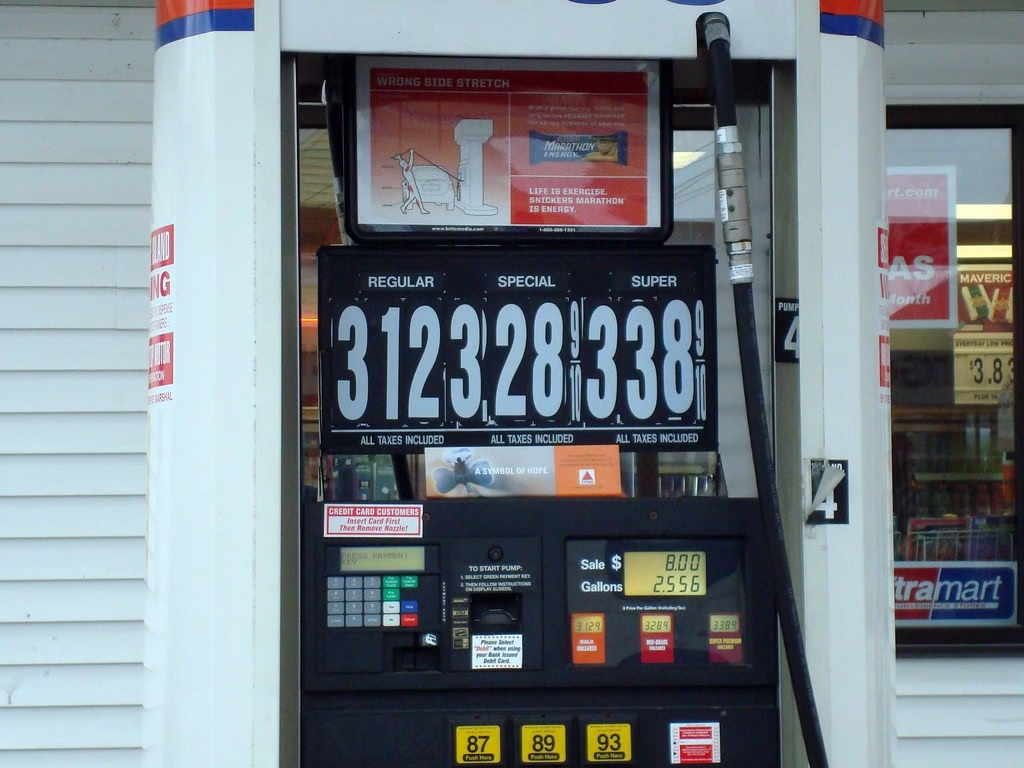
Gasoline prices across the United States have experienced significant, localized fluctuations this month as tensions in the Middle East escalate, according to a comprehensive analysis of AAA data conducted by NBC News. The investigation reveals that the impact of the ongoing Iran conflict on pump prices is not uniform, with regional supply chains, refining capacity, and state-level fuel mandates dictating the degree of financial strain felt by motorists in different counties.
The Context of Energy Market Sensitivity
Global oil markets historically react with immediate volatility to geopolitical instability in the Middle East, a region critical to crude oil production and transit. When tensions involving Iran rise, traders often bake a ‘risk premium’ into the price of Brent and West Texas Intermediate (WTI) crude, anticipating potential supply chain disruptions or blockades in key shipping lanes like the Strait of Hormuz.
While crude oil is a globally traded commodity, the price at the local pump is filtered through a complex network of domestic refineries and regional distribution hubs. This architecture explains why some areas remain insulated from sudden price spikes while others see immediate surges at the retail level.
Regional Disparities in Fuel Costs
Data analysis indicates that proximity to major refining centers, such as those along the Gulf Coast, offers a buffer against the immediate price shocks seen in more isolated markets. Counties that rely on longer, more expensive supply chains or those located in states with stringent environmental fuel blends often encounter higher volatility when global market conditions tighten.
In California, for instance, unique regulatory requirements for winter-blend fuel often exacerbate the impact of global supply shocks. Conversely, areas in the Midwest with access to internal pipeline networks may see more stable pricing, even as crude oil benchmarks rise on the international stage.
Expert Perspectives on Market Volatility
Energy analysts suggest that consumer behavior also plays a role in regional price variations. ‘When news of conflict hits the wires, regional demand spikes often lead to localized shortages that retailers are quick to price in,’ says an industry analyst familiar with retail fuel data. Industry data confirms that retail margins often widen in the days following a geopolitical event, as station owners adjust prices to account for the uncertainty of future wholesale replenishment costs.
Implications for the Consumer
For the average American household, these disparities mean that the ‘national average’ gas price is an increasingly poor metric for gauging personal budget impact. The divergence between rural counties with lower overhead and urban centers with complex supply chains is expected to widen if the geopolitical situation persists.
As the conflict unfolds, industry observers are closely monitoring the movement of crude oil inventories and domestic refining capacity. Markets will likely remain sensitive to any news regarding potential sanctions or shipping restrictions in the Persian Gulf. Consumers should look for updates from the Energy Information Administration (EIA) to track whether current price hikes represent a temporary reaction to headlines or a sustained shift in global energy costs.

























Leave a Reply