


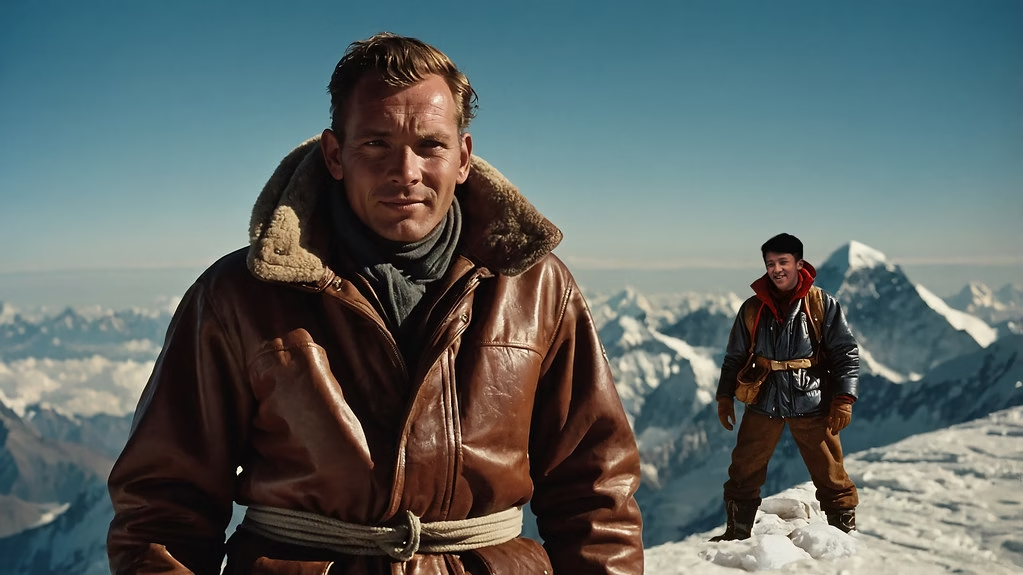
A Miraculous Survival
A Sherpa guide, previously presumed dead by his grieving family, was discovered alive on the slopes of Mount Everest this week after surviving seven days in one of the world’s most inhospitable environments. A cleaning crew spotted the man crawling down the snow-covered terrain near the mountain’s base camp, marking the end of a harrowing week-long disappearance that had gripped the climbing community.
The Context of High-Altitude Survival
Mount Everest, standing at 8,848 meters, presents extreme physiological challenges, including freezing temperatures, high-velocity winds, and oxygen levels that are roughly one-third of those at sea level. Historically, survival rates for individuals lost in the ‘Death Zone’—the area above 8,000 meters—are exceptionally low due to the rapid onset of hypothermia and altitude sickness.
Search and rescue operations on Everest are notoriously difficult, often hampered by unpredictable weather patterns and the physical limitations of rescue teams. When a climber goes missing, the window for a successful recovery is typically measured in hours rather than days, making this specific survival case a statistical anomaly in mountaineering history.
The Details of the Rescue
The guide, whose identity has been protected for privacy, had been reported missing during a high-altitude expedition. After multiple days passed without contact, his family and expedition leaders had transitioned from search efforts to mourning, formally presuming him deceased.
The recovery occurred when a dedicated waste-management and cleaning crew, tasked with clearing refuse from the mountain’s lower camps, noticed movement on the slopes. Upon closer inspection, they identified the missing guide, who was suffering from severe exhaustion and exposure but remained conscious. The crew immediately initiated emergency protocols to stabilize the man before transporting him to a medical facility for urgent care.
Expert Perspectives on Mountaineering Risks
Medical experts note that survival in these conditions is often attributed to a combination of extreme physical conditioning and the unique physiological adaptations of local high-altitude populations. Dr. Aris Varma, a specialist in wilderness medicine, stated that the human body’s ability to endure extreme cold while dehydrated is limited, suggesting that the guide likely found a sheltered micro-climate to protect himself from the worst of the mountain’s wind chill.
Data from the Himalayan Database, which tracks mountaineering expeditions, indicates that while the number of climbers on Everest has increased over the last decade, the survival rate for those caught in unexpected storms remains volatile. The incident serves as a stark reminder of the inherent volatility of the world’s tallest peak.
Implications for the Industry
This incident is expected to reignite debates regarding safety protocols and the reliance on local guides for high-stakes expeditions. Industry analysts suggest that trekking companies may face increased pressure to implement mandatory GPS tracking devices for all personnel, regardless of their experience level.
Moving forward, the focus will likely shift toward improving real-time communication networks across Everest’s base camps to prevent similar disappearances. Observers will be watching to see if this miracle rescue leads to updated international safety mandates for commercial expedition outfitters operating during the peak spring climbing season.






















Leave a Reply