


Urgent Call for Humanitarian Access
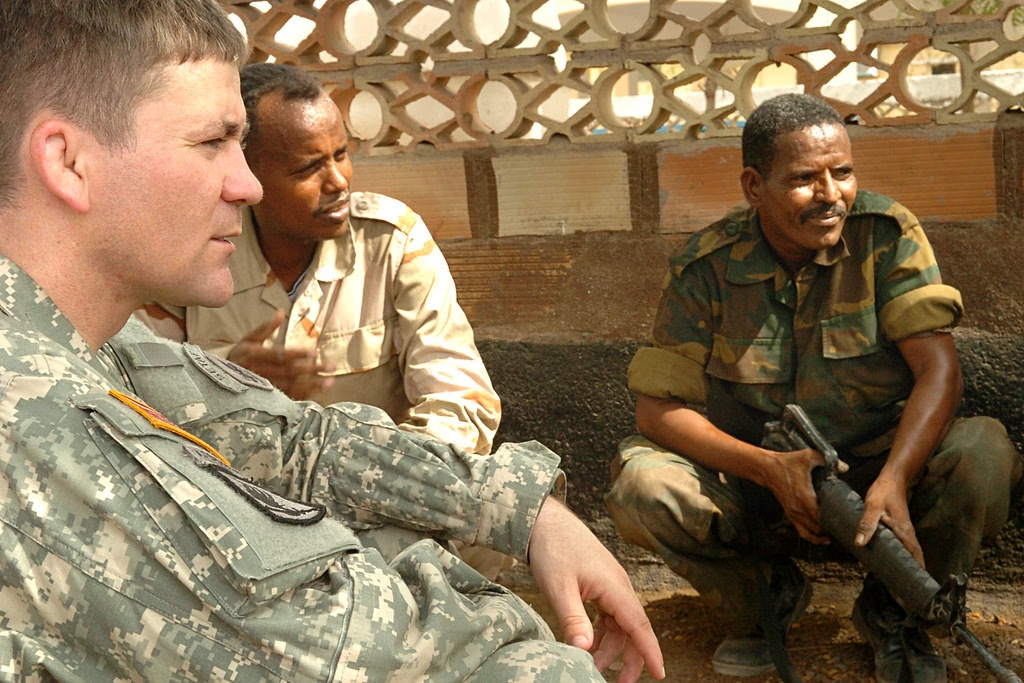
World Health Organization (WHO) Director-General Tedros Adhanom Ghebreyesus has issued an urgent plea for an immediate ceasefire in the Democratic Republic of the Congo (DRC) to allow medical personnel to contain a burgeoning Ebola outbreak. Speaking from Geneva this week, Dr. Tedros emphasized that escalating conflict in the region is directly hindering life-saving vaccination efforts and diagnostic testing in areas where health workers are currently unable to operate safely.
The Shadow of Conflict on Public Health
The Democratic Republic of the Congo has struggled with recurring Ebola outbreaks for decades, but the current situation is complicated by deep-seated political instability and localized fighting in the eastern provinces. Armed groups often control territory where the virus is spreading, creating dangerous ‘no-go’ zones for the international medical teams tasked with contact tracing and patient care.
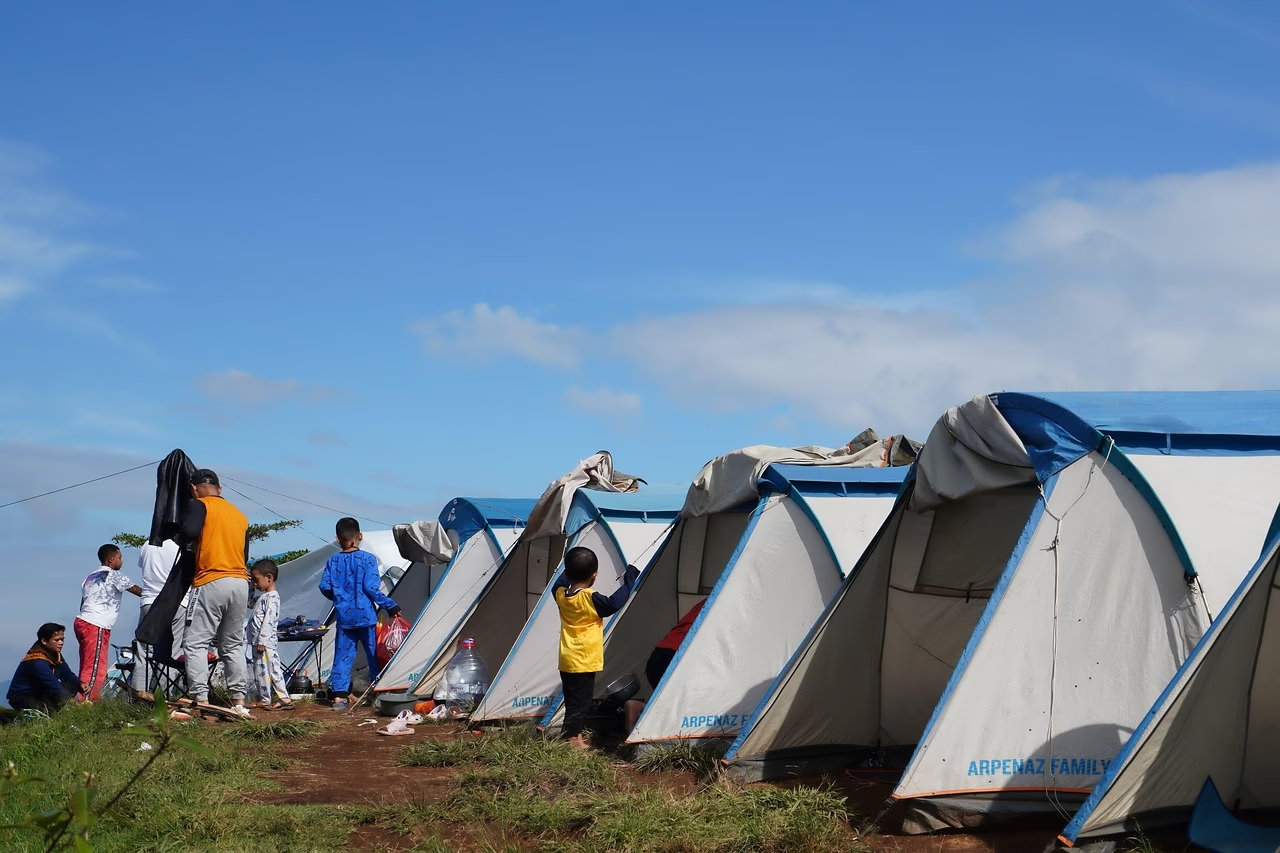
According to the WHO, the complexity of the security environment makes it nearly impossible to maintain the cold chain necessary for transporting vaccines. Furthermore, the displacement of thousands of civilians due to fighting facilitates the rapid movement of the virus, as families flee their homes and move into densely populated urban centers or refugee camps with limited sanitation.
Clinical Challenges and Mortality Rates
Ebola remains one of the world’s most lethal infectious diseases, characterized by severe hemorrhaging and high mortality rates if left untreated. Recent data from the WHO indicates that the mortality rate of the current strain can exceed 60% in settings where early medical intervention is unavailable.
Medical professionals on the ground report that they are frequently forced to pause operations when shelling or gunfire occurs nearby. These interruptions break the cycle of monitoring, which is essential to stopping the transmission chain. Dr. Tedros noted that the virus does not respect borders or battle lines, effectively turning the conflict zone into a reservoir for further infection.
Operational Implications for Global Health
The plea for a ceasefire highlights the broader challenge of delivering healthcare in conflict-affected regions. Experts in global health security argue that public health crises in war zones require a ‘humanitarian corridor’ approach, where all parties to the conflict agree to suspend hostilities to facilitate medical logistics.
For the international community, this situation signals a shift in how global health agencies must approach disease control. As geopolitical tensions rise, the ability to decouple public health interventions from political conflict becomes increasingly vital. The failure to secure these access routes may force the WHO and its partners to reconsider their strategy in high-risk areas, potentially leading to a larger regional crisis that could cross international borders.
Future Outlook and Monitoring
Looking ahead, the international community will be watching to see if local leaders and armed factions respond to the WHO’s appeal. Observers are also monitoring the potential for the virus to spread to neighboring countries, which would necessitate a massive scale-up of cross-border screening protocols. The coming weeks will be critical in determining whether health authorities can regain the momentum needed to suppress the outbreak before it reaches more stable, yet highly populated, urban regions.


















Leave a Reply