



Militia gunmen attacked a hospital treating Ebola patients in Beni, Democratic Republic of Congo, on Sunday, October 20, 2019, amid a deadly Ebola outbreak. The attack, which occurred as relatives gathered to collect bodies of deceased patients, marks the third violent incident targeting health facilities in four days, escalating fears for the safety of medical personnel and patients battling the epidemic.
Escalating Violence Threatens Ebola Response
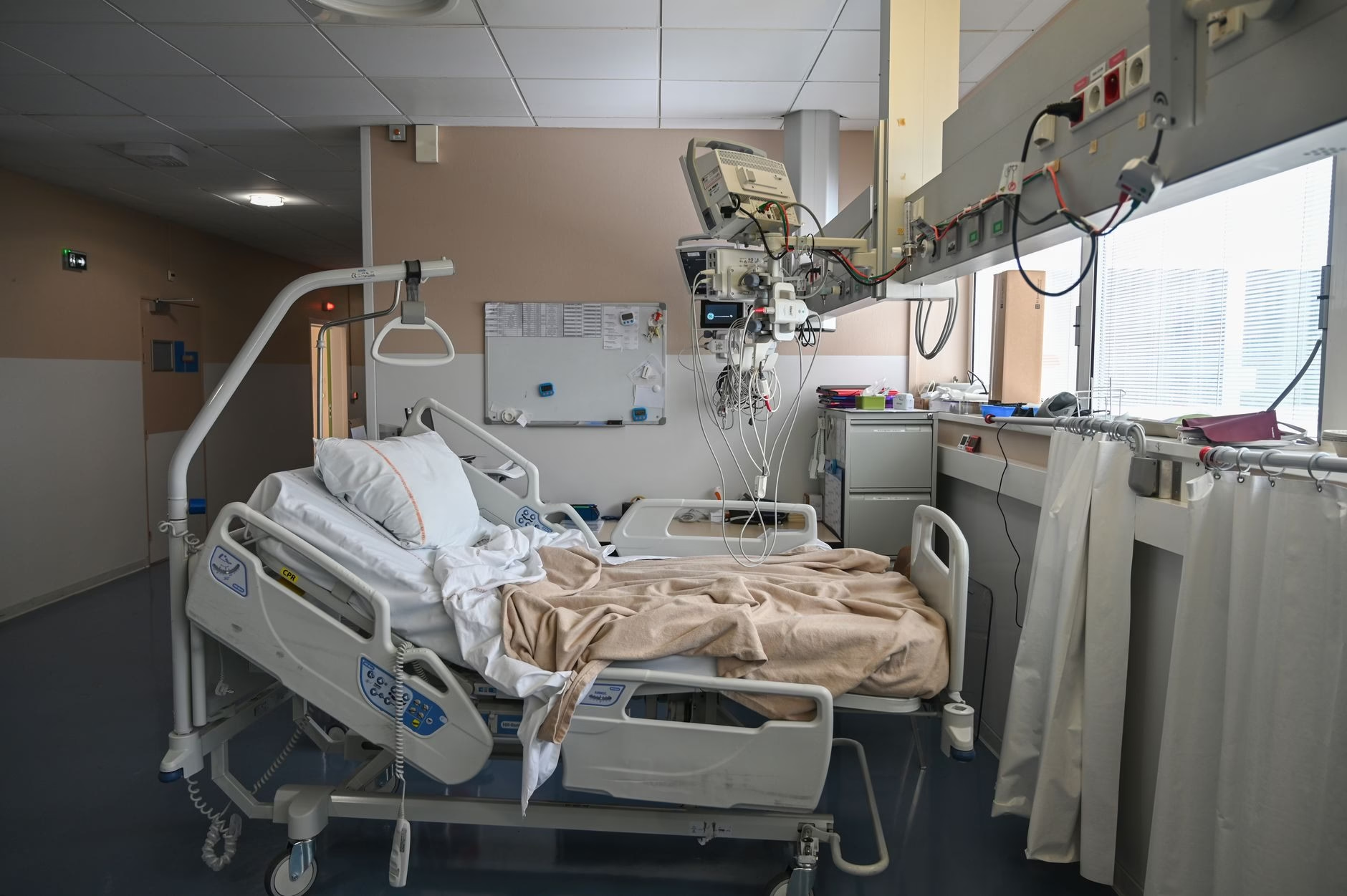
The latest assault saw armed assailants open fire at the Beni hospital, a critical hub in the ongoing fight against the Ebola virus. While details remain scarce, the incident underscores the precarious security situation in eastern Congo, where persistent rebel activity and intercommunal violence complicate efforts to contain the world’s second-deadliest Ebola outbreak.
Health workers have been increasingly caught in the crossfire. This attack follows two previous incidents earlier in the week: an assault on a different health center in Beni on Friday, and an attack on a research institute also in Beni on Wednesday. These repeated assaults have paralyzed some medical operations and instilled fear among those on the front lines of the epidemic.
Context of the Ebola Outbreak and Insecurity
The Ebola virus has ravaged parts of eastern Congo since August 2018, claiming over 2,200 lives. The region, particularly North Kivu province where Beni is located, has been plagued by decades of conflict involving numerous armed groups. These groups often operate with impunity, and their activities disrupt essential services, including healthcare.
The Ebola outbreak itself has been challenging, marked by a high number of cases and a difficult geographic terrain. Compounding these challenges, mistrust and misinformation have sometimes led to community resistance against health workers and containment measures. The recent attacks add a critical layer of insecurity, directly threatening the infrastructure and personnel vital for controlling the spread of the virus.
Impact on Healthcare Operations and Patient Care
Attacks on health facilities have direct and devastating consequences. They disrupt the delivery of essential medical care, including vaccinations, treatment for Ebola patients, and routine health services for the wider community. Fear of violence can deter patients from seeking treatment and prevent healthcare workers from reaching those in need.
The International Rescue Committee (IRC) has repeatedly warned about the dangers faced by aid workers and civilians in the region. “The safety and security of our teams and the communities we serve is paramount,” stated an IRC spokesperson in a previous report regarding the insecurity in eastern Congo. “Attacks on health facilities are unacceptable and directly undermine the global response to this devastating outbreak.”
Broader Implications for Public Health and Stability
The recurrent violence against healthcare infrastructure in an active Ebola zone presents a grave threat not only to public health but also to regional stability. It signals a breakdown in security that could embolden armed groups and further destabilize an already fragile region.
International health organizations and the Congolese government face immense pressure to ensure the safety of treatment centers and personnel. This requires a multi-faceted approach, involving enhanced security measures, community engagement to build trust, and coordinated efforts to disarm and demobilize armed groups operating in the affected areas.
What to Watch Next
The coming days and weeks will be critical in assessing the impact of these attacks on the Ebola response. Observers will be watching closely to see if security measures are strengthened around health facilities and if the Congolese government and international partners can restore confidence among healthcare workers and the affected population. The ability to maintain consistent access for medical teams and patients, free from the threat of violence, will be a key determinant in the success of efforts to control the ongoing Ebola epidemic in eastern Congo.

















Leave a Reply