


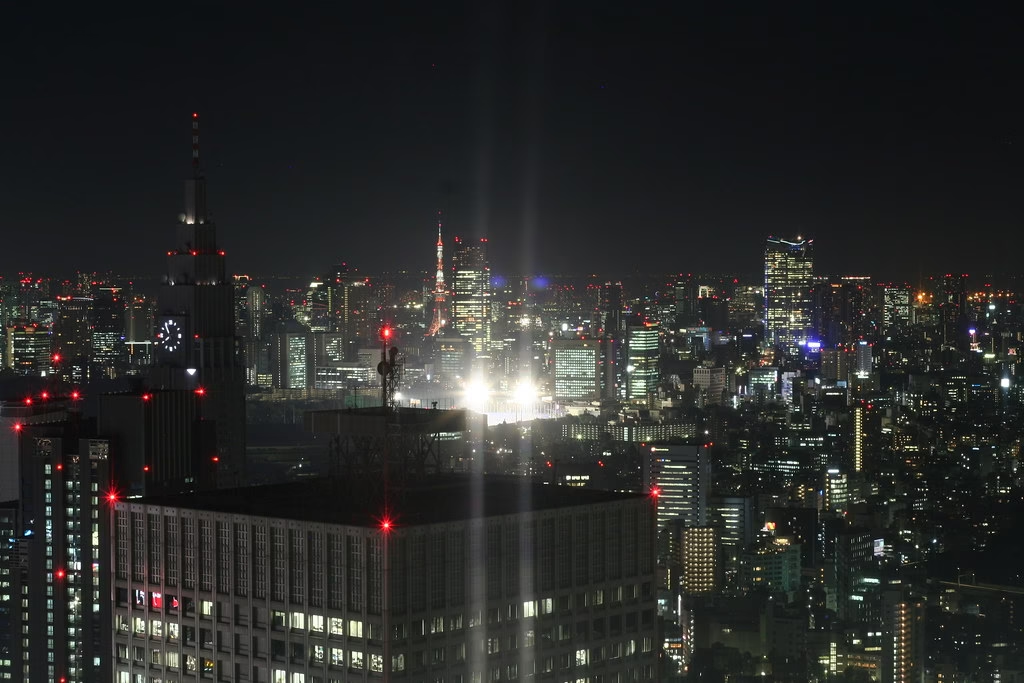
Travelers planning trips to Japan remain largely unaffected by current safety protocols following a significant 7.6 magnitude earthquake that struck near the southern Philippines on December 2, 2023. While the Japan Meteorological Agency (JMA) issued temporary tsunami advisories for coastal regions of the Izu and Ogasawara Islands, authorities confirmed that the seismic event originated far from the Japanese mainland, allowing for the swift lifting of all major warnings.
Understanding Regional Seismic Risks
Japan sits atop the intersection of several tectonic plates, making it one of the most seismically active nations in the world. The country maintains a sophisticated disaster prevention infrastructure, including a nationwide Early Warning System that provides real-time alerts via mobile devices and public broadcasting.
The recent Philippine earthquake served as a reminder of the interconnected nature of Pacific Rim seismic activity. While the event triggered localized concerns, Japan’s robust building codes and emergency preparedness plans are designed to withstand significant tremors, ensuring that tourism infrastructure remains resilient.
Current Travel Advice and Safety Measures
International travel advisories, including those from the U.S. State Department and the UK Foreign Office, currently categorize Japan as a safe destination for international visitors. There are no active travel bans or recommendations to avoid the country due to the recent regional seismic activity.
Experts from the Japan National Tourism Organization (JNTO) emphasize that the risk of a major incident impacting a standard vacation itinerary remains statistically low. For those concerned about safety, officials recommend downloading the ‘Safety Tips’ app provided by the Japan Tourism Agency, which offers real-time notifications in multiple languages.
Industry and Economic Implications
Japan’s tourism sector has seen a robust recovery post-pandemic, with millions of international arrivals contributing significantly to the national economy. Industry analysts suggest that brief, isolated seismic events rarely deter long-term travel demand, provided that communication from local authorities remains transparent and effective.
Hotels and transport operators across Japan have integrated seismic safety protocols into their daily operations. Guests are often provided with emergency information upon check-in, detailing evacuation routes and meeting points, which serves to maintain public confidence in the face of natural environmental shifts.
Future Outlook and Monitoring
Looking ahead, travelers should continue to monitor updates from the Japan Meteorological Agency before and during their stay. As climate and tectonic activity remain unpredictable, the reliance on digital information tools will grow, with travel insurance providers likely to emphasize the importance of comprehensive coverage for natural disaster-related travel interruptions.
Future trends indicate a move toward more personalized digital safety alerts, allowing tourists to receive site-specific information based on their exact geolocation. Observers suggest that as long as Japan continues to lead in disaster mitigation technology, it will maintain its status as a top-tier destination for global travelers.





















Leave a Reply