


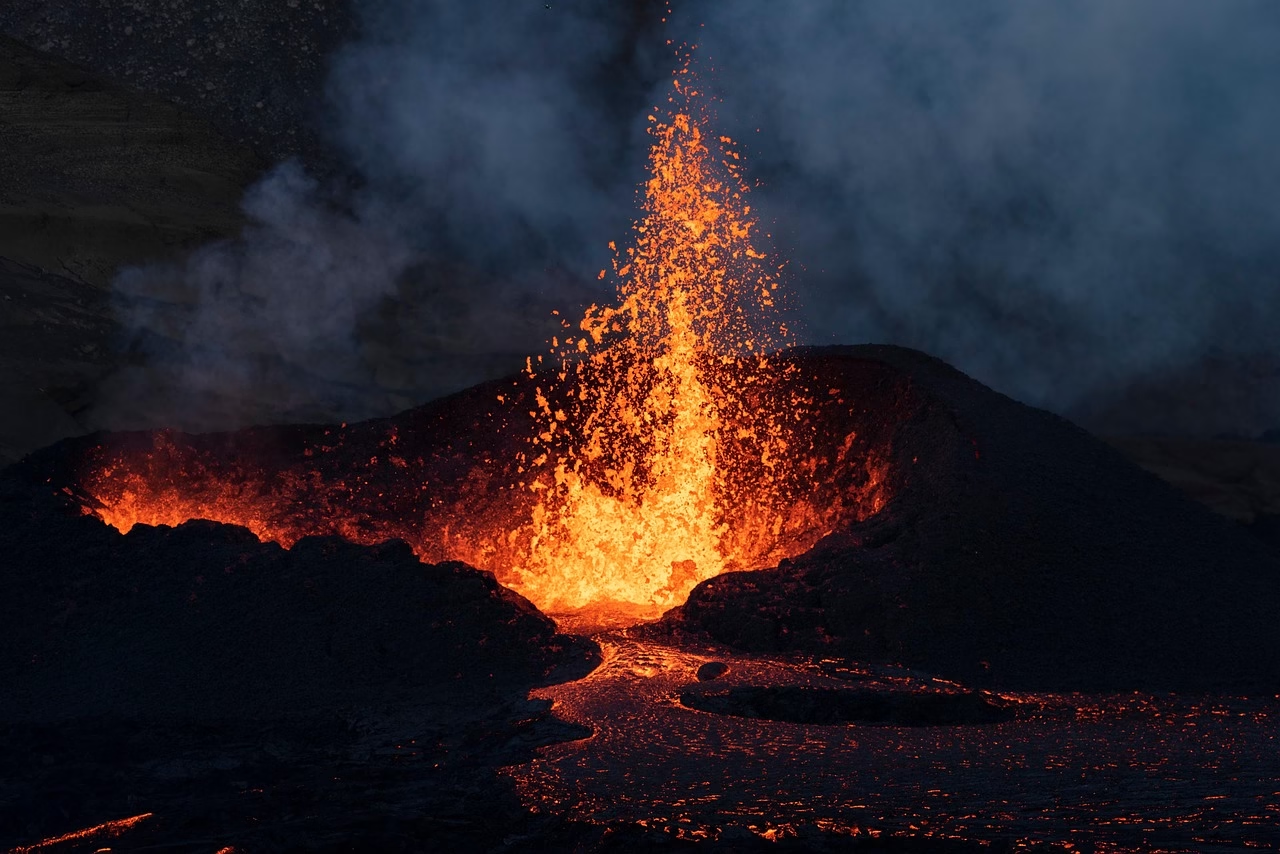
Archaeologists working at a newly excavated prehistoric site have uncovered a remarkably preserved 3,000-year-old human skeleton buried deep beneath a dense stratum of volcanic ash. The human remains, discovered lying face down in a prone position, offer researchers an unprecedented look into an ancient community disrupted by sudden volcanic activity. Bioarchaeological teams are now preparing the specimen for extensive radiocarbon dating and ancient DNA (aDNA) analysis to establish the exact timeline of the disaster and reveal the individual’s biological sex and ancestry.
Preserved Under Ash: The Mechanics of Volcanic Encapsulation
Volcanic ash falls create unique taphonomic conditions that can preserve organic material for millennia. When fine-grained tephra settles rapidly over a landscape, it creates an anoxic barrier, shielding organic remains from oxygen, scavengers, and environmental degradation.
Similar site formations across global archaeological records demonstrate that sudden volcanic events preserve fragile biological markers that normally decay within decades. By entombing the individual instantly, the ash layer locked in place microscopic evidence, including soil chemistry, plant phytoliths, and structural bone integrity that would otherwise have been lost to natural erosion.
Anomalous Position and Immediate Field Observations
Field excavation teams noted that the skeleton was positioned face down, a pose that frequently raises distinct bioarchaeological questions. Prone positioning can indicate an abrupt attempt to take shelter during an eruption, a collapse during flight, or specific cultural burial practices unique to the regional Bronze Age society.
Researchers observed that the anatomical arrangement suggests the body remained undisturbed following its initial placement beneath the tephra. Every detail, down to the articulation of the small bones in the hands and feet, remained intact due to the compacting weight of the overlying ash.
Scientific Protocols: Radiocarbon Dating and Genomic Analysis
To pinpoint the precise decade of the event, specialists are executing high-precision Accelerator Mass Spectrometry (AMS) radiocarbon dating on collagen extracted from the skeleton. Preliminary stratigraphy dates the ash deposit to approximately 1000 BCE, but laboratory carbon-14 testing will establish a far tighter chronological window.
Concurrently, geneticists are isolating ancient DNA from the petrous bone—the dense section of the temporal bone known for optimal genetic preservation. Genomic extraction will definitively determine the individual’s biological sex, physical traits, and genetic affinities to both ancient populations and contemporary regional groups.
Data from stable isotope testing on tooth enamel will further elucidate the individual’s diet and childhood geographic origin. Oxygen and strontium isotope signatures embedded in enamel reflect local groundwater consumed during development, allowing researchers to verify whether the individual was a local resident or had migrated to the area prior to the eruption.
Implications for Regional Prehistory and Future Research
The discovery promises to significantly refine regional volcanic hazard timelines while expanding the historical record of human adaptation to environmental disasters. Establishing a definitive date for the tephra layer will provide geologists with a firm chronological marker to synchronize localized volcanic activity with broader climate anomalies observed in the late Bronze Age.
In the coming months, laboratory teams will finalize genomic sequencing and carbon isotope results. Comparative analysis with nearby settlement artifacts will determine if this event represents an isolated tragedy or a widespread abandonment of the region driven by catastrophic volcanism.





















Leave a Reply