


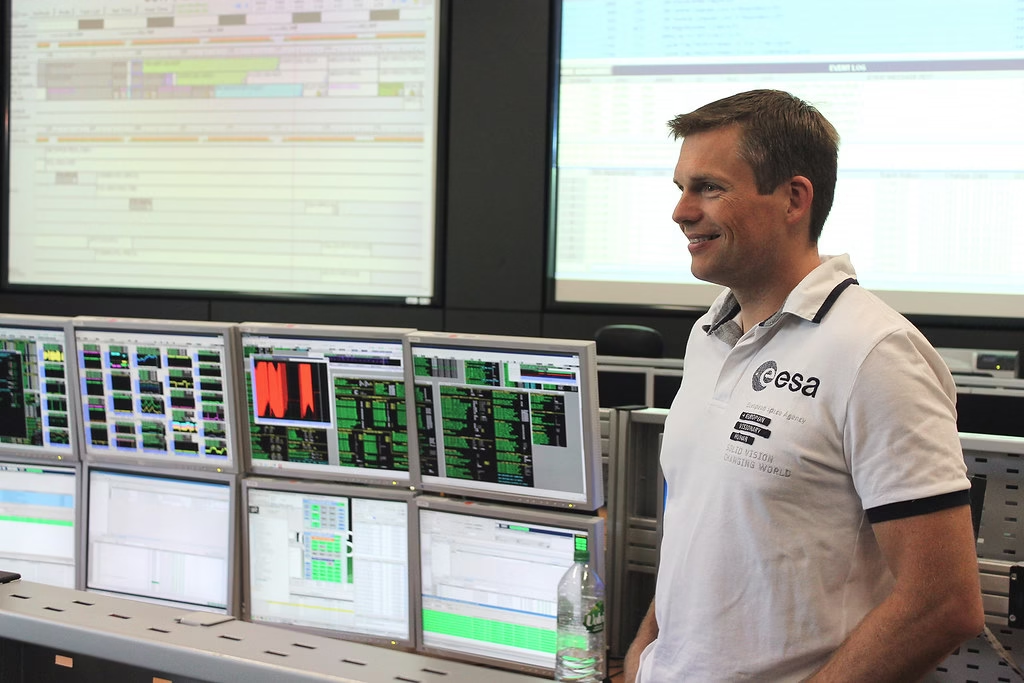
NASA officials confirmed that emergency evacuation preparations for the four crew members aboard the International Space Station (ISS) have concluded following a persistent air leak in the orbiting laboratory’s Russian segment. The astronauts were ordered to board their docked SpaceX Crew Dragon spacecraft and don their pressurized suits as a precautionary measure while ground teams monitored atmospheric pressure levels throughout the station.
Contextualizing the ISS Infrastructure
The International Space Station, a multi-national collaboration that has been continuously occupied since November 2000, is currently facing aging infrastructure issues. The specific leak in question has been isolated to the Zvezda service module, a component that has been in orbit for over two decades. NASA and Roscosmos, Russia’s space agency, have been monitoring the slow increase in the station’s background leak rate for several years, though recent diagnostic data prompted a heightened state of readiness.
Operational Response and Safety Protocols
When the leak rate showed signs of deviation from standard operational parameters, mission control centers in Houston and Moscow initiated standard emergency protocols. The four crew members—NASA astronauts Matthew Dominick, Michael Barratt, and Jeanette Epps, along with Roscosmos cosmonaut Alexander Grebenkin—followed established procedures to secure the station. By isolating specific modules, engineers were able to confirm that the leak remained contained within a specific sector, allowing the station to maintain its overall structural integrity.
Expert Perspectives on Orbital Integrity
Aerospace industry analysts note that managing leaks is a routine, albeit serious, aspect of long-term space station maintenance. Dr. Elena Rossi, an independent aerospace engineer, explains that the ISS is subjected to constant thermal cycling and micrometeoroid impacts, which naturally degrade pressurized seals over time. While the current leak does not pose an immediate threat to the structural viability of the station, it necessitates rigorous oversight and consistent seal maintenance to ensure the safety of the crew.
Industry Implications and Future Monitoring
The event highlights the increasing reliance on redundant systems as the ISS approaches its projected retirement date near the end of the decade. Commercial space companies are already developing the next generation of private space stations, which will be tasked with replacing the capabilities currently provided by the ISS. The ability of NASA and its international partners to manage these technical anomalies serves as a critical stress test for maintaining human presence in low-Earth orbit during the transition period.
Moving forward, space agencies will continue to conduct high-resolution inspections of the Zvezda module’s interior and exterior interfaces. Stakeholders will be watching for potential restrictions on station operations, such as limiting the number of modules utilized during cargo arrivals or crew rotations, to minimize further stress on the pressurized environment. As the station continues to age, the frequency of these diagnostic procedures is expected to increase, further emphasizing the need for robust contingency planning in upcoming commercial orbital missions.



















Leave a Reply