


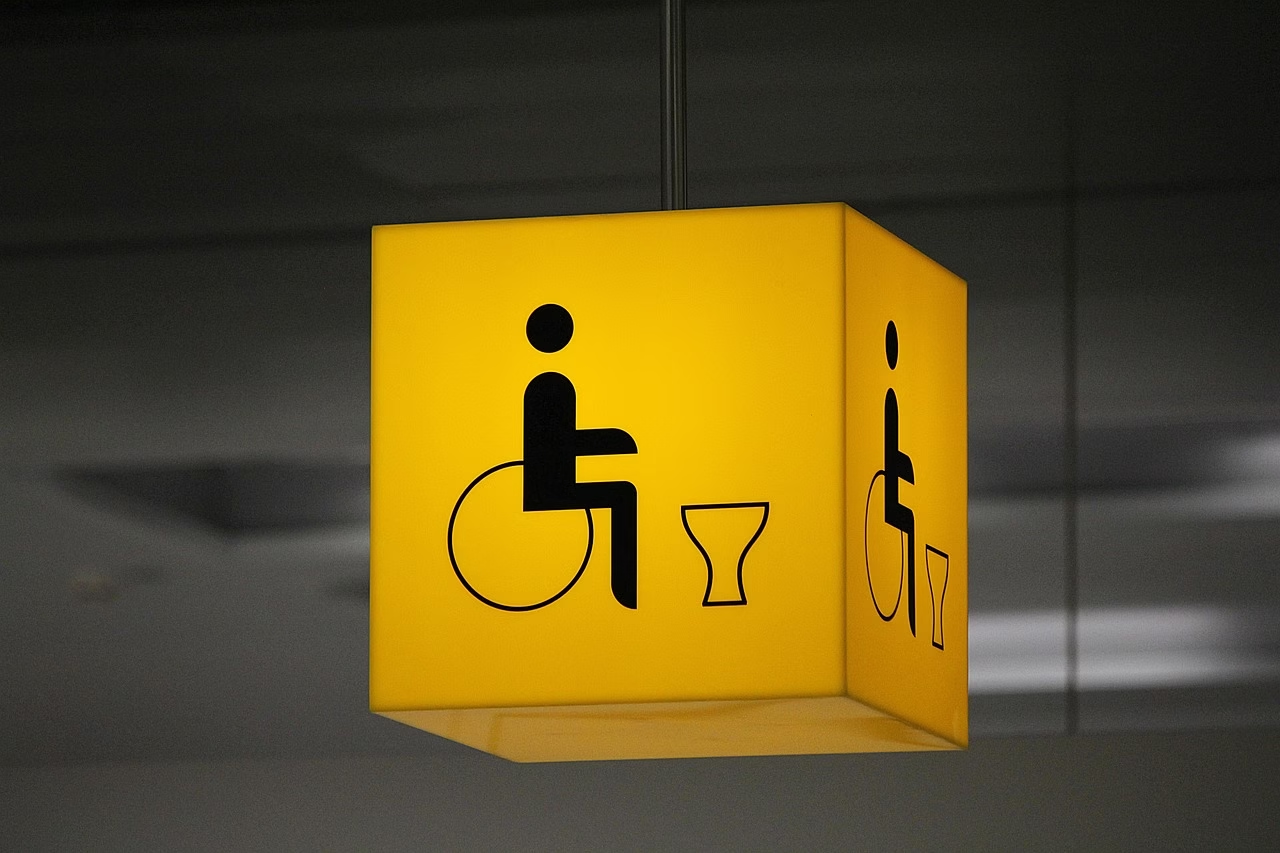
A motorist dressed as the superhero Spider-Man leaped from a Jeep in Arkansas this week to assist a man in a wheelchair who was stranded while attempting to cross a dangerous six-lane highway during heavy traffic. The costumed bystander positioned himself between oncoming vehicles and the mobility-impaired pedestrian, successfully halting multi-lane traffic to ensure a safe crossing before driving away.
An Unexpected Intervention on a Six-Lane Corridor
The high-risk situation unfolded on a heavily traveled arterial roadway, where high speed limits and wide pavement frequently pose hazards for non-motorized travelers. Traffic halted abruptly when the individual in the Spider-Man suit spotted the wheelchair user struggling mid-thoroughfare.
Witnesses reported that the costumed driver pulled his Jeep into a protective position, dismounted quickly, and stepped directly into the travel lanes. Utilizing the high visibility of the costume, the Samaritan signaled approaching vehicles to stop across all six lanes.
The rescuer then safely escorted the individual across the remaining lanes of asphalt. Once the pedestrian reached the sidewalk safely, the driver returned to his vehicle without revealing his identity.
Contextualizing Pedestrian Safety Gaps
The dramatic rescue underscores widespread infrastructure challenges facing individuals with disabilities in suburban environments. Arterial corridors in many American towns were historically engineered primarily for vehicular throughput rather than pedestrian accessibility.
According to data from the National Highway Traffic Safety Administration (NHTSA), pedestrian fatalities among wheelchair users are disproportionately high on multi-lane roads lacking mid-block crosswalks or refuge islands. Research indicates that wheelchair users face a 36 percent higher risk of pedestrian mortality compared to the non-wheelchair population.
Urban infrastructure advocates point out that long distances between signalized intersections often force individuals with physical limitations to make high-risk crossings out of necessity.
The Psychology of Public Heroism
The incident also highlights the phenomenon of public intervention and the psychological barriers associated with the bystander effect. In emergency situations on busy roadways, drivers often assume someone else will stop or that emergency services are already en route.
Behavioral scientists note that novelty and high visibility—such as wearing a recognized superhero costume—can effectively break social hesitation. The costume serves as a visual catalyst, commanding immediate driver attention and creating a clear signal of authority in a chaotic traffic setting.
This event reflects a broader cultural trend of modern costumed philanthropy, where individuals adopt iconic personas to execute public service acts or assist vulnerable community members.
Data-Driven Imperatives for Urban Design
Transportation planners are increasingly looking at micro-mobility and accessibility data to address these systemic safety flaws. Reports from the Federal Highway Administration (FHWA) highlight that retrofitting arterial roads with pedestrian hybrid beacons, curb ramps, and traffic-calming measures reduces pedestrian crashes by up to 55 percent.
While community members praised the Arkansas driver’s swift actions, transportation analysts emphasize that spontaneous civilian intervention should not remain the primary safety net for vulnerable commuters.
Municipalities across the region face growing pressure to comply with updated Americans with Disabilities Act (ADA) transition plans. Funding allocated through federal infrastructure grants is increasingly conditional on addressing identified hazardous pedestrian corridors.
Future Implications and Infrastructure Trends
As state agencies review traffic safety metrics following high-visibility incidents, local planning boards are expected to face renewed calls for physical road retrofits along commercial thoroughfares. Observers will be watching whether municipal governments accelerate sidewalk connectivity projects and install additional signalized crossings along multi-lane corridors. Urban design researchers continue to monitor how community-led interventions influence public policy debates regarding pedestrian equity and roadway safety standards.














Leave a Reply