



Renewed Tensions in the Persian Gulf
Iran launched a coordinated barrage of missiles and drones toward Bahrain and Kuwait on Tuesday, prompting immediate defensive actions from United States naval forces stationed in the region. The sudden escalation signals a significant breakdown in the fragile ceasefire that had largely stabilized the Persian Gulf over the past several months. U.S. Central Command confirmed that its interceptor systems successfully neutralized the majority of the incoming projectiles, preventing widespread civilian casualties or critical infrastructure damage.
Context of the Regional Standoff
The Persian Gulf has remained a flashpoint for international diplomacy due to its status as the world’s primary maritime artery for crude oil shipments. Following years of heightened maritime insecurity and proxy conflicts, regional powers had recently entered into a de-escalation period intended to preserve trade routes and regional stability. This latest breach of that understanding follows a series of diplomatic stalemates regarding regional security architecture and the presence of foreign military assets in Middle Eastern waters.
Strategic Implications of the Engagement
Analysts suggest that the timing of the Iranian operation is not coincidental, occurring as regional stakeholders attempted to formalize long-term security guarantees. The use of both ballistic missiles and unmanned aerial vehicles indicates a shift toward more sophisticated, multi-layered strike capabilities. Military observers note that the U.S. military’s ability to intercept these assets underscores the continued efficacy of regional missile defense networks, though the political cost of such engagements remains high.
Expert Perspectives on Regional Stability
Defense analysts at the Middle East Institute indicate that this exchange forces a reassessment of the current deterrence model. “The reliance on a fragile ceasefire is being tested by the reality of domestic political pressures and regional power competition,” stated one senior policy researcher. Data from the International Institute for Strategic Studies suggests that the proliferation of low-cost, high-impact drone technology has significantly lowered the threshold for initiating cross-border strikes. This technological shift complicates traditional containment strategies and places additional strain on diplomatic channels.
Broader Economic and Diplomatic Impacts
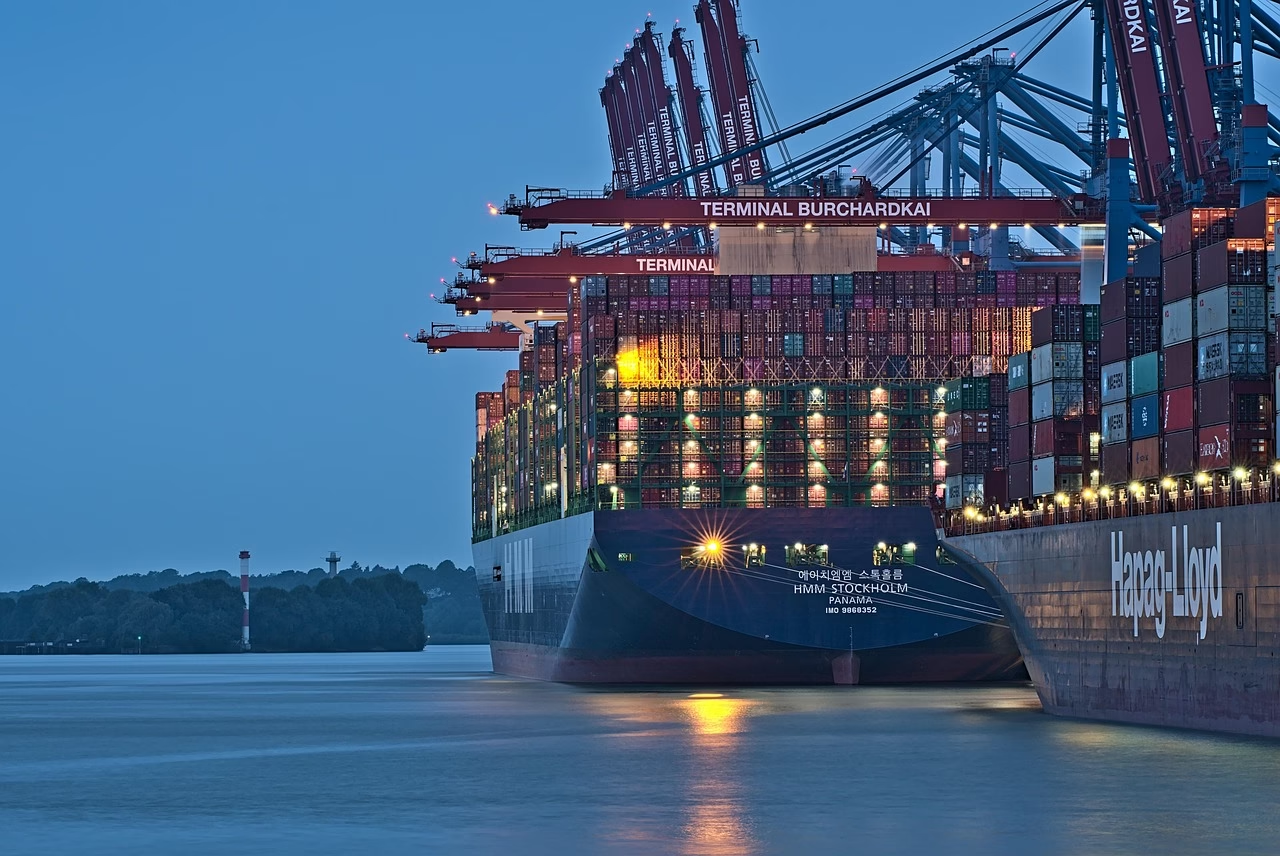
Global energy markets reacted swiftly to the news, with oil futures climbing as investors weighed the potential for supply chain disruptions in the Strait of Hormuz. For the shipping industry, the return of active kinetic conflict necessitates an immediate increase in maritime security premiums and potential re-routing of commercial vessels. Beyond the economic sphere, diplomatic efforts to mediate between Tehran and its neighbors now face the challenge of restoring trust in an environment where military posturing has regained precedence.
Future Outlook and Monitoring
Observers are now closely monitoring whether this exchange remains an isolated incident or marks the beginning of a sustained campaign of regional disruption. Diplomatic delegations are expected to convene in neutral capitals within the coming days to determine if the existing ceasefire framework can be salvaged or if a new security paradigm is required. The primary concern for international stakeholders remains the prevention of a wider, uncontrollable conflict that could permanently destabilize the region’s geopolitical landscape.























Leave a Reply