


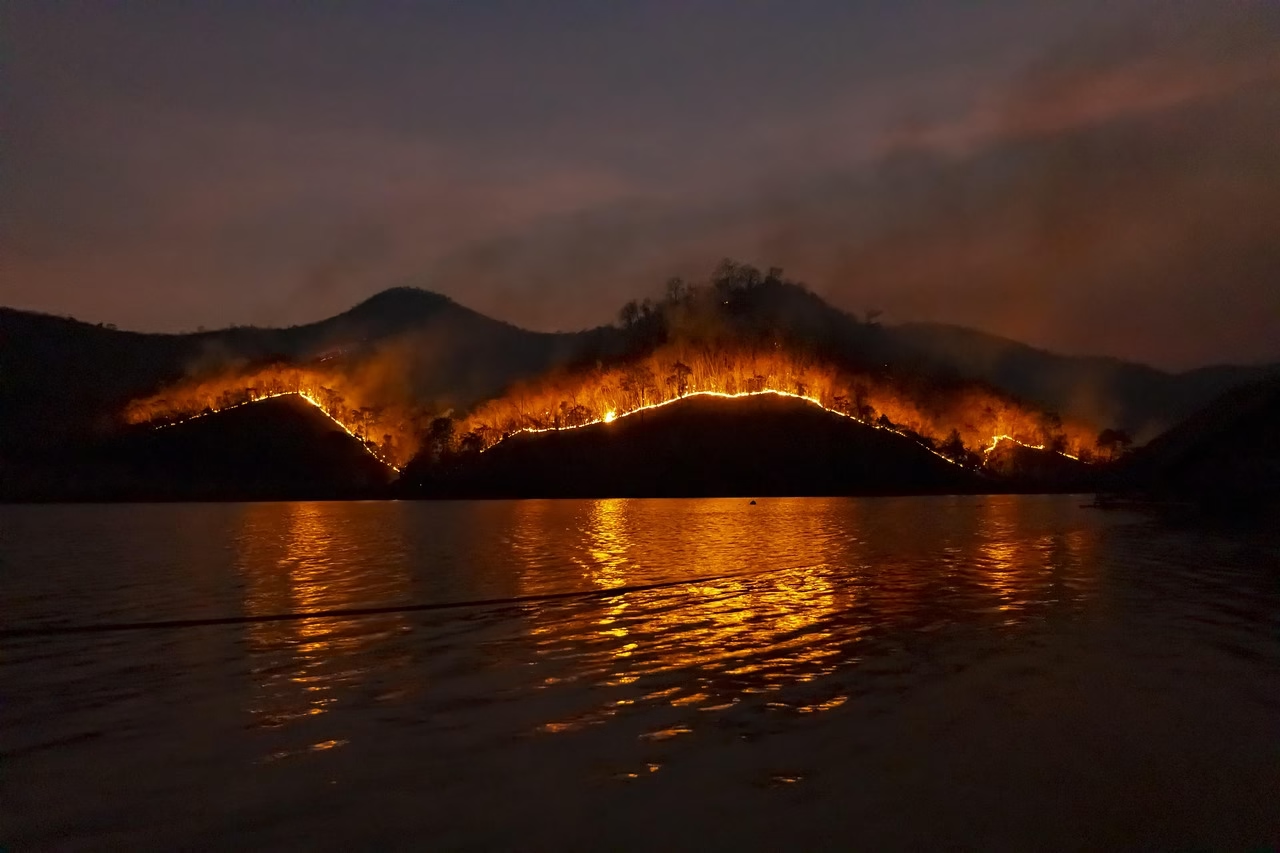
Hundreds of firefighters deployed across southern France are struggling to contain rapidly spreading wildfires as extreme summer heatwaves consume much of Southern Europe, triggering mass evacuations and threatening rural communities.
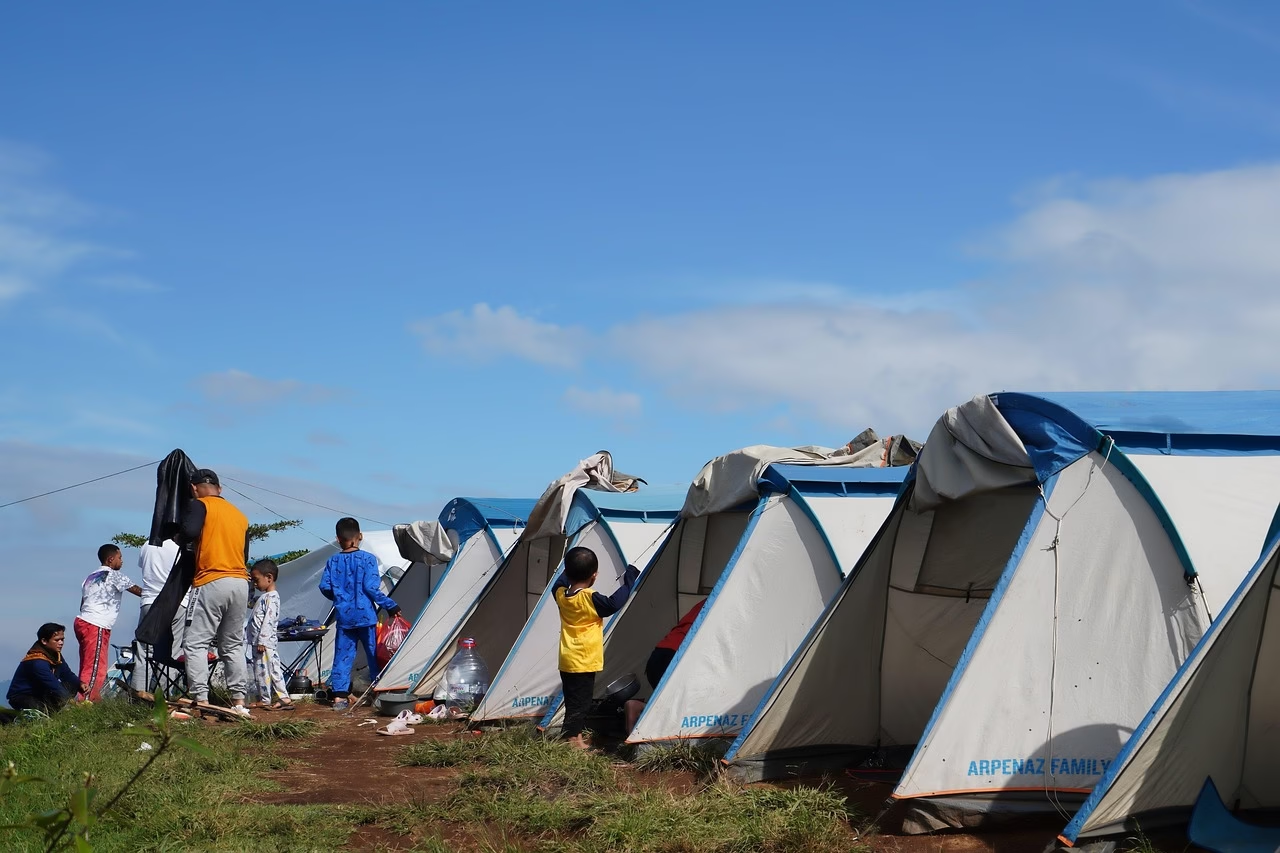
Driven by strong winds and dangerously dry vegetation, the blazes have swept through scrubland and pine forests across the region, forcing thousands of local residents and seasonal tourists to flee their homes and holiday accommodations.
Escalating Crisis in Southern Europe
The emergency unfolds against the backdrop of an intense heatwave gripping the Mediterranean basin, where ambient temperatures have repeatedly surpassed 40 degrees Celsius (104 degrees Fahrenheit).
According to data from the Copernicus Climate Change Service (C3S), Southern and Western Europe have experienced prolonged thermal anomalies this summer, creating powder-keg conditions across rural departments in France, Spain, and Italy.
Persistent low rainfall over consecutive seasons has left soil moisture levels at historical lows, allowing minor ignition sources to rapidly expand into uncontrollable firestorms.
Emergency Response and Agricultural Impact
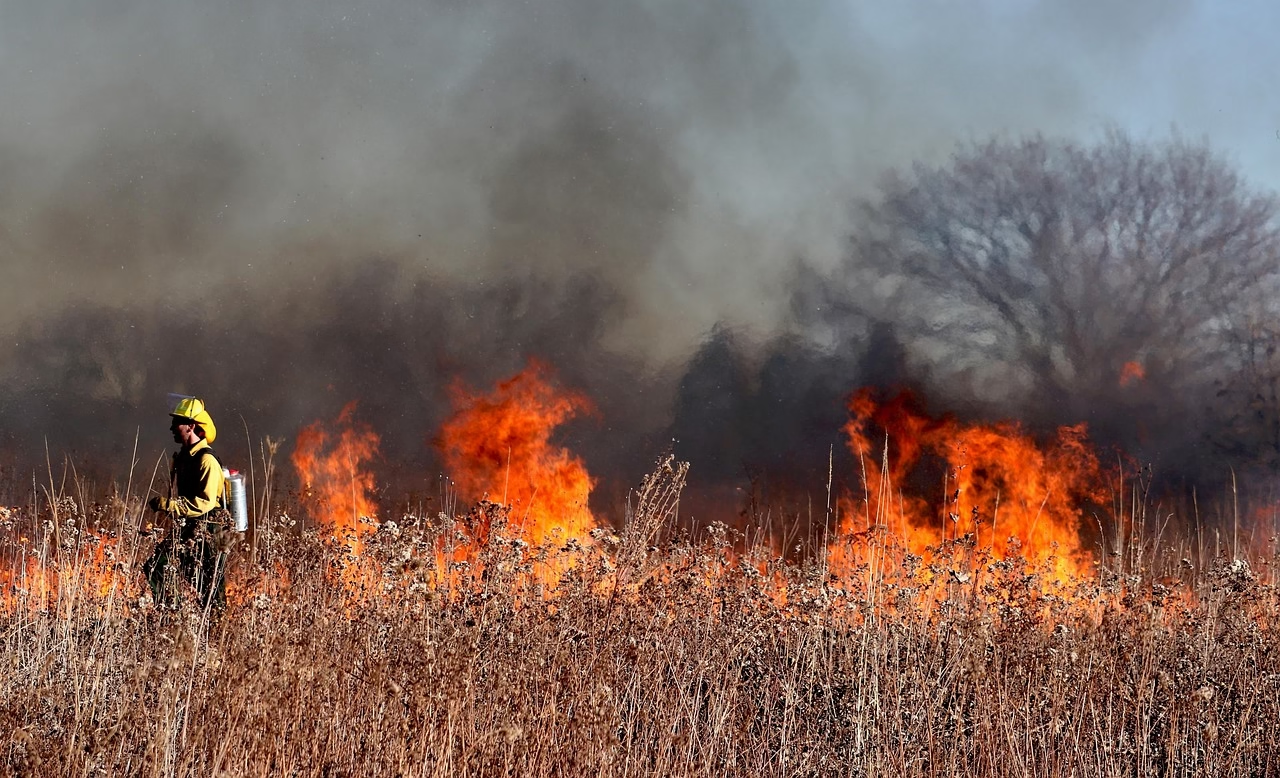
Emergency service personnel are working around the clock under extreme physical conditions to establish containment lines around threatened municipalities.
Dramatic footage captured in the region shows local livestock, including horses, running frantically through fields shrouded in thick, choking smoke as flames crested nearby hillsides.
Local agricultural networks report severe disruptions, with farmers rushing to evacuate animals and clear firebreaks around farmsteads threatened by the fast-moving front.
More than 1,200 firefighters, supported by heavy water-bombing aircraft and specialized ground vehicles, remain deployed across vulnerable corridors in the Gard, Var, and Bouches-du-Rhône departments.
Aerial firefighting support operations have faced periodic groundings due to turbulent thermal currents and reduced visibility caused by dense plumes drifting over major transportation routes.
Climate Data and Expert Assessments
Meteorological experts emphasize that the frequency and intensity of compound climate events—where extreme heat combines with prolonged drought—are accelerating across the continent.
“What we are witnessing is no longer an isolated seasonal anomaly, but part of a structural shift in Mediterranean climate patterns,” stated Dr. Elena Rostova, a senior researcher at the European Climate Hazards Observatory.
“The atmospheric conditions creating these firestorms are becoming more persistent, stretching regional emergency response capacities to their absolute limit,” Rostova added.
Data from the European Forest Fire Information System (EFFIS) indicates that total burnt land area across the European Union has already exceeded seasonal historical averages by more than 35 percent this year.
The economic impact on regional tourism, forestry, and agriculture is expected to be substantial, with local prefectures shuttering access to national parks and hiking trails to prevent further accidental ignitions.
Regional Preparedness and Future Outlook
The ongoing disaster highlights growing operational challenges for European civil protection services as simultaneous wildfire outbreaks occur across multiple member states.
EU officials are evaluating plans to expand the permanent rescEU civil protection fleet, aiming to procure additional specialized amphibious aircraft and heavy-lift helicopters before the next summer season.
For affected communities in southern France, immediate focus remains on volatile weather shifts expected over the coming days, with meteorologists tracking incoming wind shifts that could either abate or fan existing fire lines.
With high temperatures forecast to persist through the month, disaster management authorities warn that the fire risk index across Mediterranean forests will remain at critical levels for the foreseeable future.























Leave a Reply