


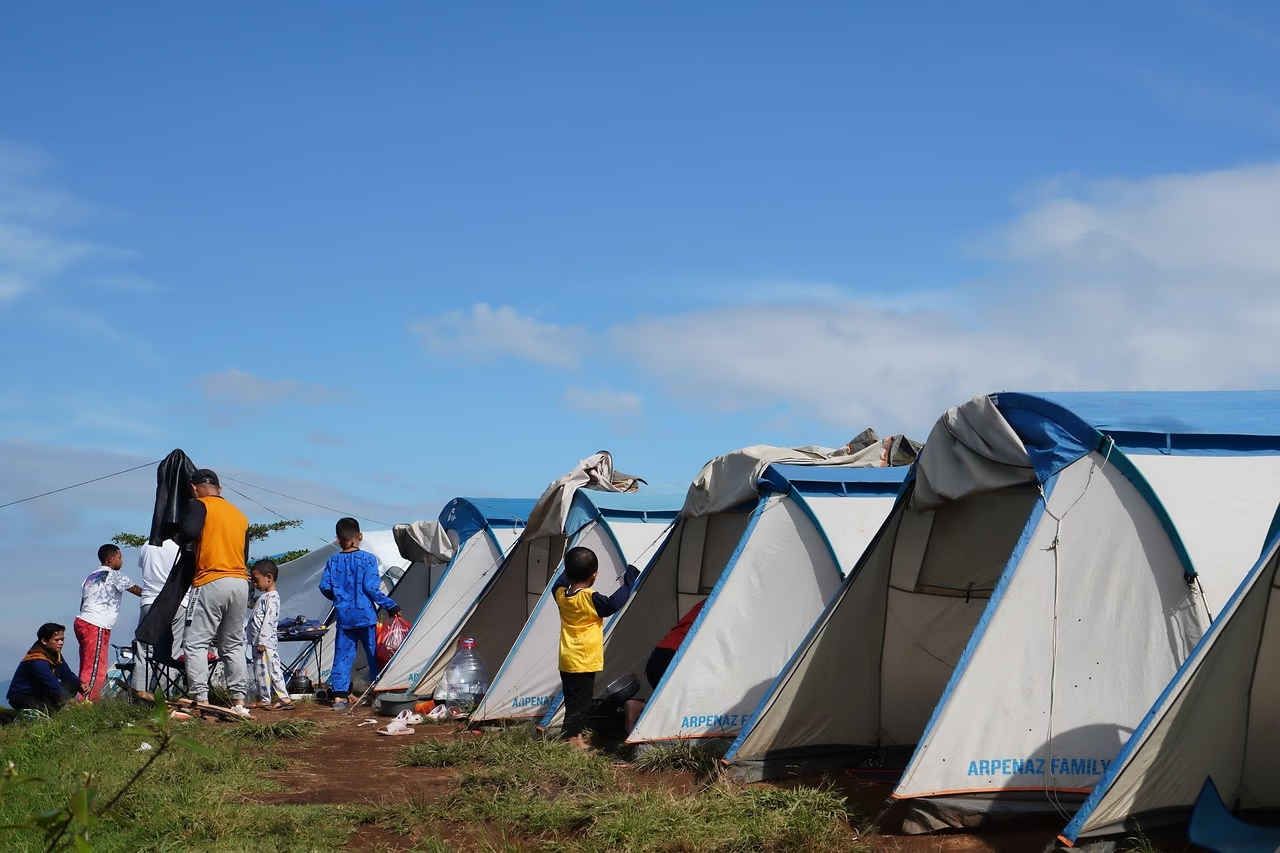
One month after a series of destructive earthquakes struck central Venezuela, hundreds of displaced families remain stranded in makeshift tent encampments on the ruins of state-built apartment complexes, facing severe health hazards and a government relocation timeline that stretches to 2027.
The survivors, currently occupying temporary shelters erected on the cracked asphalt of former residential compounds, are enduring extreme tropical heat, high humidity, and swarms of insects without access to running water, electricity, or sanitary services. State officials have promised replacement housing, but residents face a three-year wait before permanent structures are expected to be completed.
Background of Venezuela’s Housing Vulnerabilities
The collapsed structures were originally constructed under the Great Housing Mission Venezuela (Gran Misión Vivienda Venezuela), a flagship state social program launched by former President Hugo Chávez in 2011 and continued under President Nicolás Maduro. The initiative aimed to provide low-cost housing to millions of low-income citizens across the country.
For years, independent structural engineers and urban planning organizations have raised red flags regarding the construction standards of these rapid-build projects. Reports from civil engineering associations highlighted the use of substandard materials, skipped seismic compliance checks, and a lack of proper geological surveys prior to foundation pouring.
Venezuela sits atop complex fault lines, including the Boconó, San Sebastián, and El Pilar faults, making strict adherence to seismic building codes a critical requirement for public safety. The recent seismic activity exposed long-standing vulnerabilities in public infrastructure, leaving state-built units particularly susceptible to structural failure compared to private constructions adhering to standard codes.
Desperate Conditions on the Ground
Life in the displacement camps has deteriorated rapidly over the past thirty days as environmental conditions worsen. Families are sleeping in high-density nylon tents that trap heat during peak daylight hours, creating internal temperatures that regularly exceed 100 degrees Fahrenheit.
Without functioning municipal water grids, residents rely entirely on sporadic deliveries from state-operated water tankers or untreated local sources. Sanitation facilities are virtually non-existent, forcing displaced populations to rely on pit latrines, which heightens the risk of vector-borne and waterborne illnesses.
Local health volunteers report an increasing prevalence of skin infections, gastrointestinal illness, and insect-borne diseases among children and the elderly. Vector control services have not been deployed to manage the exploding populations of flies and mosquitoes breeding around stagnant water accumulation near the debris fields.
Expert Analysis and State Capacity
Disaster response experts point out that the three-year timeline offered by the government reflects deep economic stagnation and severe fiscal constraints within state institutions. National infrastructure spending has dropped significantly over the past decade amid prolonged economic contraction and ongoing international sanctions.
“A three-year delay for basic shelter relocation indicates a complete breakdown in emergency reserve capacity,” said Dr. Elena Rivas, an urban infrastructure analyst specializing in Latin American housing policy. “In standard post-disaster recovery frameworks, temporary structural housing is provided within 90 days. Leaving populations in soft-shell tents for years creates long-term public health emergencies.”
Data from international humanitarian monitoring groups indicates that emergency aid distribution in the affected region remains hindered by logistical bottlenecks and fuel shortages. While state authorities maintain that relief supplies are arriving regularly, independent field surveys show significant gaps in food security and medical assistance for camp residents.
Forward-Looking Implications and Next Steps
The prolonged displacement of earthquake victims is expected to place additional strain on regional public health networks and neighboring municipalities. As the regional rainy season approaches, the integrity of temporary canvas and plastic shelters will face severe tests, raising the likelihood of secondary evacuations or heightened disease outbreaks.
Humanitarian observers are watching closely to see whether international aid organizations will be granted unhindered access to establish semi-permanent transitional shelters. Observers are also monitoring whether the government will revise its 2027 reconstruction target or seek external financing to accelerate structural repairs and housing development before environmental conditions worsen further.





















Leave a Reply