


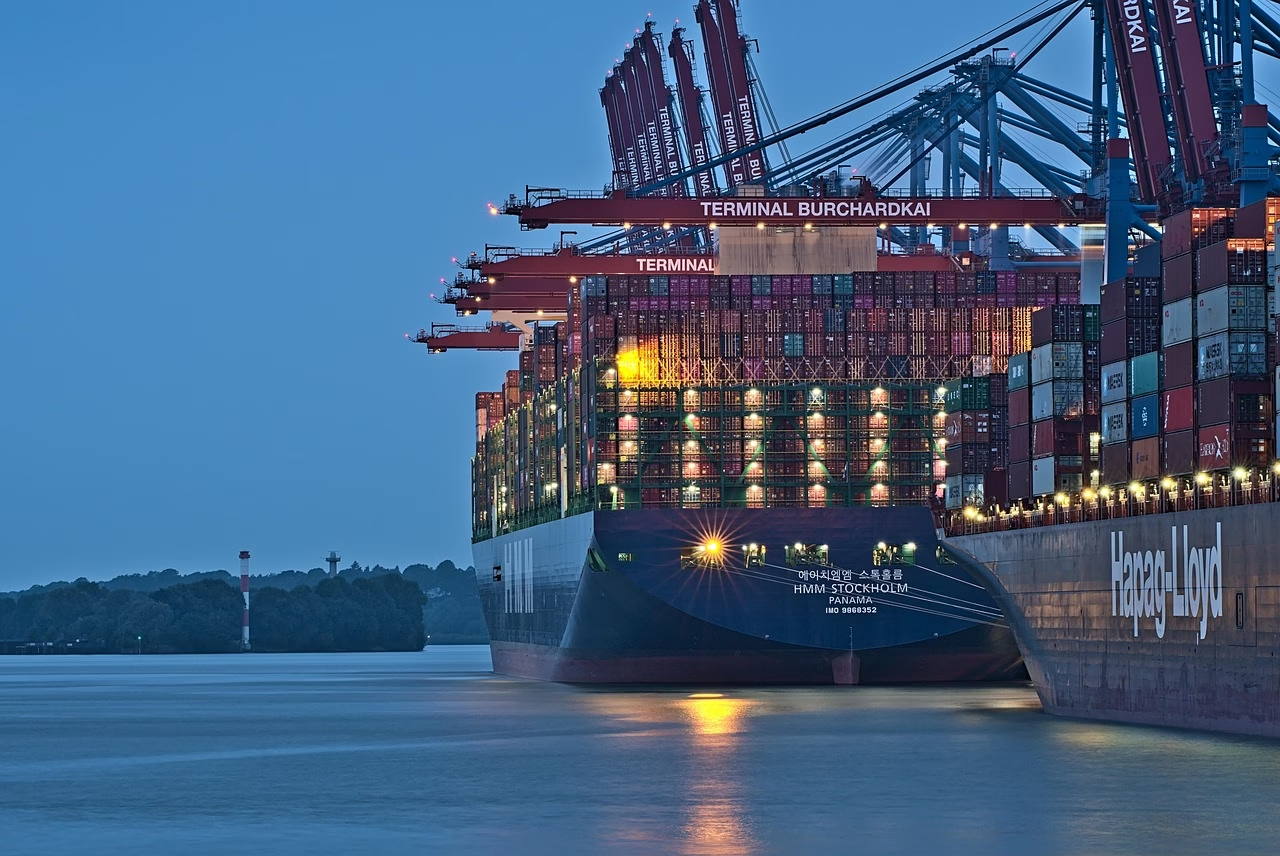
WASHINGTON — The Trump administration imposed a 50% tariff on Canadian dairy, alcohol, and automotive imports, citing alleged discriminatory trade actions by Ottawa. The move represents a major escalation in North American trade tensions, targeting three key sectors of the Canadian economy.
According to reports from NBC News’ Monica Alba, administration officials are also considering additional tariffs tied to cross-border smoke pollution caused by Canadian wildfires. The announced duties mark one of the most severe trade penalties levied against Canada in recent history.
Context Behind the Escalation
Bilateral trade between the United States and Canada relies on the framework established by the United States-Mexico-Canada Agreement (USMCA), which replaced NAFTA in 2020. Despite the agreement, longstanding disputes over Canada’s dairy supply management system have routinely strained economic relations.
Washington has repeatedly accused Ottawa of keeping domestic milk and cheese prices artificially high while limiting market access for foreign competitors through strict import quotas. Similarly, American spirits producers have complained about provincial liquor boards in Canada imposing regulatory hurdles and discriminatory price markups on U.S. exports.
The automotive industry represents a deeply integrated cross-border supply network, with vehicle components frequently crossing the U.S.-Canada border multiple times before final assembly. Imposing heavy duties on this sector threatens to disrupt manufacturing operations on both sides of the border.
Details of the New Tariff Order
The 50% import duties target shipments of Canadian milk, cheese, butter, distilled spirits, wine, beer, passenger vehicles, and auto components. Federal customs authorities are expected to begin collecting the elevated rates immediately at all northern border entry points.
White House representatives justified the sweeping policy by claiming Canadian trade policies continue to disadvantage American workers and manufacturers. The administration argued that diplomatic remedies and standard panel disputes under the USMCA have failed to resolve underlying structural disparities.
In a novel policy expansion, officials confirmed that the administration is evaluating potential trade penalties linked to environmental impacts. White House advisers claim that smoke drifting across the border from severe Canadian wildfires creates measurable economic harm and public health costs for northern U.S. states, potentially justifying additional protective duties.
Economic Impact and Expert Perspectives
The total bilateral trade in goods between the U.S. and Canada reached over $770 billion in 2023, with automotive products representing more than $100 billion of that total. Economists warn that a 50% duty on automotive imports will immediately increase manufacturing costs for major vehicle producers operating in North America.
‘The automotive supply chain is designed for frictionless trade under the USMCA,’ said Marcus Vance, a senior trade analyst at the Center for Transportation Economics. ‘A 50% tariff on vehicle parts will spike retail car prices for American consumers and could lead to temporary plant shutdowns in the Midwest.’
Agricultural economists noted that while American dairy farmers have long sought greater access to Canadian markets, sudden unilateral tariffs often lead to swift counter-measures that destabilize broader agricultural exports.
Regarding the proposed environmental tariffs, international legal scholars expressed skepticism. Trade attorney Elena Rostova noted that using tariffs to penalize neighboring nations for natural disasters like forest fires would challenge standard interpretations of international commercial law and World Trade Organization guidelines.
Implications for Consumers and Trade Relations
American consumers are likely to experience immediate price increases on specialty Canadian agricultural products, imported Canadian whiskies, and popular vehicle models assembled in Ontario processing plants. Distributors expect supply chain delays at key border bottlenecks, including the Ambassador Bridge between Detroit and Windsor.
The Canadian government is preparing retaliatory trade measures targeting specific U.S. goods exported to Canada. Canadian officials confirmed that emergency consultations are taking place with provincial leadership to coordinate economic support for impacted domestic industries.
Key developments to monitor next include potential emergency injunction filings in federal courts, formal dispute resolution proceedings initiated under USMCA mechanisms, and whether the proposed wildfire-related tariffs proceed into formal administrative action.
























Leave a Reply