


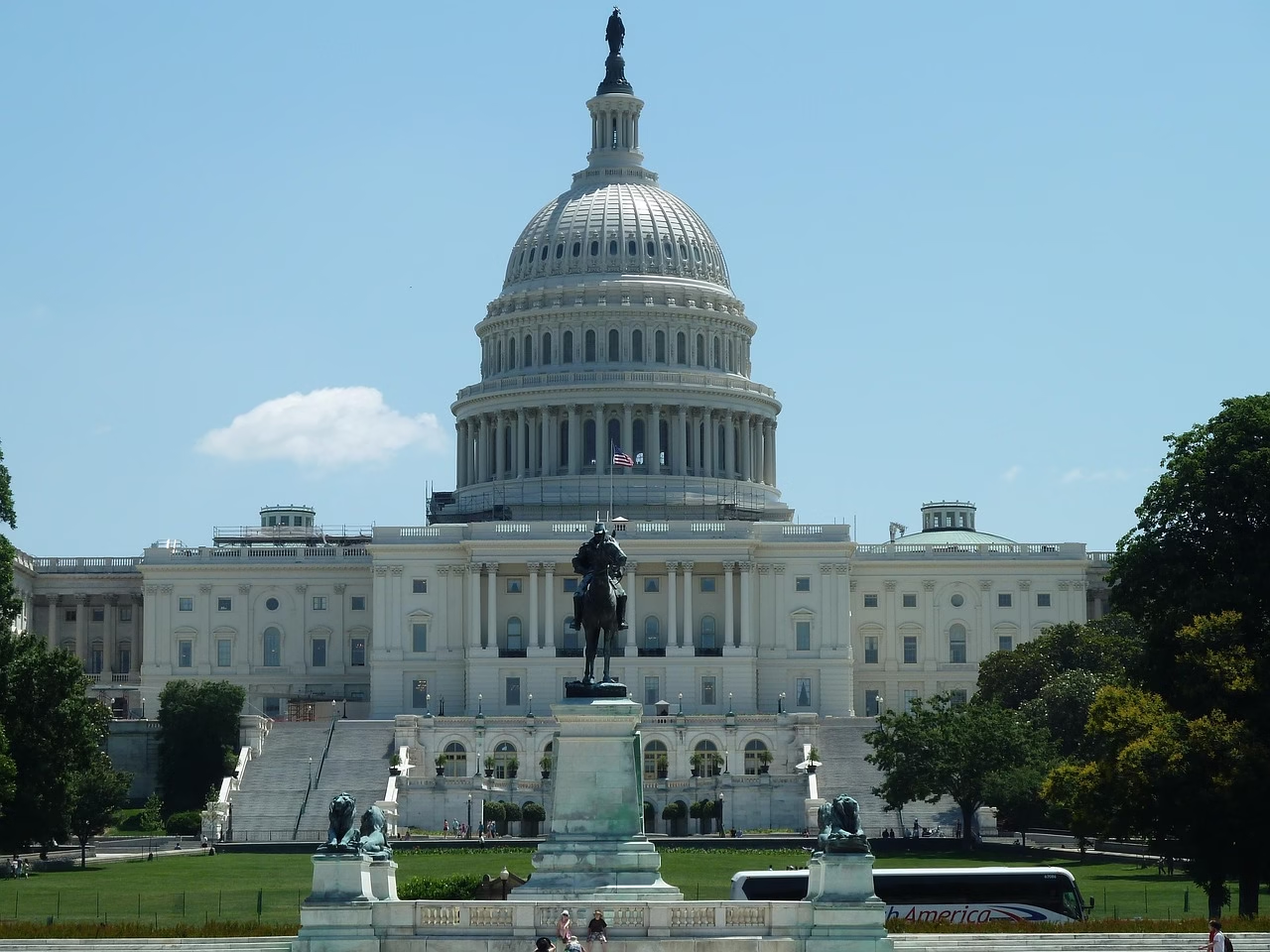
In Washington on Wednesday, Senate Finance Committee Ranking Member Ron Wyden introduced landmark legislation aimed at reining in executive trade powers, following former President Donald Trump’s recent proposal to levy aggressive new tariffs on Canadian imports. The Oregon Democrat characterized the proposed duties on Canadian goods as an economic “shakedown,” arguing that unilateral executive trade action threatens key alliance relationships and destabilizes international supply chains.
Context and Background on Executive Trade Authority
Under Section 232 of the Trade Expansion Act of 1962 and Section 301 of the Trade Act of 1974, Congress historically delegated significant power to the executive branch to impose tariffs under national security or unfair trade justifications. Over recent years, these statutory authorities faced increased scrutiny from lawmakers as successive administrations utilized executive unilateralism to implement broad trade penalties without prior legislative consent.
The latest flashpoint emerged when Trump signaled new cross-border duties against Canada, one of the United States’ primary trading partners and a central signatory of the United States-Mexico-Canada Agreement (USMCA). Lawmakers across party lines expressed growing concern regarding the potential economic ripple effects on domestic consumers, automotive manufacturers, and agricultural producers.
Historically, trade policy remained tightly controlled by Capitol Hill under Article I, Section 8 of the U.S. Constitution, which grants Congress explicit authority to lay and collect duties and regulate foreign commerce. However, statutory delegations over the past six decades gradually shifted trade leverage directly into the Oval Office, creating tension between the two branches of government.
The Proposed Congressional Trade Oversight Legislation
Wyden’s newly introduced bill seeks to restore congressional prerogative by requiring explicit authorization from Capitol Hill within 60 days for any executive order imposing tariffs under national emergency or national security declarations. Without approval from both the Senate and the House of Representatives, executive-imposed duties would automatically expire.
The legislation specifically targets the broad interpretation of national security claims used to justify trade barriers on long-standing allies. By introducing strict reporting standards and mandatory economic impact assessments from the independent International Trade Commission (ITC), the bill establishes rigorous procedural guardrails against arbitrary trade actions.
Supporters emphasize that the measure does not strip the executive branch of its ability to respond rapidly to genuine foreign economic threats or foreign subsidies. Instead, it ensures that long-term structural tariffs undergo constitutional review to protect domestic industries from sudden, uncoordinated supply chain disruptions.
Economic Impact and Expert Analysis
Economists and commercial policy analysts have voiced deep alarm over the potential disruption caused by renewed tariffs on Canadian exports. According to official data from the U.S. Census Bureau, two-way trade in goods and services between the United States and Canada exceeded $770 billion in 2023, directly supporting millions of American jobs across manufacturing, agriculture, and energy sectors.
Trade policy scholars from the Peterson Institute for International Economics noted that cross-border tariffs operate essentially as a domestic consumption tax on American buyers. Unilateral duty increases on Canadian timber, aluminum, and crude oil directly elevate input costs for U.S. manufacturers and increase retail prices for everyday consumers.
Industry trade associations representing domestic manufacturers warned that retaliatory measures from Ottawa could severely impact border-state economies. Data from the U.S. Chamber of Commerce reveals that over 35 states list Canada as their top international export destination, highlighting the vulnerability of regional labor markets to retaliatory trade measures.
Industry Implications and What to Watch Next
The introduction of Wyden’s bill marks a significant step in the bipartisan debate over foreign commerce governance and executive restraint. While passing the measure through a polarized Congress presents substantial legislative hurdles, mounting anxiety among business leaders regarding supply chain predictability could generate momentum for statutory reform.
Corporate boardrooms and international trade ministers across North America are monitoring Capitol Hill closely as committee leadership prepares to schedule preliminary hearings on the bill. The upcoming legislative debate will serve as a crucial test of whether Congress can reassert its constitutional authority over American trade policy or if trade relations will continue to be governed by unilateral executive decree.
























Leave a Reply