


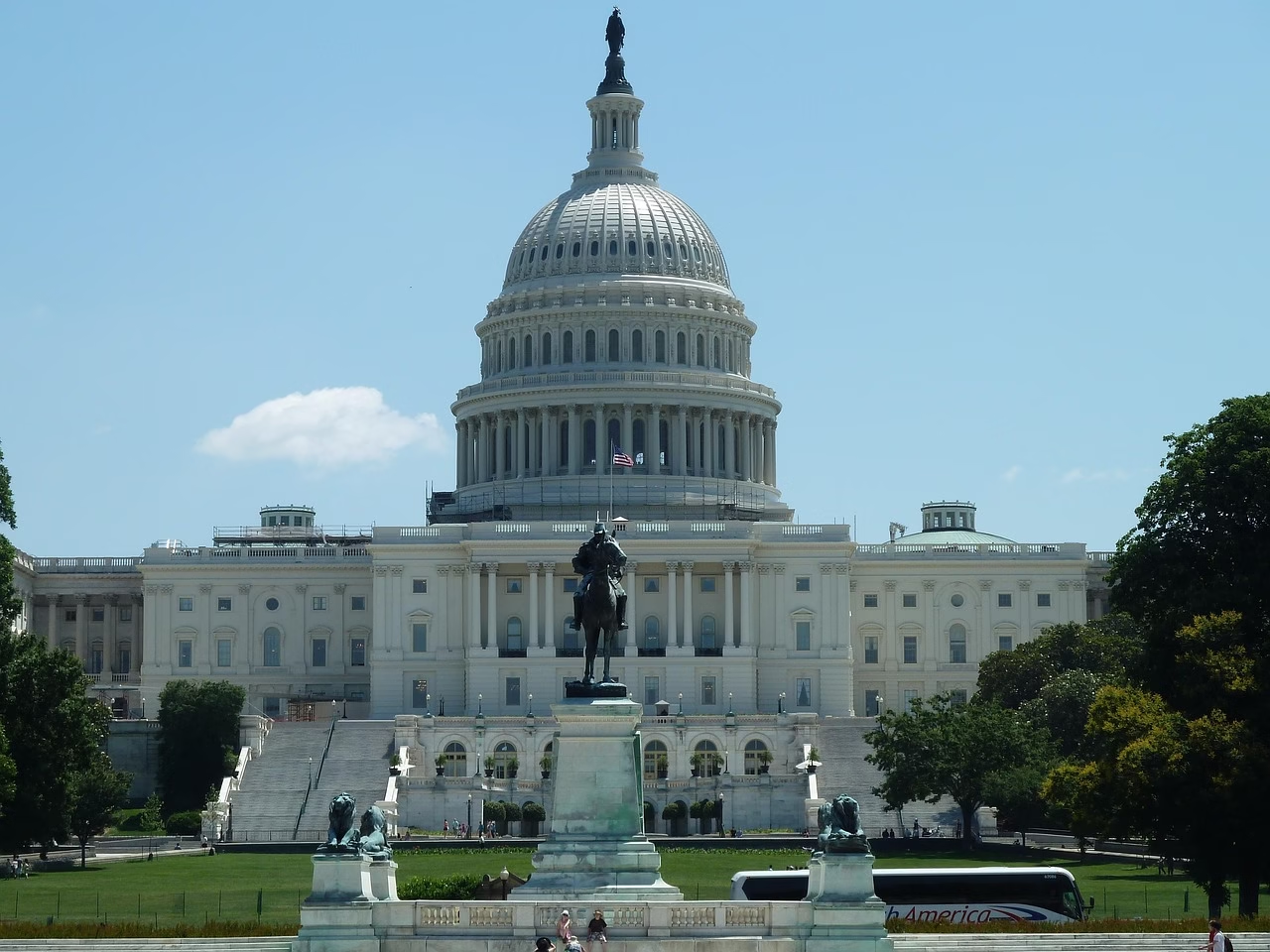
U.S. lawmakers in Washington introduced an updated version of the Clarity Act this week, proposing groundbreaking restrictions that would prohibit high-ranking federal officials—including the President, Vice President, and members of Congress—from issuing, sponsoring, or promoting digital assets. The legislation targets growing concerns over financial ethics and conflicts of interest in the rapidly evolving cryptocurrency sector. By establishing strict boundaries around public office and decentralized finance, the bill seeks to prevent government leaders from leveraging their public positions for private digital token gains.
Closing Ethics Loopholes in the Digital Age
The revised Clarity Act arrives at a time when the intersection of American politics and digital finance has reached an unprecedented level of activity. Over the past two years, several prominent political figures and executive branch affiliates have engaged with non-fungible tokens (NFTs), branded meme coins, and decentralized finance protocols to raise funds or build personal brands. Existing ethics laws, such as the Ethics in Government Act of 1978, were drafted decades before the advent of blockchain technology, leaving regulatory gray areas regarding token minting and promotional sponsorships.
Under current rules, federal officials must report traditional stock holdings and real estate transactions, but regulations governing the creation and promotion of digital tokens remain vague. Ethics watchdogs have repeatedly warned that public officials can influence asset prices through legislative actions, public statements, or regulatory appointments. The legislative push reflects urgency among lawmakers to codify clear guidelines before digital asset promotion becomes a standardized tool in political campaigns.
Key Provisions of the Expanded Clarity Act
The core of the new draft establishes an absolute prohibition on federal elected officials and senior political appointees holding controlling stakes in digital asset projects. Specifically, the bill bars public servants from participating as founders, advisors, or official promoters of any publicly traded or privately distributed cryptographic token during their tenure. The ban extends to executive officers, cabinet secretaries, heads of independent regulatory agencies, and members of both the Senate and House of Representatives.
The legislation mandates that any digital asset project previously associated with an incoming official must be placed into a blind trust or completely liquidated prior to taking the oath of office. To ensure compliance, the Office of Government Ethics (OGE) and the Securities and Exchange Commission (SEC) would gain joint oversight powers to investigate potential violations. Enforcement mechanisms include substantial financial penalties equal to three times the value of the digital assets issued, alongside potential administrative bans from holding public office.
Expert Perspectives and Industry Reaction
Legal and ethics experts have largely welcomed the proposal as a necessary modernization of government conduct rules. Former government ethics officials point out that digital tokens present unique risks compared to traditional equities because market sentiment can swing dramatically based on a single endorsement. According to financial policy analysts at the Center for Financial Integrity, public officials possess market-moving authority, making personal involvement in speculative tokens an inherent risk to public trust.
Within the cryptocurrency industry, response to the bill has been cautiously optimistic. Major industry trade groups note that clear boundaries for elected officials help legitimize the broader digital asset ecosystem by separating technological innovation from political influence. However, some policy advocates warn that overly broad definitions could inadvertently restrict legitimate blockchain research or technical standard-setting by government agencies work on central bank digital currency (CBDC) exploration.
Market Implications and Public Standards
If enacted, the bill will reshape how political campaigns handle digital innovation and financial outreach. Political action committees and individual campaigns will face strict boundaries regarding tokenized rewards, commemorative digital collectibles, and decentralized fundraising mechanisms. The measure also sets a precedent for state legislatures, several of which are considering similar restrictions for governors and state lawmakers.
For the digital asset market, the removal of political token launches could reduce speculative volatility associated with politically branded assets. Institutional investors frequently cite regulatory certainty and ethical oversight as key prerequisites for long-term participation in digital finance. By removing high-profile political conflicts of interest, the bill could contribute to a more stable regulatory climate for legitimate enterprise blockchain projects.
Legislative Horizon and Next Steps
The revised Clarity Act now moves to the Senate Banking Committee, where lawmakers will conduct hearings to review the updated text. Observers expect intense debates over the precise language defining official sponsorship and whether restrictions should extend to immediate family members of executive officials. Bipartisan co-sponsors are pushing to attach the measure to upcoming broader financial regulatory legislation before the legislative session closes.
























Leave a Reply