


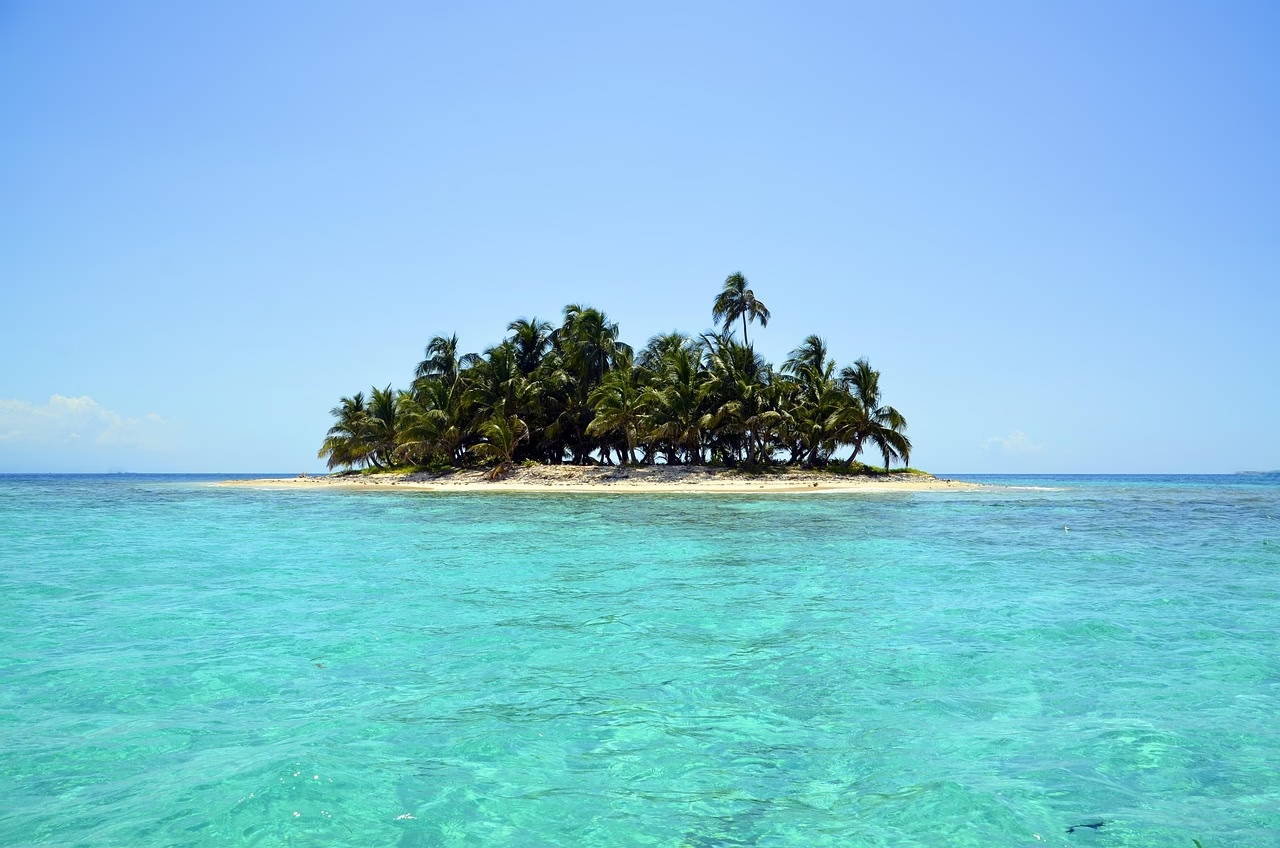
Jared Kushner and Ivanka Trump have unveiled plans for a major luxury resort development on the island of Sazan, Albania, sparking significant resistance from local environmentalists and activists this week. The project, proposed through Kushner’s investment firm, Affinity Partners, aims to transform the formerly restricted military island into a high-end tourism destination, but critics argue the development threatens the fragile ecosystem of the Adriatic coast.
The Context of Sazan Island
Sazan Island, situated at the entrance of the Bay of Vlorë, served as a closed-off military base for decades, leaving its natural environment largely untouched by modern development. Following the collapse of the communist regime, the island transitioned into a protected area, now part of the Karaburun-Sazan National Marine Park.
The Albanian government has been aggressively pursuing foreign investment to bolster its tourism sector, which has become a primary driver of the national economy. Officials view the Kushner-led project as a landmark opportunity to elevate Albania’s profile as a luxury travel destination in the Mediterranean.
Environmental and Regulatory Concerns
Local advocacy groups, including the Protection and Preservation of Natural Environment in Albania (PPNEA), have voiced strong opposition to the proposal. Environmentalists argue that the construction of luxury villas and infrastructure on Sazan could lead to irreversible damage to marine life and terrestrial biodiversity.
Critics point to the potential for excessive waste production and water consumption, which they claim the island’s limited infrastructure cannot support. Furthermore, there is significant concern regarding the transparency of the bidding process and the potential for political influence to bypass traditional environmental impact assessments.
Economic Ambitions vs. Preservation
Affinity Partners has defended the project, citing its potential to create thousands of jobs and generate significant tax revenue for the Albanian state. Representatives from the firm have emphasized that the development would adhere to international sustainability standards, aiming to create an ‘eco-conscious’ luxury retreat.
Data from the World Travel & Tourism Council indicates that Albania’s tourism sector has experienced rapid growth, with the industry contributing roughly 20% to the country’s GDP in recent years. Proponents of the resort argue that sustainable development is the only viable path to managing this growth while preserving the country’s natural assets.
Implications for the Mediterranean Landscape
The controversy surrounding the Sazan project reflects a broader tension across the Mediterranean as nations balance the demand for luxury tourism with the necessity of environmental conservation. If the project proceeds, it may set a precedent for how Albania handles large-scale international investments in protected areas.
Industry analysts suggest that the coming months will be critical, as the project undergoes rigorous environmental audits and public consultations. Observers are now watching to see if the Albanian government will prioritize the economic potential of the resort or succumb to the mounting pressure from environmental groups and the local public, potentially altering the future trajectory of the nation’s tourism development strategy.




















Leave a Reply