


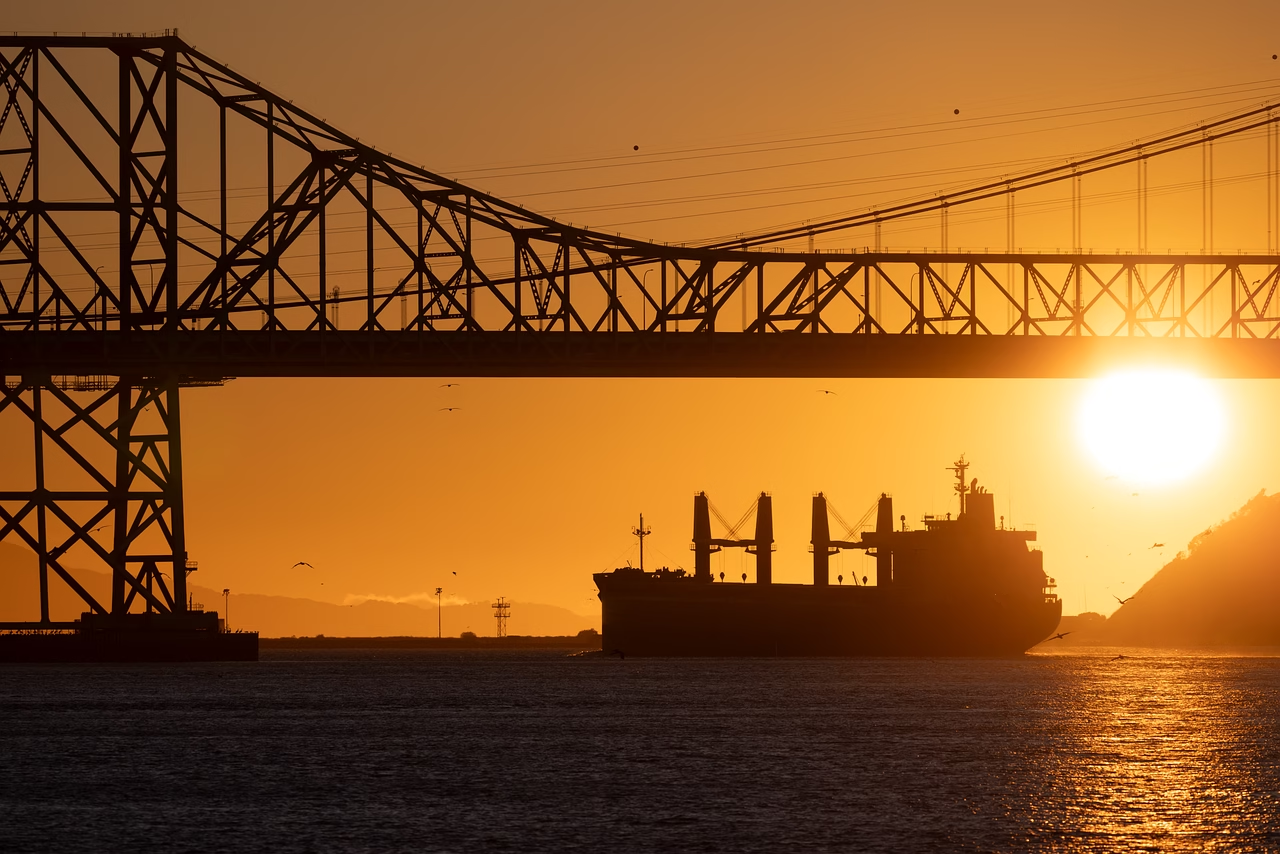
Global energy markets faced severe disruption this week as commercial shipping traffic through the Strait of Hormuz ground to a near-complete halt following an escalation in the military conflict involving Iran. The strategic waterway, which handles over a fifth of the world’s petroleum liquids, has become virtually impassable for major tankers, driving crude oil and commodity prices to multi-month highs. Shipping firms have rerouted or anchored their fleets as geopolitical tensions turn the vital trade corridor into an active combat zone.
The Strategic Importance of the Strait
The Strait of Hormuz is a narrow channel separating Iran from Oman, connecting the Persian Gulf with the Gulf of Oman and the Arabian Sea. It represents the world’s most critical oil transit chokepoint, with an average flow of 21 million barrels per day, according to the U.S. Energy Information Administration (EIA). This volume accounts for roughly 21% of global petroleum liquid consumption, making the global economy highly sensitive to any disruptions in the passage.
Unlike other maritime routes, the Strait of Hormuz has no immediate, viable alternatives. Only Saudi Arabia and the United Arab Emirates operate pipelines that can bypass the strait to transport crude oil directly to the Red Sea or the Gulf of Oman, but these systems have limited capacity. Consequently, a total or near-total closure of the waterway immediately chokes the supply of oil to major economies, particularly in Asia and Europe.
Shipping at a Standstill
Satellite tracking data from maritime intelligence firms reveals an unprecedented bottleneck of tankers idling outside the strait. Major shipping conglomerates, including Maersk, Mediterranean Shipping Company (MSC), and Hapag-Lloyd, have suspended all transits through the region indefinitely. Dozens of Very Large Crude Carriers (VLCCs) remain anchored in the Arabian Sea, awaiting security clearances or alternative routing instructions.
The halt in traffic follows a series of military exchanges and threats of vessel seizures in the territorial waters surrounding the strait. Insurers have responded by designating the Persian Gulf and adjoining waters as high-risk zones, causing war-risk insurance premiums for commercial vessels to surge by more than 400%. For many ship operators, the financial risk of transit has become as prohibitive as the physical danger.
Global Market Shockwaves
The sudden supply freeze sent immediate shockwaves through global financial markets. Brent crude futures jumped 12% within forty-eight hours of the traffic halt, while West Texas Intermediate (WTI) crude surpassed key psychological resistance levels. Analysts warn that if the blockade persists for more than a month, oil prices could easily breach $120 per barrel, triggering a fresh wave of global inflation.
Beyond crude oil, the shipping freeze threatens the supply of Liquefied Natural Gas (LNG). Qatar, the world’s leading exporter of LNG, relies almost entirely on the Strait of Hormuz to deliver gas to international buyers. European nations, already vulnerable to energy supply shocks following the loss of Russian pipeline gas, now face the prospect of severe winter fuel shortages if Qatari shipments remain blocked.
Asian Economies on High Alert
Asian economies are particularly vulnerable to the prolonged closure of the strait, as more than 70% of the crude oil passing through Hormuz is destined for markets in China, Japan, India, and South Korea. Refineries in these nations are already scrambling to secure alternative supplies from West Africa and the Americas, though at significantly higher freight costs. Indian government officials have convened emergency meetings to assess national strategic oil reserves, which currently hold enough supply for roughly nine days of domestic consumption.
In China, the world’s largest crude importer, the disruption threatens to stall industrial output. Although Beijing maintains a diverse portfolio of energy suppliers, including overland pipelines from Russia and Central Asia, the sheer volume of seaborne Middle Eastern crude cannot be easily replaced. Economists warn that a sustained blockade will force manufacturing cutbacks, sending ripples through the global electronics and automotive supply chains.
Expert Analysis and Geopolitical Standoffs
“We are looking at a worst-case scenario for global energy supply chains,” says Marcus Vance, chief energy analyst at the Maritime Security Consortium. Vance notes that even during past conflicts in the region, shipping lanes remained partially open under naval escorts, whereas the current escalation has completely paralyzed commercial operations.
Diplomatic efforts to resolve the crisis remain deadlocked. Western allies, led by the United States, are reportedly discussing the establishment of a multinational naval coalition to escort merchant vessels through the strait. However, military analysts warn that escorting tankers through such a narrow corridor poses extreme tactical risks due to the proximity of land-based missile systems and drone launch sites.
Future Outlook and Industry Implications
In the coming weeks, the focus will shift to how quickly international partners can secure the shipping lanes or negotiate a temporary de-escalation. Energy analysts are closely monitoring commercial inventories in major consuming nations, which could help buffer the immediate impact of the blockade for a limited time. However, these strategic reserves are designed for short-term relief and cannot sustain global demand indefinitely.
If the standstill continues, consumer prices for gasoline, heating oil, and manufactured goods will rise globally, forcing central banks to reconsider their monetary policies. Industries reliant on petrochemicals, from plastics to pharmaceuticals, are already preparing for supply rationing. The situation remains highly fluid, and the next few days will determine whether the global economy faces a localized shock or a prolonged energy crisis.























Leave a Reply