



On July 12, 2026, CBS’s flagship news program 60 Minutes delivered a landmark broadcast that bridged the worlds of investigative religious history, eccentric geopolitical sovereignty, and high-concept cinema. The episode featured three highly anticipated segments: an in-depth investigation into the Vatican’s historical management of orphans, an exclusive look inside the North Sea micronation of Sealand, and an intimate profile of Oscar-winning director Christopher Nolan. This diverse lineup captivated millions of viewers globally, highlighting deep-seated institutional secrets, the complexities of international law, and the evolving landscape of modern filmmaking.
Secrets Behind the Sanctuary: The Vatican’s Orphans
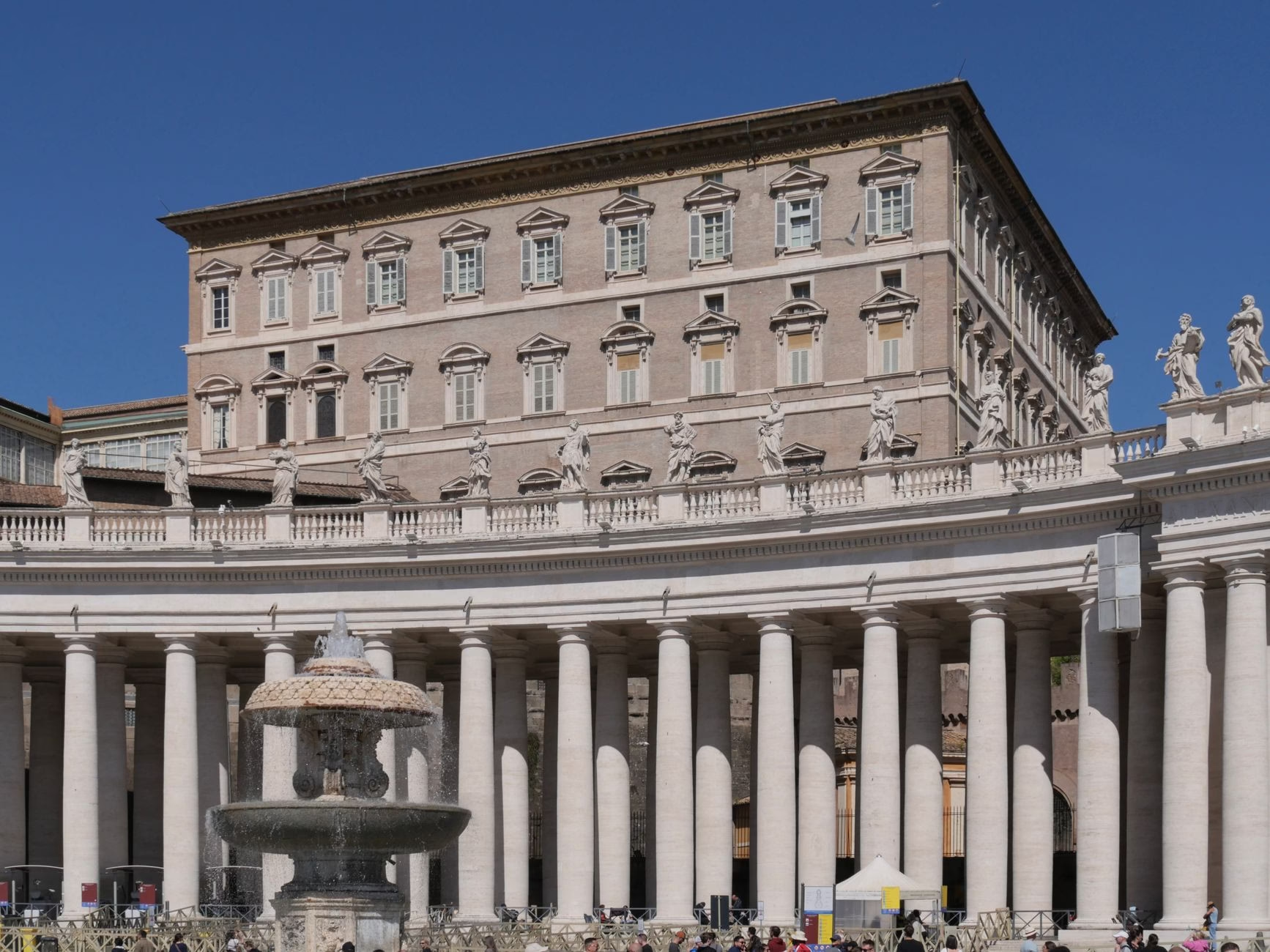
The broadcast opened with a sobering investigation into the Vatican’s historical orphanages and the children of Catholic priests. For decades, advocacy groups have pressured the Holy See to release comprehensive records concerning children fathered by clergy members and those placed in Catholic-run institutions during the mid-to-late 20th century. The segment brought new urgency to a global conversation about institutional accountability and the right to personal identity.
According to data from reform organizations like Coping International, thousands of individuals globally continue to search for their biological origins, blocked by strict Vatican confidentiality protocols. The 60 Minutes segment revealed newly uncovered archival documents suggesting a systemic effort to shield the Church from legal and financial liabilities. These documents outline internal directives that historically prioritized the protection of clerical reputations over the rights of children to know their parentage.
Journalists interviewed survivors and historians who argue that these secretive policies have caused generational trauma. While the Vatican has made strides toward transparency under recent reforms, critics featured in the report argue that the pace of disclosure remains painfully slow for aging descendants seeking closure. The segment underscored the growing demand for a centralized, accessible registry of clerical offspring to facilitate reunification and healing.
Seven Miles off the Coast: The Legend of Sealand
Shifting focus from spiritual authority to territorial eccentricity, the program took viewers to Sealand, recognized globally as the world’s smallest unrecognized state. Located seven miles off the coast of Suffolk, England, this former World War II anti-aircraft platform has claimed independence since 1967. The segment offered a rare, close-up look at daily life on the concrete legs of Roughs Tower, high above the choppy waters of the North Sea.
The segment explored how the Bates family has defended their self-proclaimed sovereignty through decades of legal challenges, physical confrontations, and digital-era adaptations. Today, Sealand operates with its own constitution, flag, currency, and national anthem, surviving largely on the sale of noble titles and hosting secure data servers. Prince Michael of Sealand explained how the platform has transitioned from a pirate radio haven into an intriguing digital sanctuary.
Legal experts interviewed in the segment noted that while Sealand lacks formal diplomatic recognition from the United Nations, its unique position in international waters continues to exploit loopholes in maritime law. The British government’s historic reluctance to forcibly evict the Bates family has created a de facto status quo. The segment raised compelling questions about the definition of a nation-state in an increasingly digital and borderless world.
Christopher Nolan and the Preservation of Celluloid
The final segment of the evening turned to the arts, featuring an exclusive interview with director Christopher Nolan. Known for his commitment to analog filmmaking and grand-scale storytelling, Nolan discussed his creative philosophy and his vision for the future of the theatrical experience. The interview took place in his private editing suite, surrounded by physical film reels and cutting-edge projection equipment.
Speaking with the host, Nolan emphasized his continued reliance on IMAX cameras and practical special effects over computer-generated imagery. He argued that the physical texture of film captures human emotion and environmental scale in a way that digital algorithms cannot replicate. Nolan’s advocacy for celluloid has single-handedly kept several film manufacturing plants operational, proving his immense influence on the industry.
Nolan also addressed the rapid integration of artificial intelligence in Hollywood, expressing cautious skepticism about its role in creative writing and directing. The director asserted that while technology can enhance efficiency, the core of storytelling must remain an inherently human endeavor. He urged major studios to respect the theatrical window, arguing that communal viewing in a cinema remains the pinnacle of artistic expression.
Future Implications for Institutions and Art
The revelations from the Vatican segment are expected to intensify pressure on Catholic dioceses worldwide to open their archives. Legal analysts predict a rise in civil lawsuits as more descendants of clergy members obtain the documentation necessary to prove their lineage. This could force the Holy See to issue a formal global policy regarding the rights of priests’ children.
Meanwhile, Sealand’s survival model offers a fascinating blueprint for future decentralized communities. As rising sea levels and geopolitical instability prompt discussions of artificial islands and floating cities, Sealand’s legal battles could serve as a historical precedent for new territorial claims. The micronation’s digital sovereignty initiatives may also inspire new forms of cloud-based citizenship.
Finally, Christopher Nolan’s insights arrive at a critical juncture for the film industry. As movie theaters struggle against the dominance of streaming platforms, Nolan’s box-office successes serve as a powerful argument for preserving traditional cinema. Industry analysts will watch closely to see if his advocacy inspires a broader renaissance in celluloid filmmaking and theatrical exclusivity among the next generation of directors.

























Leave a Reply