


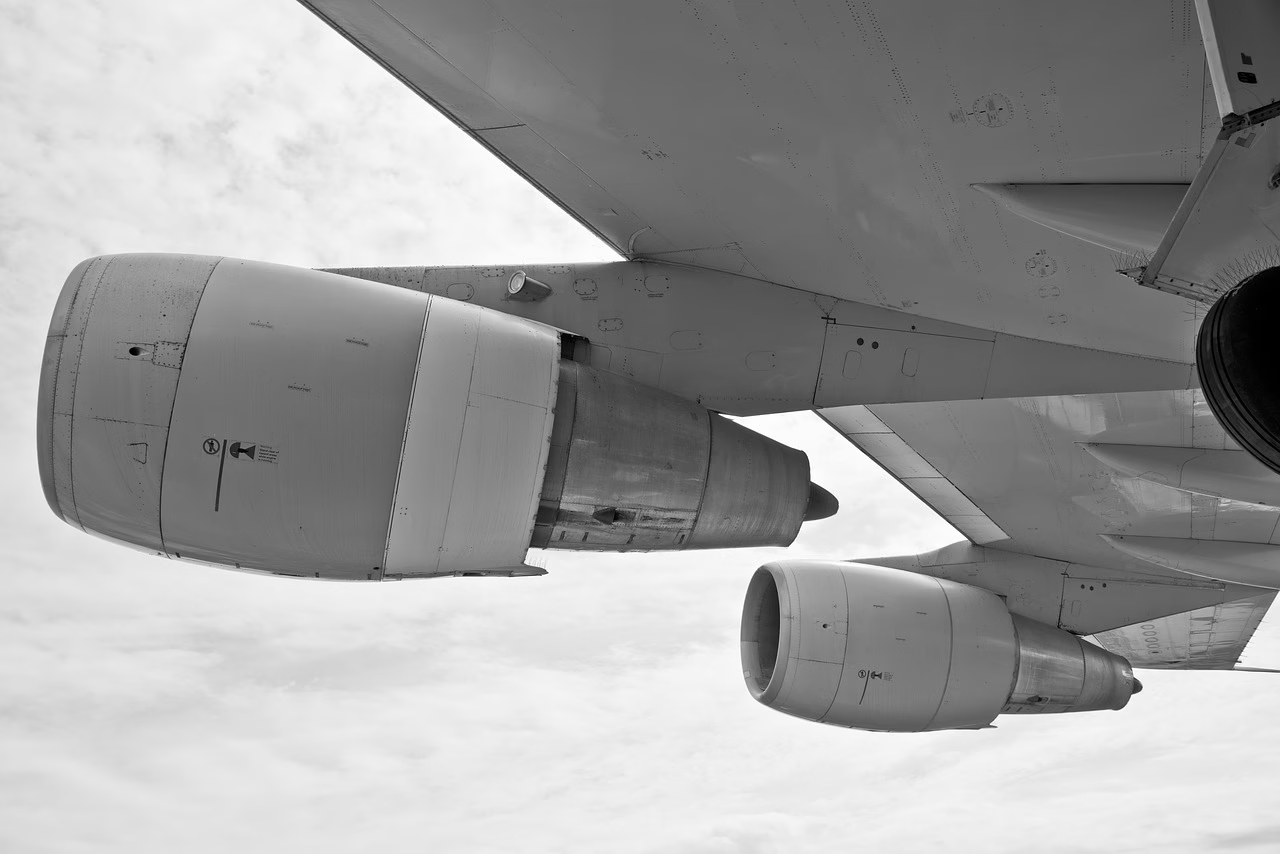
Federal investigators revealed on Thursday that both engines of a small business jet flamed out before it crashed onto a Texas highway in June, killing one passenger and injuring six others. The National Transportation Safety Board (NTSB) preliminary report details how the sudden loss of dual engine power left the flight crew unable to reach their destination at Laredo International Airport.
Background on the Laredo Highway Crash
The twin-engine business jet was on its final approach to Laredo on a clear afternoon when the flight crew declared an emergency. According to air traffic control records, the pilots reported losing power and requested immediate clearance to land on any available runway. Despite controllers clearing a direct path, the aircraft rapidly lost altitude and descended toward a busy state highway just miles short of the airport boundary.
Witnesses on the ground reported seeing the aircraft flying unusually low and silent before it clipped power lines and struck the highway median. The impact sparked a post-crash fire that consumed a significant portion of the fuselage. First responders arrived within minutes to extinguish the flames and transport the survivors to local medical facilities.
NTSB Investigates Dual Engine Flameout
The NTSB’s preliminary report focuses heavily on the timeline of the engine failures, noting that both powerplants ceased producing thrust in rapid succession. Investigators recovered the aircraft’s flight data recorder and cockpit voice recorder, which are currently being analyzed at the agency’s headquarters in Washington, D.C. Initial telemetry indicates that the engines did not suffer catastrophic mechanical containment failures prior to losing power.
On-site investigators documented the wreckage trail, noting that the fuel tanks were ruptured during the impact sequence. However, recovery teams managed to extract fuel samples from the remaining fuel lines and the airport refueling source to test for contamination. The absence of typical engine turbine damage suggests the engines may not have been rotating at high speed upon impact, aligning with the flameout report.
Aviation Safety Experts Analyze the Failure
Aviation safety experts emphasize that simultaneous dual-engine failures are extremely rare in modern turbine-powered business aircraft. “A double flameout typically points to systemic issues such as fuel starvation, severe fuel contamination, or an environmental factor like heavy ice ingestion,” said former NTSB investigator Alan Diehl in a general analysis of similar dual-engine events. He noted that modern turbofan engines are designed with highly redundant systems to prevent single-point failures from affecting both powerplants.
According to safety data from the Federal Aviation Administration (FAA), turbine engines possess a reliability rate exceeding 99.9% per flight hour. When both engines fail, investigators immediately prioritize analyzing the fuel supply chain, including the refueling logs and fuel quality at the aircraft’s departure airport. The NTSB will also examine the aircraft’s maintenance records to determine if any recent service was performed on the fuel delivery or engine control systems.
Industry Implications and Next Steps
The preliminary findings will likely prompt charter operators and private pilots to review emergency glide procedures and fuel management protocols. The FAA may also issue a Special Airworthiness Information Bulletin if investigators discover a systemic mechanical or fuel system vulnerability common to this aircraft model. Such bulletins often recommend immediate inspections of fuel pumps, filters, and electronic engine control units.
Over the coming months, NTSB metallurgy and powerplants divisions will disassemble both engines at a specialized facility to search for subtle internal anomalies. Investigators will also conduct interviews with the surviving flight crew members as they recover to reconstruct the final minutes of the flight. A final report, which will determine the definitive probable cause of the flameout and crash, is expected within 12 to 18 months.























Leave a Reply