


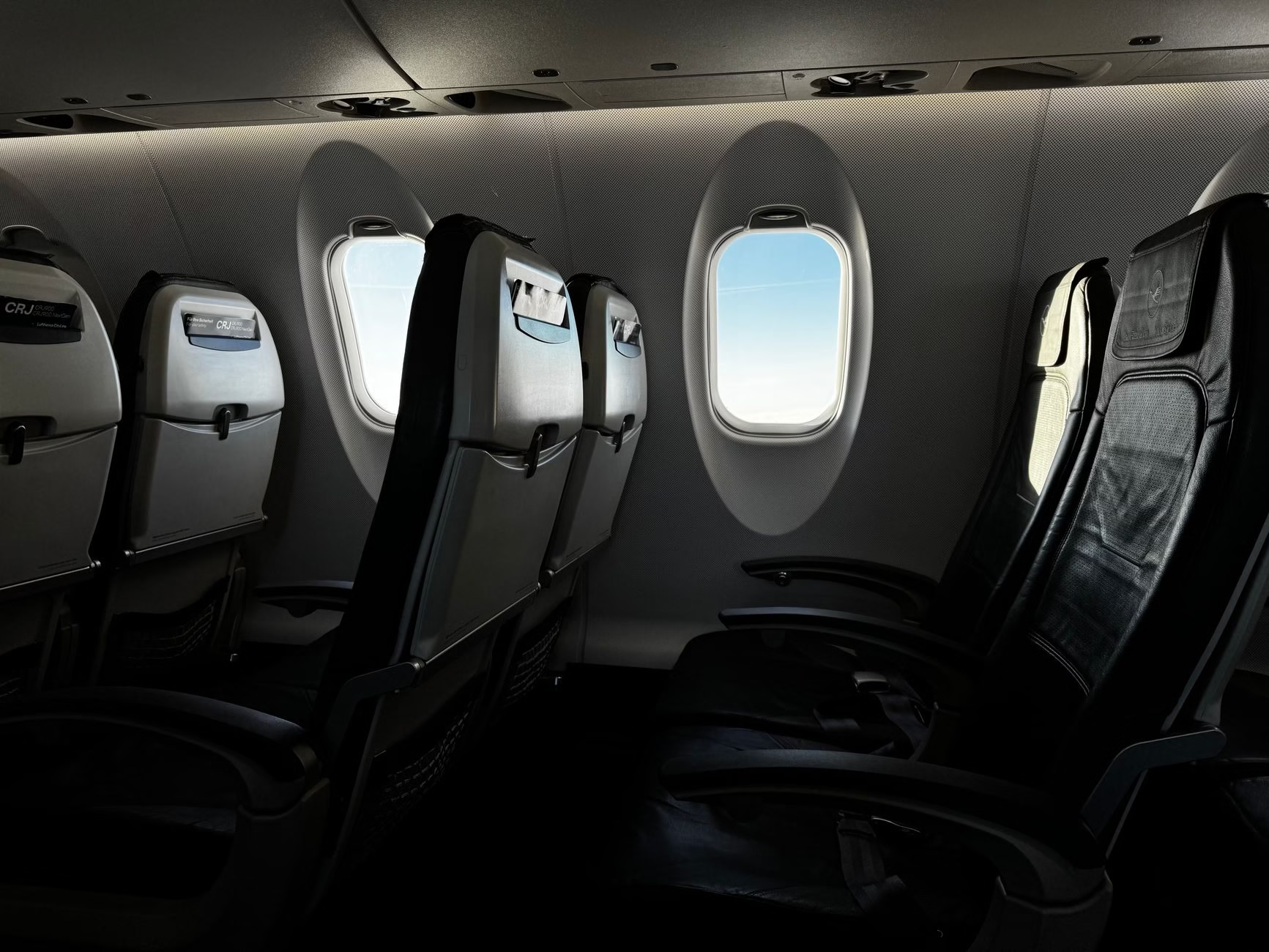
Frontier Airlines announced a major strategic shift this week, signing an agreement with SpaceX to equip its entire fleet with Starlink satellite internet. The ultra-low-cost carrier plans to debut the high-speed, low-latency service in 2027, offering it free to all passengers. This decision marks a significant departure from the traditional budget airline model, which historically eschewed in-flight entertainment and connectivity to minimize operational costs.
Redefining the Ultra-Low-Cost Model
For over a decade, ultra-low-cost carriers (ULCCs) have operated on a strict unbundled pricing strategy. Passengers pay a minimal base fare and purchase add-ons such as seat assignments, carry-on baggage, and onboard refreshments. In-flight Wi-Fi was long considered an expensive luxury that did not align with the budget airline philosophy of keeping aircraft weight and maintenance costs low.
However, shifting consumer expectations and intense domestic competition are forcing airlines to adapt. Major network carriers have already raised the stakes; Delta Air Lines introduced free Wi-Fi for loyalty members in 2023, and United Airlines recently announced a similar fleet-wide partnership with Starlink. As premium carriers close the gap on technology, budget airlines face the risk of losing tech-savvy travelers if they do not upgrade their cabin experience.
The Technology Behind Starlink Aviation
SpaceX’s Starlink relies on a constellation of thousands of low-Earth orbit (LEO) satellites. Unlike legacy geostationary satellites that orbit at altitudes of over 22,000 miles, Starlink satellites operate just 340 miles above the Earth. This proximity drastically reduces latency, allowing for internet speeds that rival ground-based fiber-optic networks.
For Frontier’s passengers, this means the ability to stream high-definition videos, play online multiplayer video games, and conduct video calls from 35,000 feet. Starlink’s aviation hardware features a low-profile, electronically steered phased array antenna. This design minimizes aerodynamic drag, a crucial factor for Frontier as it seeks to maintain its fuel efficiency targets.
The service will be available gate-to-gate, ensuring passengers remain connected from the moment they board until they deplane. Frontier plans to roll out the service across its entire fleet of Airbus A320 and A321 aircraft, which currently stands at over 150 planes and is expected to grow significantly by 2027.
Strategic and Financial Implications
Aviation analysts view the Starlink partnership as a calculated move to boost passenger satisfaction and drive brand loyalty. According to a 2023 survey by travel technology firm Amadeus, 73% of travelers state that access to reliable Wi-Fi is a high priority when choosing an airline. By offering this service for free, Frontier hopes to attract a broader demographic, including business travelers who previously avoided ULCCs due to the lack of connectivity.
“This is a game-changer for the ultra-low-cost sector,” says travel industry analyst Robert Mann. “Frontier is effectively removing one of the biggest pain points of budget travel. By leveraging SpaceX’s global satellite network, they can offer a product that outperforms the Wi-Fi currently found on many legacy airlines.”
The financial structure of the deal remains undisclosed, but the long-term benefits could outweigh the initial hardware installation costs. High-speed Wi-Fi opens new avenues for ancillary revenue, such as targeted digital advertising, partnerships with streaming services, and real-time credit card promotions during flights.
What to Watch Next
The implementation of Starlink on Frontier’s fleet requires regulatory approval from the Federal Aviation Administration (FAA). Engineers must certify the installation of the antenna on different Airbus models, a process that can take several months per aircraft type. Frontier has indicated that early trials could begin as soon as next year ahead of the full commercial rollout in 2027.
Industry observers will closely monitor how Frontier’s direct competitors, such as Spirit Airlines and Allegiant Air, respond to this announcement. Spirit currently charges passengers for Wi-Fi access, while Allegiant offers no in-flight connectivity. If Frontier successfully deploys free Starlink Wi-Fi, it may trigger an industry-wide race to upgrade cabin technology across all low-cost carriers globally.






















Leave a Reply