


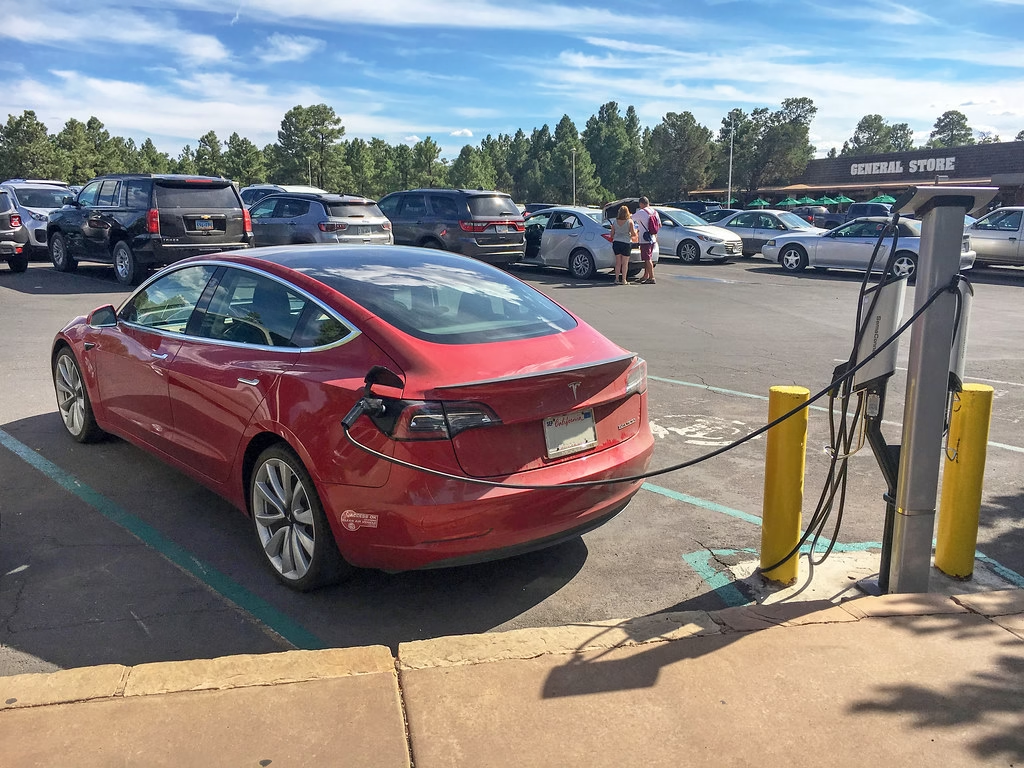
The Barriers to Entry
American consumers facing record-high costs for vehicle ownership are increasingly eyeing the Chinese electric vehicle (EV) market, yet federal trade policies and national security mandates continue to block these affordable options from entering the United States. As of late 2024, a combination of steep import tariffs and legislative bans on Chinese-made automotive technology effectively creates a closed ecosystem, preventing U.S. drivers from accessing models that retail for a fraction of the cost of domestic counterparts.
The current landscape is defined by the intersection of volatile fuel prices and the rising expense of new vehicle financing. While gasoline prices have shown some fluctuations, the overall cost of operating a personal vehicle remains at historical highs, intensifying the demand for low-cost transportation alternatives that the U.S. market has struggled to provide.
The Context of Trade Restrictions
The U.S. government has implemented a series of protective measures aimed at shielding the domestic automotive industry and mitigating perceived cybersecurity risks. The Biden administration recently maintained and expanded tariffs on Chinese electric vehicles, effectively raising the cost of importing these cars to a level that makes them uncompetitive in the American market.
These restrictions are rooted in the Section 301 investigation under the Trade Act of 1974, which concluded that China engages in unfair trade practices, including the forced transfer of technology. Beyond simple economics, lawmakers cite national security concerns, fearing that the sophisticated software and connectivity features embedded in modern Chinese EVs could be used for data collection or remote surveillance on U.S. soil.
Market Dynamics and Domestic Challenges
The absence of Chinese competitors leaves a vacuum in the sub-$25,000 EV segment. Major Chinese manufacturers like BYD and SAIC have achieved significant economies of scale, allowing them to produce high-quality battery-powered vehicles at prices that undercut almost every domestic offering. In contrast, U.S. automakers are currently grappling with high manufacturing costs and a slower transition to mass-market electrification.
According to data from the Bureau of Labor Statistics, the cost of new vehicle ownership has surged by nearly 20% over the past three years. Industry analysts suggest that without competition from abroad, U.S. consumers are forced to choose between premium-priced domestic EVs or traditional internal combustion engines, which remain subject to fluctuating oil markets.
Expert Perspectives
Economic analysts argue that while protectionism may preserve domestic manufacturing jobs in the short term, it creates a long-term affordability crisis for the average worker. “By insulating the U.S. market, we are essentially placing a premium on the transition to green energy,” says automotive industry consultant Marcus Thorne. “The consumer is paying the price for this geopolitical friction through higher monthly payments and limited choices.”
Conversely, trade hawks maintain that allowing an influx of Chinese vehicles would jeopardize the future of the American automotive supply chain. They argue that the state-subsidized nature of the Chinese EV industry creates an uneven playing field that, if left unchecked, could lead to the collapse of local innovation and manufacturing capabilities.
Future Implications and Market Outlook
As the U.S. continues to push for a carbon-neutral future, the tension between affordable transportation and national security will likely intensify. The success of the domestic EV transition may depend on whether U.S. manufacturers can rapidly innovate to lower production costs without the pressure of direct international competition.
Looking ahead, industry observers are watching for potential shifts in trade policy following the upcoming election cycle. Any softening of these bans or tariffs could trigger a massive influx of investment and consumer interest, fundamentally altering the landscape of American mobility. For now, the barrier remains firmly in place, leaving the most affordable electric vehicles on the other side of the Pacific.























Leave a Reply