


Former Interior Secretary Deb Haaland secured the Democratic nomination for governor of New Mexico on Tuesday, setting the stage for a high-stakes general election as the state navigates an unprecedented period of fiscal prosperity driven by a surging oil boom.
Voters across the state headed to the polls to finalize party tickets, with the results highlighting a central tension in New Mexico politics: balancing massive energy-sector tax revenues with long-standing concerns regarding economic inequality and environmental stewardship.
The Context of the Energy Surge
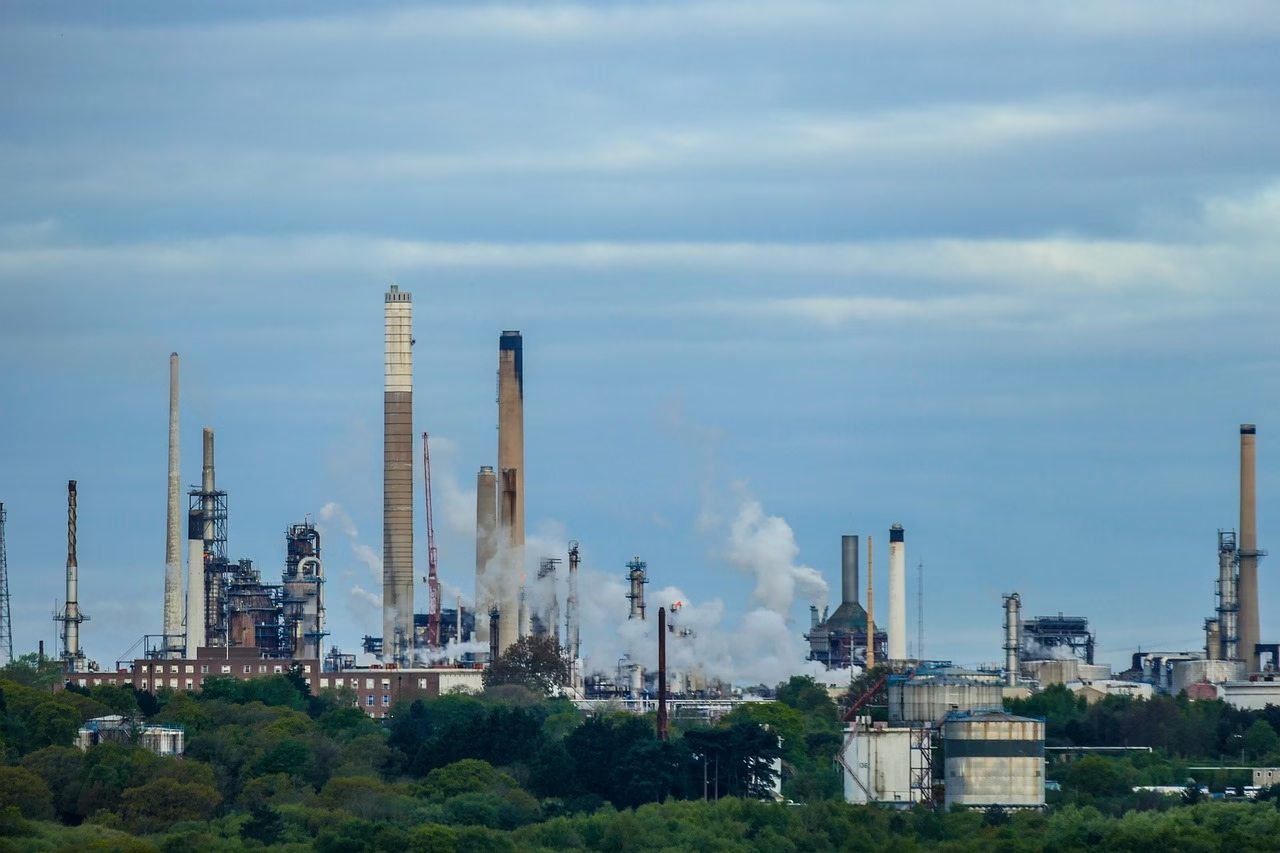
New Mexico currently finds itself in the midst of a historic production spike in the Permian Basin, one of the most prolific oil fields in the world. According to data from the New Mexico Department of Finance and Administration, the state’s general fund has seen record-breaking revenue growth directly tied to oil and natural gas extraction.
This influx of capital has transformed the state budget, allowing for increased investments in public education, infrastructure, and social programs. However, the reliance on fossil fuel revenues remains a subject of intense debate among policymakers and voters alike.
A Shifting Political Landscape
Deb Haaland’s nomination marks a significant moment for the Democratic Party, signaling a focus on federal-state coordination and environmental policy. Supporters view her background as the former Secretary of the Interior as a strategic advantage for securing federal support for New Mexico’s energy transition.
Critics and industry analysts, however, raise questions about how the state will manage its budget if global energy prices fluctuate. The state’s heavy dependence on oil and gas royalties creates a volatile fiscal environment that complicates long-term economic planning.
Expert Perspectives on Economic Sustainability
Economists at the University of New Mexico note that while the current surplus provides a unique opportunity to address systemic poverty, the state must prioritize economic diversification. Relying solely on the boom-and-bust cycle of the energy sector poses risks to future public services.
“The challenge for the next administration will be to build a resilient economy that survives the eventual decline of fossil fuel dominance,” says a lead analyst at the New Mexico Economic Policy Institute. Data shows that neighboring states are similarly struggling to transition their labor markets toward renewable energy and technology sectors.
Future Implications for the State
The upcoming general election will serve as a referendum on how the state utilizes this windfall. Voters are weighing whether to prioritize immediate social spending or invest in long-term economic foundations that do not rely on resource extraction.
Observers are now watching to see how the Republican opposition frames its platform in response to Haaland’s nomination. As the campaign unfolds, the discourse is expected to center on the sustainability of the state’s current fiscal trajectory and the tangible impact of oil revenues on the average New Mexican household.






















Leave a Reply