


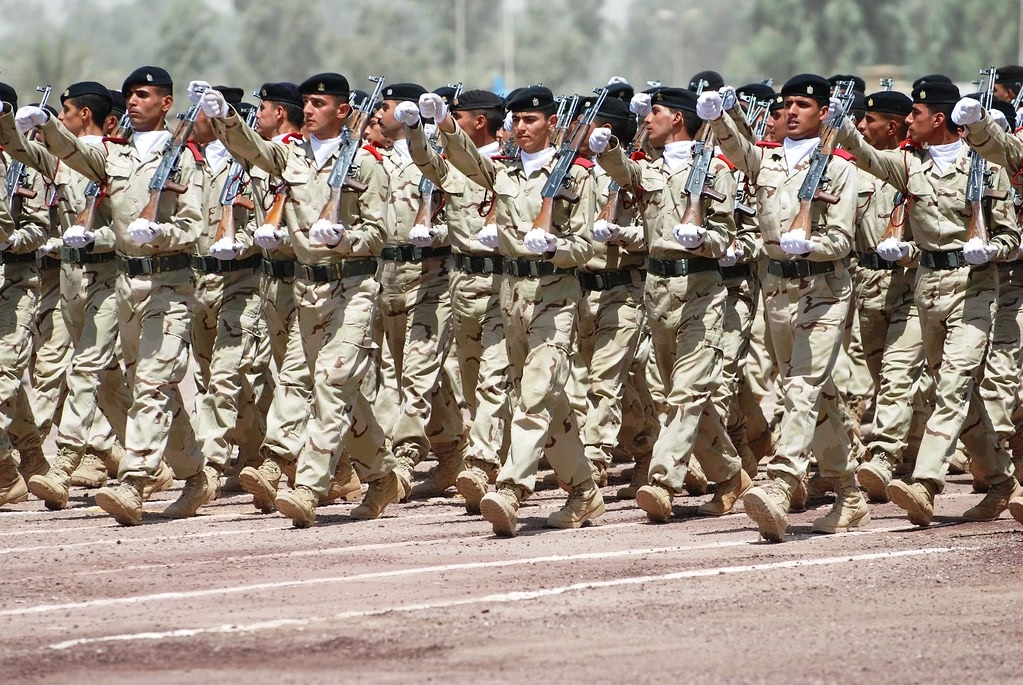
A Shift in Security Dynamics
An influential Iraqi militia group began the formal transfer of its heavy weaponry to the Iraqi state military this week, marking a significant, if cautious, shift in the country’s complex security landscape. The handover, conducted at a military site near Baghdad, represents a notable effort by the central government to consolidate control over armed factions that have operated outside the state apparatus for years.
Background of the Militia Integration
For two decades, Iraq has navigated a volatile environment where numerous paramilitary groups, many of which formed to combat extremist threats like ISIS, maintained independent arsenals. These groups, often collectively referred to as the Popular Mobilization Forces (PMF), have frequently wielded significant political and military influence, sometimes operating independently of the Iraqi Ministry of Defense. Recent government initiatives have sought to integrate these factions into formal state security structures to curb unauthorized military activities and restore the state’s monopoly on force.
Operational Logistics and Scope
The handover process involves the cataloging and transfer of armored vehicles, artillery, and heavy machine guns to the Iraqi Army. Military officials overseeing the process have stated that the equipment will be integrated into the national inventory to bolster regular army capabilities. Observers note that while this specific group has complied, the broader challenge remains the voluntary disarmament of dozens of other factions with varying levels of political autonomy.
Expert Analysis on Political Stability
“This move is as much about political posturing as it is about national security,” says Dr. Sarah Al-Haddad, a senior analyst at the Institute for Middle East Security. “By handing over these weapons, the faction is signaling a willingness to align with the current administration’s agenda, potentially securing a more stable political future for its leadership.”
Data from the Global Conflict Tracker suggests that the proliferation of small arms and heavy weaponry among non-state actors has been a primary driver of regional instability since 2003. According to recent reports, successful integration of these militias into the formal military could reduce internal friction, provided the process remains transparent and equitable across all sectarian lines.
Implications for the Region
For the average Iraqi citizen, the reduction of independent militias on the streets offers a glimmer of hope for improved domestic security and the rule of law. If the central government can successfully absorb these units, it could lead to a decrease in localized violence and a more unified national defense strategy. However, the true test will be the government’s ability to maintain oversight of these newly integrated units.
Moving forward, international observers will be watching to see if other militias follow suit or if this remains an isolated event. Future developments will likely hinge on the upcoming national budget negotiations, which will determine how much influence these factions retain over state-funded military salaries and equipment procurement. The success of this disarmament phase will serve as a bellwether for Iraq’s ability to transition from a fractured security environment to a centralized, state-led defense framework.


















Leave a Reply