


Diplomatic Engagement Amid Regional Tensions
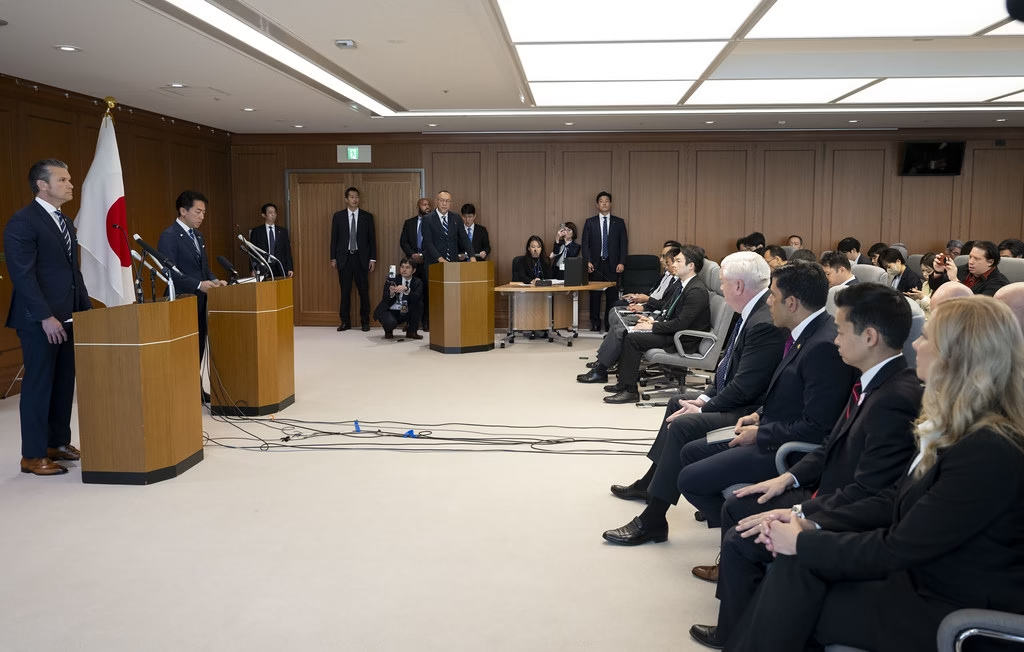
Japanese Defense Minister Koizumi addressed the international community this week, emphasizing Tokyo’s commitment to open and candid dialogue to resolve escalating security tensions across the Indo-Pacific. Speaking from the Ministry of Defense in Tokyo, Koizumi firmly rejected claims of a resurgence in ‘neo-militarism,’ asserting that Japan’s recent defense policy shifts are strictly defensive in nature and aimed at maintaining regional stability.
The Context of Strategic Realignment
For decades, Japan has operated under a pacifist constitution that limits its military capabilities to self-defense. However, in response to increased regional volatility and the rapid modernization of neighboring military forces, the Japanese government has significantly increased its defense spending.
These policy shifts, including the acquisition of counterstrike capabilities, have sparked domestic and international debate. Critics in neighboring countries have occasionally characterized these moves as a pivot back toward the militarism of the early 20th century, a label that Tokyo has consistently sought to refute.
Addressing the Narrative of Militarization
During his address, Koizumi highlighted that Japan’s defense strategy is rooted in transparency and international law. He argued that the perception of ‘neo-militarism’ ignores the comprehensive oversight mechanisms built into the Japanese democratic process.
The Defense Minister pointed to the 2022 National Security Strategy, which emphasizes a ‘free and open Indo-Pacific.’ He noted that the primary goal of this strategy is to deter unilateral attempts to change the status quo by force, rather than to project power offensively.
Expert Perspectives on Security Policy
Regional security analysts suggest that the friction arises from a lack of communication channels between Tokyo and its neighbors. Dr. Elena Vance, a senior fellow at the Center for Strategic and International Studies, notes that misinterpretations of policy shifts are common in a highly digitized and polarized information environment.
‘The challenge for Japan is not just the policy itself, but how it is perceived through the lens of historical memory,’ Vance explained. Data from the Stockholm International Peace Research Institute (SIPRI) indicates that while Japan’s military budget is rising, it remains proportional to the broader regional trend of increased defense spending across Asia.
Implications for Future Regional Stability
The call for candid dialogue represents a strategic push by Tokyo to de-escalate rhetoric before it results in accidental military friction. By framing the conversation around transparency, Japan hopes to establish a multilateral security framework that includes clear communication protocols with regional counterparts.
Observers should watch for upcoming bilateral security summits, which will serve as a barometer for whether these diplomatic overtures are accepted by regional powers. The success of this policy will depend on whether Tokyo can balance its defensive modernization with meaningful confidence-building measures that satisfy the security concerns of neighboring nations.






















Leave a Reply