



Diplomatic Standoff Deepens
The Iranian government has officially suspended all back-channel negotiations with the United States, citing Israel’s intensified military offensive in Lebanon as the primary catalyst for the decision. Reported by state-aligned media outlets in Tehran this week, the move marks a significant departure from months of cautious, indirect dialogue aimed at de-escalating regional tensions and addressing nuclear proliferation concerns.
This suspension follows a series of high-intensity Israeli airstrikes targeting Hezbollah infrastructure across southern Lebanon and Beirut. Tehran, a primary benefactor of the Lebanese militant group, views the current military campaign as a direct threat to its strategic interests, forcing a reassessment of its diplomatic posture toward Washington.
The Context of Indirect Diplomacy
For several months, U.S. and Iranian officials have engaged in intermittent, indirect talks facilitated by regional intermediaries, including Oman and Qatar. These discussions were intended to manage regional proxy conflicts and prevent a wider conflagration in the Middle East. The U.S. has consistently pushed for these channels to influence Iran’s regional behavior, while Tehran has sought relief from crippling economic sanctions.
The current breakdown underscores the volatility of these informal channels. Historically, communication between the two nations is fraught with mistrust, relying heavily on third-party mediators to prevent miscalculations. The shift to a hardline stance suggests that Tehran’s leadership believes the military situation in Lebanon has reached a threshold that renders diplomatic engagement counterproductive.
The Strategic Calculus
Analysts suggest that Iran’s decision is designed to signal solidarity with its regional partners while putting pressure on the Biden administration. By severing communication, Tehran aims to compel the U.S. to exert greater influence on Israel to cease its offensive operations. However, this strategy carries significant risks, as a total lack of communication increases the probability of accidental escalation between U.S. assets in the region and Iranian-backed militias.
Data from international security think tanks indicate that regional stability is currently at its most fragile point since the onset of the conflict in Gaza last October. The suspension of talks removes a critical safety valve that has previously helped contain skirmishes from spiraling into full-scale regional war. Military experts note that without these back-channels, the margin for error in the Persian Gulf and the Levant has narrowed significantly.
Implications for Global Markets and Geopolitics
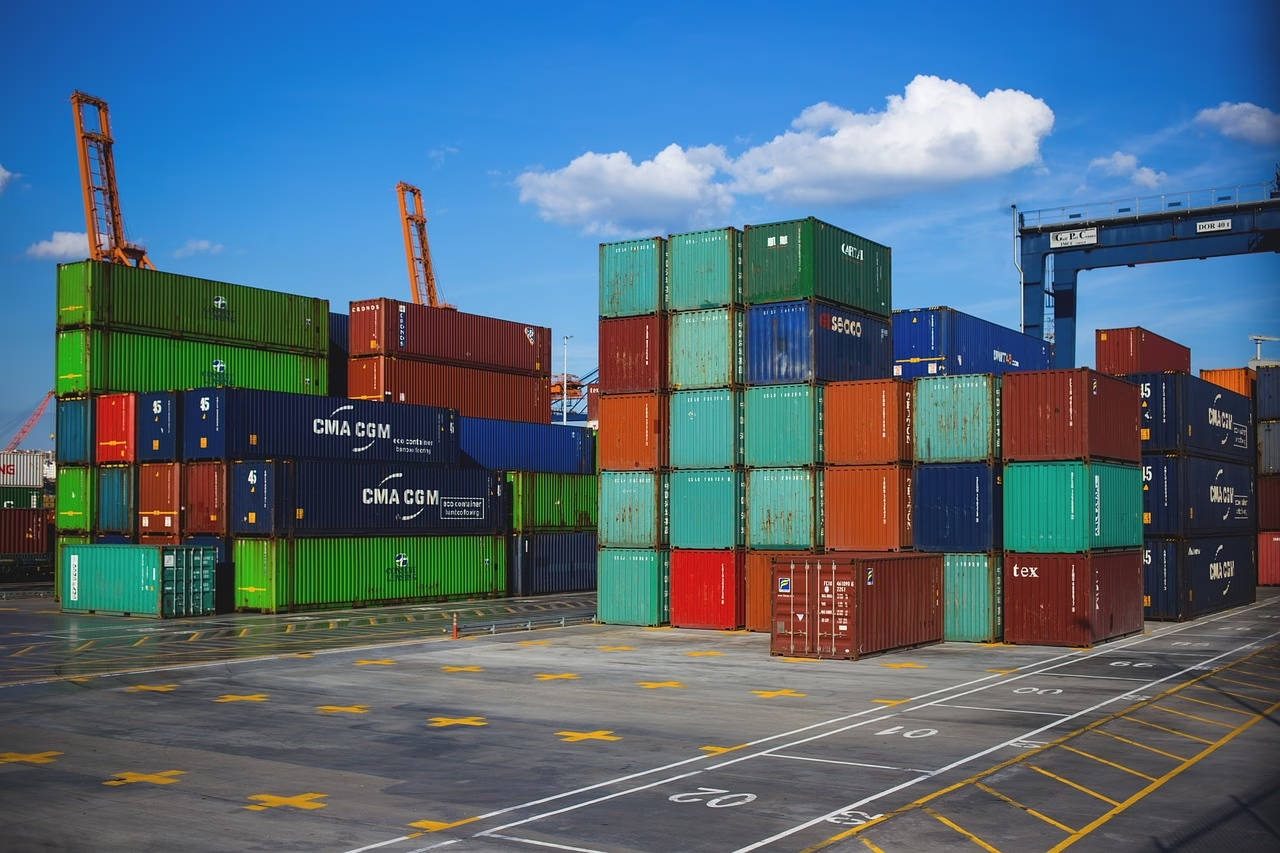
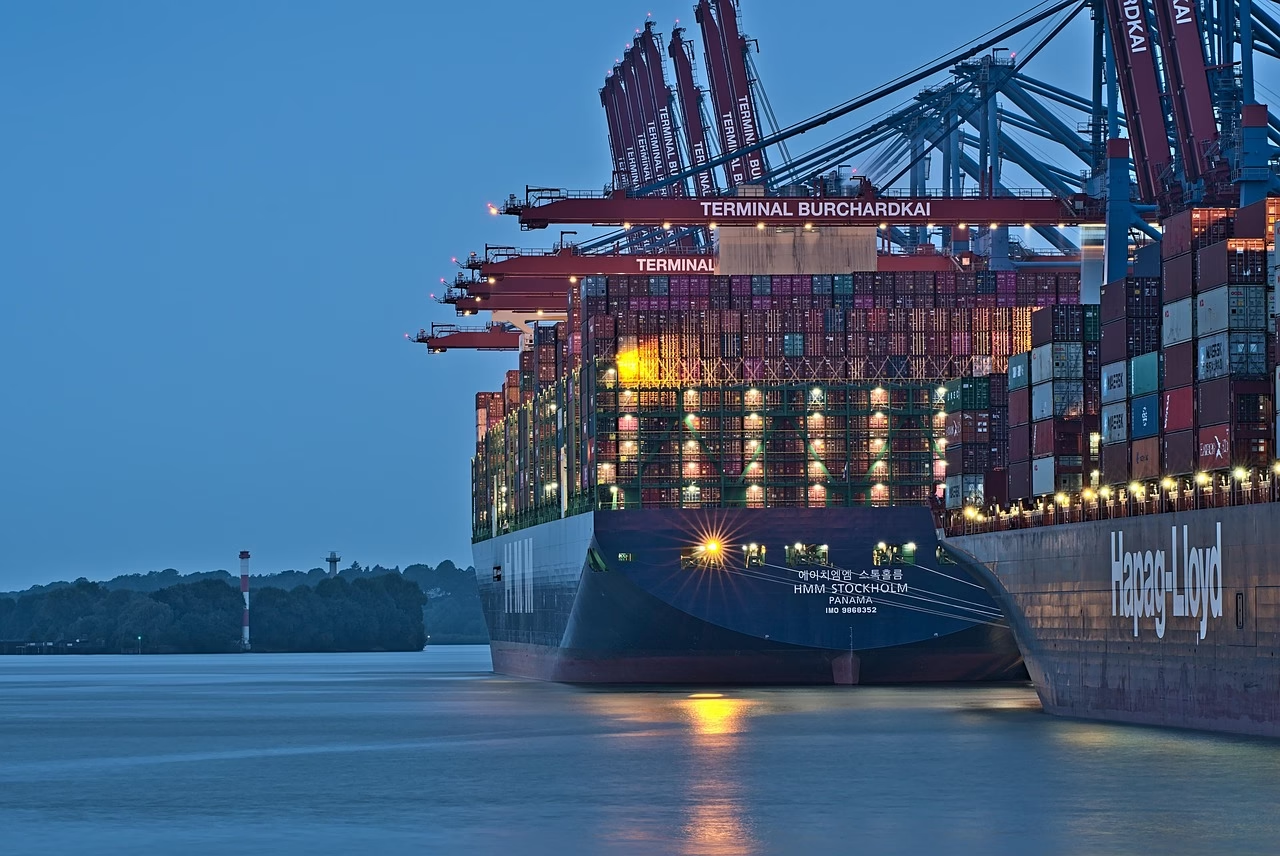
For the energy sector and global markets, the cessation of diplomatic efforts is a concerning development. Any further escalation in the Middle East poses a tangible threat to shipping lanes in the Strait of Hormuz, through which a significant portion of the world’s oil supply passes. Investors are already pricing in higher risk premiums, anticipating that the lack of dialogue will lead to sustained regional instability.
The U.S. State Department has yet to issue a formal confirmation regarding the status of these specific channels, though officials have repeatedly stated that they maintain various ways to communicate with Tehran if necessary. The challenge for the U.S. remains balancing its support for Israeli security with the urgent need to prevent a wider regional conflict that could draw in global powers.
Looking ahead, observers are watching for potential signs of renewed back-channel efforts or, conversely, an increase in hostile rhetoric from Tehran. The next several weeks will be critical in determining whether this is a temporary tactical pause or a long-term abandonment of diplomatic engagement. Should the conflict in Lebanon continue to intensify without a diplomatic horizon, the risk of a direct confrontation involving regional actors remains at an all-time high.






















Leave a Reply