


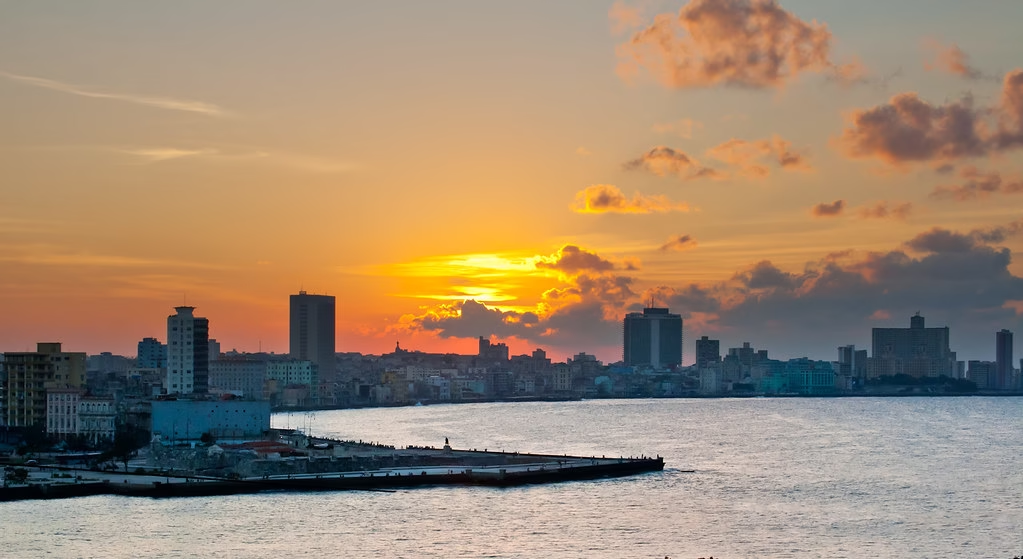
The United States has intensified its diplomatic and economic pressure campaign against the Cuban government throughout the current fiscal quarter, signaling a strategic shift that analysts suggest mirrors historical pre-conflict postures. This escalation, characterized by tightened financial sanctions and increased rhetoric regarding regional security, comes as Havana faces its most severe economic contraction in three decades.
The Historical Context of U.S.-Cuba Relations
Relations between Washington and Havana have remained strained for over six decades, rooted in the 1959 revolution and the subsequent U.S. trade embargo. While the Obama administration briefly pursued a policy of rapprochement, the following years saw a reversal of these diplomatic gains. Today, the bilateral relationship is defined by a complex web of travel restrictions, financial prohibitions, and mutual accusations of destabilization.
Analyzing the Current Pressure Campaign
The current phase of pressure involves a multi-pronged approach aimed at limiting the Cuban government’s access to international credit markets. By leveraging the Office of Foreign Assets Control (OFAC), Washington has effectively blocked several key avenues for foreign investment, citing human rights concerns and the island’s support for regional allies. These measures are designed to increase the cost of governance for the Cuban Communist Party, which is currently struggling to provide basic services to its citizens.
Simultaneously, U.S. officials have ramped up public messaging regarding the presence of foreign intelligence assets on the island. While these claims remain subject to intense debate among geopolitical experts, they serve to frame Cuba as a national security risk rather than merely a localized diplomatic challenge. This framing is essential for maintaining bipartisan support in Congress for maintaining the current hardline stance.
Expert Perspectives and Economic Data
Economic indicators suggest that the Cuban economy is under unprecedented strain, with inflation rates estimated by independent economists to exceed 100% in the informal market. According to a report by the Economic Commission for Latin America and the Caribbean (ECLAC), the island’s GDP growth has stalled, crippled by a lack of hard currency and the degradation of critical infrastructure.
“The current strategy is less about diplomatic engagement and more about attrition,” notes Dr. Elena Rodriguez, a senior fellow at the Center for Western Hemisphere Studies. “By cutting off the oxygen to the state’s financial networks, the U.S. is testing the limits of internal institutional stability within Havana.” Conversely, critics of the sanctions regime argue that these policies disproportionately affect the civilian population, exacerbating the humanitarian crisis and driving record-breaking migration waves toward the U.S. border.
Implications for Regional Stability
The tightening of the blockade carries significant implications for the broader Caribbean basin. Increased regional volatility often forces neighboring nations to contend with sudden refugee influxes and shifting security alliances. For the private sector, the unpredictability of U.S. regulatory changes regarding Cuba creates a high-risk environment that discourages long-term capital allocation in the region.
Looking ahead, observers are monitoring the upcoming diplomatic summits for any signs of back-channel negotiations. Whether the U.S. continues to pursue a containment strategy or pivots toward a targeted incentive structure will depend heavily on the internal political climate in Havana and the perceived success of the current sanctions in achieving Washington’s long-term policy goals.


















Leave a Reply