


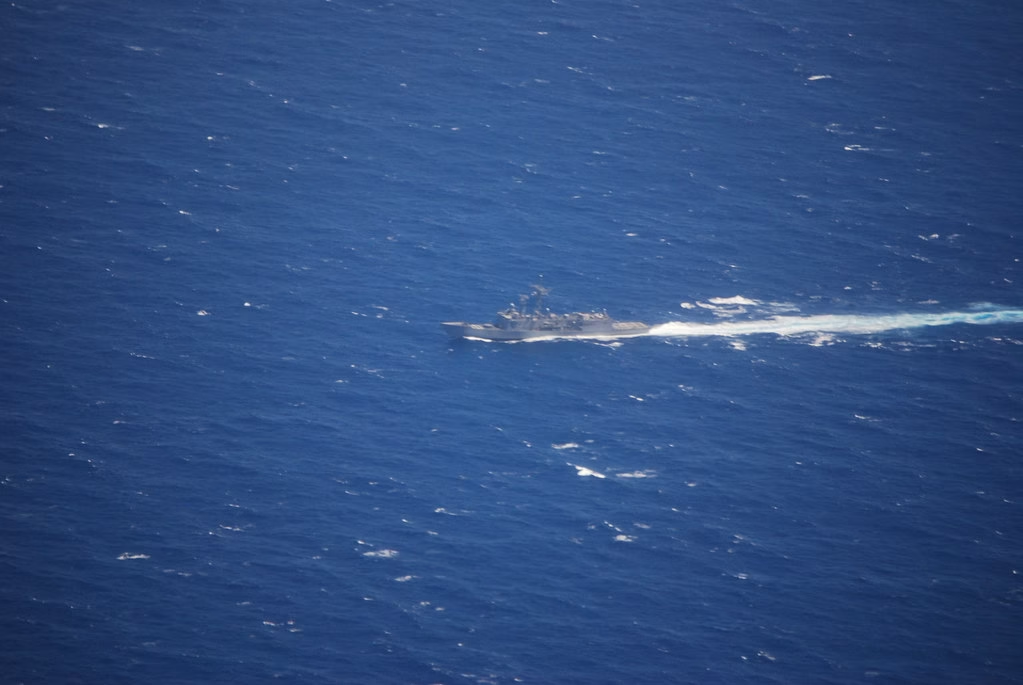
The United States military launched a series of targeted strikes against Iranian-linked facilities this week, marking a significant escalation in the Persian Gulf following a string of Iranian-led attacks on commercial shipping vessels navigating the Strait of Hormuz. These retaliatory measures, confirmed by Pentagon officials, come as regional instability threatens the security of key U.S. allies in the Gulf, complicating efforts to maintain a fragile, long-standing ceasefire between Washington and Tehran.
Contextualizing the Regional Volatility
The Strait of Hormuz serves as one of the world’s most critical maritime chokepoints, through which approximately 20% of global oil consumption passes daily. For months, the region has experienced an uptick in maritime harassment, involving the boarding of international tankers and the deployment of drones against regional energy infrastructure.
These incidents occur against a backdrop of complex geopolitical maneuvering. While diplomatic channels remain open, the recent kinetic exchanges suggest that traditional deterrence strategies are being tested by both state and non-state actors operating within the Iranian security apparatus.
The Breakdown of Diplomatic Momentum
The latest military activity places the prospect of a near-term peace deal in jeopardy. President Donald Trump recently signaled potential optimism regarding a breakthrough, suggesting that a framework for de-escalation could be finalized as early as this weekend. However, the intensity of the latest skirmishes has forced a shift in focus from the negotiating table back to the battlefield.
Defense analysts suggest that the attacks are part of a broader strategy by Iran to leverage its regional influence. By targeting maritime corridors and allied infrastructure, Tehran aims to signal its capacity to disrupt global markets despite existing economic sanctions.
Expert Analysis on Regional Security
Military strategists emphasize that the situation remains highly fluid. “The challenge lies in the calibration of force,” notes Dr. Elena Rossi, a senior fellow at the Center for Regional Security. “Both sides are attempting to project strength without triggering a full-scale regional war, but the margin for error is shrinking rapidly.”
Data from the U.S. Central Command indicates that U.S. assets in the region have been placed on high alert. The deployment of additional naval assets is intended to safeguard international trade routes and reassure regional partners of American commitments to Gulf security.
Implications for Global Markets and Future Stability
For the energy sector, the continued instability presents a significant risk to price volatility. Persistent threats to shipping lanes historically result in increased insurance premiums for maritime transport, which eventually impacts the cost of crude oil and refined products for global consumers.
Observers are now closely monitoring whether the current exchange of strikes will lead to a broader tactical withdrawal or if both nations are entering a period of protracted, low-intensity conflict. The immediate focus will remain on the Strait of Hormuz, where any further disruption could force an international response beyond current U.S. military operations. The coming days will likely determine if the proposed weekend peace talks remain viable or if the diplomatic window has effectively closed for the foreseeable future.























Leave a Reply