


Escalating Concerns Over Human Rights
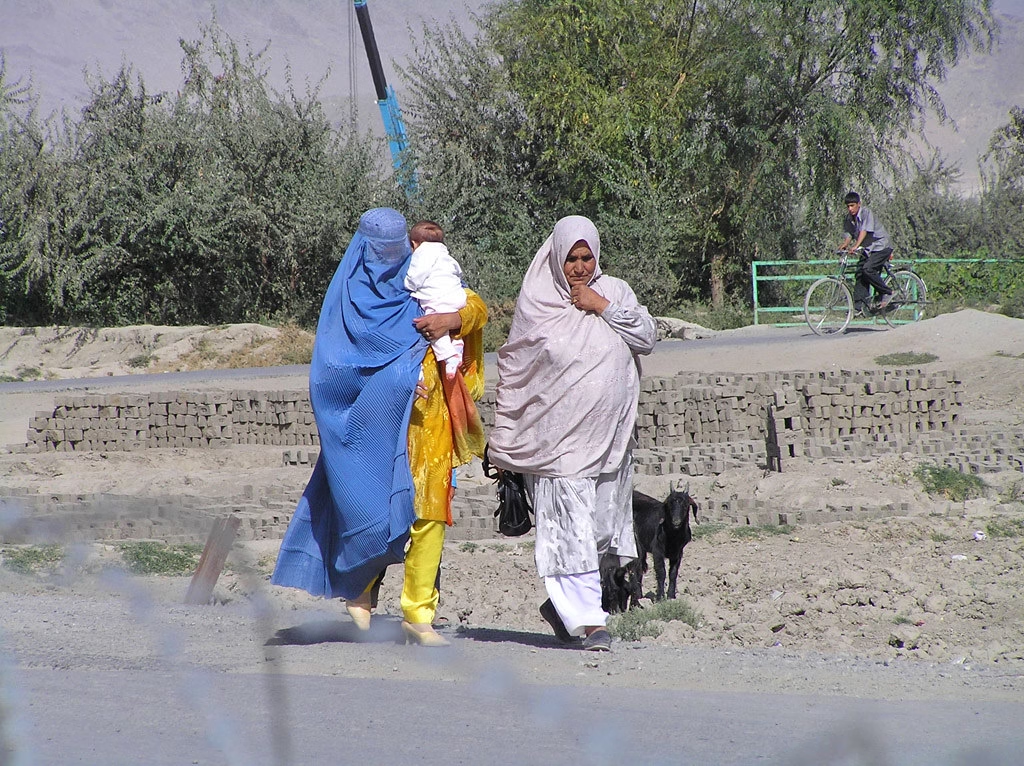
The United Nations Assistance Mission in Afghanistan (UNAMA) officially expressed grave concern this week regarding a surge in the arbitrary detention of women across western provinces. Reports indicate that local authorities are targeting women for alleged violations of strict dress codes and the absence of a male guardian, known as a mahram, in public spaces. These enforcement actions, occurring throughout the latter half of the month, represent a significant tightening of the restrictive policies imposed by the de facto authorities since their return to power in August 2021.
Context of Evolving Restrictions
Since 2021, the de facto authorities have progressively dismantled the rights of women and girls in Afghanistan. International monitors have documented a series of decrees that have systematically barred women from secondary education, universities, and most forms of employment, including work with non-governmental organizations. The current crackdown in the western region marks a transition from policy-based exclusion to active physical enforcement, raising fears of a broader campaign of intimidation.
Details of Enforcement and Impact
Witnesses and local human rights advocates report that security forces have detained women in public markets, parks, and transportation hubs. The detentions are often characterized by a lack of due process, with detainees frequently held without access to legal counsel or formal charges. Families are reportedly being asked to provide written guarantees that the detained women will comply with dress code regulations before release.
Data from international human rights organizations suggest that these actions have created a pervasive climate of fear. Many women have reported choosing to remain in their homes rather than risk confrontation with security patrols. This self-imposed isolation further exacerbates the humanitarian crisis, as women are unable to access essential services or maintain independent livelihoods.
Expert Perspectives
UNAMA officials have urged the de facto authorities to provide clarity on the legal basis for these detentions and to ensure the protection of fundamental human rights. Independent analysts point out that the lack of a standardized interpretation of the dress code leads to inconsistent enforcement, leaving women vulnerable to the personal whims of individual patrol officers. Human Rights Watch has noted that the arbitrary nature of these arrests is designed to discourage public visibility, effectively erasing women from the public sphere.
Implications and Future Outlook
These developments signal a potential shift toward even more stringent social controls across the country. For the international community, the situation complicates diplomatic efforts, as the treatment of women remains a primary condition for the recognition of the de facto government. Observers are now watching to see if these enforcement patterns will expand to Kabul and other major urban centers in the coming weeks.
Looking ahead, the international community will likely intensify calls for the release of those detained and seek guarantees against future harassment. The situation necessitates close monitoring of local police activity, as any expansion of these detention practices could lead to a further collapse of civil society engagement. Analysts suggest that the next few months will be critical in determining whether these measures remain localized or become a nationwide standard of governance.















Leave a Reply