


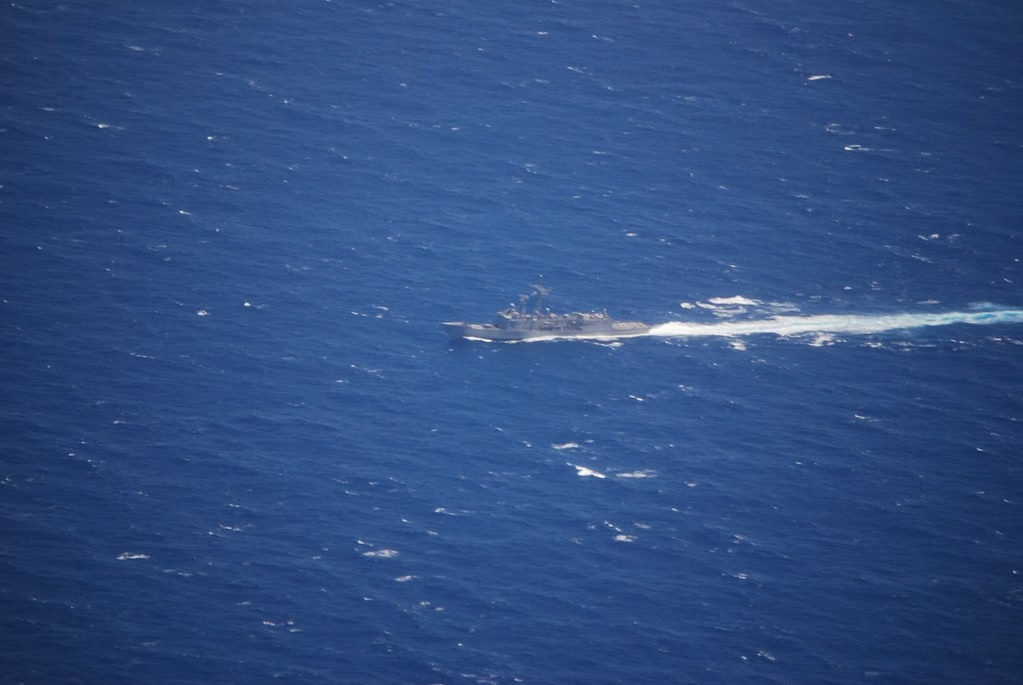
The United States military launched targeted airstrikes against Iranian–linked facilities in the Strait of Hormuz this week, a decisive retaliatory measure following the downing of an American helicopter in the region. This escalation occurred as President Donald Trump signaled that a diplomatic breakthrough with Tehran remains a possibility, suggesting that a formal agreement could be reached within days despite the heightened kinetic activity.
The Context of Rising Maritime Tensions
The Strait of Hormuz serves as one of the world’s most critical maritime chokepoints, through which approximately 20 percent of the world’s petroleum consumption flows. Tensions in the area have remained elevated for months, characterized by a series of intercepted tankers, drone incursions, and naval posturing by the Iranian Revolutionary Guard Corps.
The downing of the U.S. aircraft represents a significant departure from previous skirmishes, marking a shift from indirect harassment to the direct destruction of U.S. military assets. This development has forced the Pentagon to recalibrate its regional security posture to deter further aggression while maintaining a fragile path toward de-escalation.
Operational Dynamics and Strategic Responses
Military analysts suggest that the U.S. response was calculated to demonstrate resolve without triggering a full-scale regional conflict. By targeting specific infrastructure used to coordinate anti-aircraft operations, the U.S. aimed to degrade Iran’s ability to threaten maritime traffic while signaling the cost of further engagement.
Data from the U.S. Central Command indicates that the strikes successfully neutralized the launch platforms responsible for the initial attack on the helicopter. Simultaneously, the White House continues to utilize back-channel communications to ensure that the retaliatory strikes do not derail ongoing diplomatic overtures.
Expert Analysis on Regional Stability
Security experts note the precarious nature of this balancing act. Dr. Elena Rossi, a senior fellow at the Center for International Strategic Studies, points out that the current strategy relies on a delicate separation between tactical military deterrence and high-level political negotiation.
“The challenge for the administration is to project strength while simultaneously keeping the door open for a deal,” Rossi stated. “When a military asset is destroyed, the domestic pressure to respond is immense, but the strategic goal remains to avoid a protracted war that would paralyze global energy markets.”
Broader Implications for Global Energy and Defense
For the global economy, the primary concern remains the potential for the Strait of Hormuz to be closed or restricted. Any sustained disruption in this corridor would likely trigger an immediate spike in crude oil prices, impacting inflation rates and consumer costs worldwide.
For the defense industry, the incident underscores the growing importance of advanced drone defense systems and integrated anti-access/area-denial (A2/AD) strategies. As adversaries continue to employ asymmetric tactics, the U.S. military is increasingly prioritizing rapid-response capabilities that can address threats in real-time without requiring a massive deployment of ground forces.
Observers are now looking toward the upcoming diplomatic meetings to see if the recent military actions have hardened or softened Tehran’s stance. Future developments will likely focus on whether the U.S. can successfully compartmentalize the military friction from the core diplomatic negotiations, or if the cycle of retaliation will continue to overshadow the potential for a lasting accord.






















Leave a Reply